Little over twenty years separate us from Edifício Master (2002), which has long been established as one of our recent classics. Entirely filmed within the titular building, its project is based on interviewing some of the residents within their apartments over the course of a week, in the traditional neighborhood of Copacabana, known for its social complexity and urban agglomeration. Master, the building, seems to concentrate it, and Eduardo Coutinho’s film sets out to see who are the individuals present in this place. What these people have in common, at first, is only the fact that they live in the same building.
The first interviewee summarizes the history of Master, for decades a place of prostitution, but that in recent years, after an administrative reform, became a “family building.” The woman tells us that she spent her entire life in the building, living in 28 different apartments, most of them with her mother. All for a peculiar reason: they decorated the apartments they lived in very well, catching the attention of passing neighbors who admired them and, desiring to move there, sublet the fully furnished places. Mother and daughter continued in the same building, repeating the process with a new space, financially surviving through these successive exchanges.
Master is located in an upscale neighborhood of Rio de Janeiro, no more than a hundred meters from the beach, as Coutinho’s voice-over initially states, announcing the film’s project: “We rented an apartment in the building for a month. With three teams, we filmed life in the building for a week.” Its residents, in general, belong to the middle class, and each of their apartments is just under 50m², all similar in size and floor plan. The aspect of each of these apartments is inevitably an extension of the personality of its inhabitant, presenting distinct decorations: some covered in curtains and heavy fabrics; others with antique wooden furniture; sometimes filled with religious images; rarely empty, with very little or no decoration. There are people who present their homes with more pride, giving a sort of guided tour for the camera, and others who are only seen in a closed shot, without views of their surroundings.
Edifício Master (2002)
Most of the interviewees in Edifício Master are between 40 and 60 years old, with young inhabitants of the building being rare. Each of them narrates some aspect of their biography, whether previous marriages, professions, or family relationships. In one of the interviews, a man who barely introduces himself already says goodbye and surprises us with the brevity of his presence on the scene. Throughout the farewell, his story unfolds; he remembers the mother who died by his side in Brasília, and here is the destabilizing part of the story, what moves him the most is his gratitude to the employer who allowed him to travel to be with her. The man seems to cry not for the deceased mother, but for the pride of being recognized as a good employee. A similar case occurs with Esther, who says she put on long pants to jump out the window after being robbed but decided not to commit suicide because she remembered the debts she still had to pay.
In most cases, these are common stories, life stories as one could find in other places and contexts, without extraordinary events, but perhaps only in a neighborhood like Copacabana and in a building like Master would one find a similar diversity, gathered within a few square meters. Social institutions, precarious work, urban violence, themes that can be found in any newspaper headline, are discussed there. There is also resentment, pettiness, and cruelty in some of the interviewees’ accounts, which affirm negative images not only of the world but sometimes also of themselves. The neighborhood of Copacabana, like all other places, is only evoked in these conversations. We will not see its streets, nor the beachfront; the windows, when shown, always face other windows.
Edifício Master (2002)
Edifício Master begins with a shot that shows, through the security camera monitor, the team of four or five people entering the building and going up together in the same elevator. A decisive inclusion, reiterated at various other moments, of what is behind the cameras, the filmmaking work, and the reduced team that makes it possible. It is also frequent, here and in other of Coutinho’s films, the moment of the director’s first approach to the interviewee. Each time, this approach is distinct, but generally, the team arrives, asks permission, says good morning, shakes hands, and makes light comments: it is a presentation ritual, an invitation to enter the apartment, the initial greetings, the director’s introduction, situations that occur under different moods according to each interviewee. All with the camera in hand, in motion, until the next shot already shows the interviewee seated and ready to speak. From this cut, the camera fixes the close-up as the standard for interviews, directing the viewer’s attention strictly to the speech and facial expressions of the interviewees, whose names are soon marked in the corner of the screen.
Edifício Master (2002)
Beyond the personal dimension of each speech, the accounts are enhanced by the similar conditions of presentation of their characters, presented solo, in pairs or trios, always within their apartment, which constitutes a determined block of the film, without reappearing at other times. The editing operates mainly within each particular block, stitching only the speeches of the same character, never crossing between different participants in the film. Edifício Master comprises a mosaic, in which what is said at the beginning may be mirrored in many interviews later, establishing returns and parallels between people and distant parts of the film, through common themes and reactions. The recurrences, therefore, are more surprising, and the tensions between the characters gain strength from their sequential accumulation and the appearance of spontaneity in the unfolding of the film.
In this regard, the choice to maintain, as much as possible, the chronological order of the interviews in the editing contributes a lot; not seeking to group the accounts by themes or profiles of the interviewees but allowing the relationships between their speeches to be projected throughout their duration. In an interview with Contracampo magazine, Eduardo Coutinho clarifies his editing operations: “The Frank Sinatra man […] is the most evident character, somewhat obvious. So obvious that we filmed him last and changed the order because it would be emotional blackmail. In this type of film, that can’t happen. So we put him in the middle of the film. Besides that, we separated two suicide attempts, which were stuck in chronological order, and three who sang because they were one after the other.” [1]
Among the interviewees, there is one particularly interesting for her scarcity of stories to tell. She is the last participant in the film, who has just arrived in the capital, coming from the interior of the state. This young woman, apparently 17 or 18 years old, presents herself as naive, sitting on the floor, and when the team enters the apartment, she extends her hand to Coutinho, asking “who are you?”. Throughout the interview, she mainly talks about her mother and grandfather, who sent her to Rio to go to a college-preparatory school. She has only been in the building for a short time and does not even know her neighbors; according to her, only a few days before filming she was able to see for the first time who was the child that she heard playing and only knew the name. After many emotional accounts, it is significant that Coutinho and his team have left her as the last interviewee in the film, ending the film with a serene character who seems to not have many stories to tell, she has not yet experienced the traumas, the dramatic events, that other people narrate, as if her personal story is yet to be written. “I still don’t know what I want to be,” is the last phrase with which the film ends, with this being the only participant in the film who talks about the expectations of her future life, not the past.
The first interviews for Edifício Master, however, are not conducted by Coutinho, but by his research team, which rented an apartment in the building for a month, getting to know and interviewing some of its residents, in the process of researching participants for the film and then showing the filmed interviews to Coutinho in the apartment where the initial discussions about the possible interviewees and the conception of the film’s cinematic ideas and conceptual mechanism took place. We follow this process in the documentary directed by Beth Formaggini, Coutinho.doc: Apartamento 608 (2009), which closely follows what happens in the production base. There, the director and the team watch these research interviews, whose edited material with the film’s participants is included in the extras of Edifício Master’s DVD, arranging the speeches following the order in which the same interviewees are presented in the film. [2] [3]
In this initial contact, some of the approached residents are suspicious of the filming, they question the reasons for being interviewed, what will be done with these images, hesitant about the presence of the camera and their participation in the film. The interviewers try to find out who they are, listening to their life stories, gradually convincing them to go on and helping to define some of the themes that they could “tell the director” when the actual filming begins. Thus, an expectation is created for when Coutinho will enter the scene, for this special event that will be filming with him, and it is important for the project that he remains distant until then so that the interviewees have a new stimulus to also tell him these stories for the first time. In these initial conversations, we see at the same time the preparation of the piece and the rehearsal with the actors, who, later, will try to convince the director of their performances.
In each interview present in Edifício Master, therefore, we are facing a reenactment. The characters dress and make up for the film, just as the assistants often remind them of lines they had agreed upon in preparation. At the end of some of the appearances, Coutinho questions the performances and asks the interviewees about the reasons for their behavior throughout the speech. “Why didn’t you look at the camera?” he says to Daniela, who reads a poem. “What was the lie you told?” he asks Alessandra, who talks about her life as a prostitute. This last one is particularly special for the course Edifício Master took. At the end of her selection interview, she says that, for the day of filming with Coutinho, she wants to present herself as a sex worker, dressing in character to be more convincing in the stories she will tell. Among the possibilities of her account, she could choose the role of mother, young girl, immigrant, alcoholic, but she wants to interpret this other role, which she says is the “Alessandra of the night.” In Apartamento 608, we see Coutinho’s reaction to the tests he watches; initially uninterested in the middle-class characters and disbelieving the course of the project for most of the preparation, the director gains a new enthusiasm from Alessandra’s presence. In a meeting marked with the team, who were waiting for his resignation, he reaffirms the desire to move the project forward, making his new ambitions clear: “I wanted there to be more invention, more lies. […] This woman is wonderful because she will be theater.” [4]
In Apartamento 608, the first interview conducted for the film, when Coutinho finally faces the interviewee, is with Sérgio, the building’s superintendent, who receives the team at the door of his apartment, like the other participants. In Edifício Master, however, the introduction of the same interviewee is done differently, in a shot that begins with the camera in the building lobby, passing through some residents sitting at a table, entering through a door and finding the superintendent sitting behind an office desk, in a completely different environment. It is clear that Coutinho and his team deliberately re-enacted his interview, inserting this character in a context specific to the distinct role he represents in the building, not just another common resident.
Sérgio in Coutinho.doc: Apartamento 608 (2009)
Sérgio in Edifício Master (2002)
At the end of Formaggini’s making-of, there is the filming of perhaps the most well-known scene from Edifício Master, when one of the interviewees sings Frank Sinatra’s “My Way”. At first, however, what plays on his radio is “New York, New York”, but Coutinho interrupts the recording and demands that he switch to the other song. We know that the man sings three times and, after the last one, we see Coutinho excited, exclaiming to the camera of Apartamento 608: “It’s pure fiction! That’s what a documentary is.” Coutinho directs the interviewee as a director of a narrative film would, introducing what he wants from his performance, preparing the emotion he wants to achieve—with success, after all it is the most remembered and commented scene of the film. The vision of its creation dismantles the conventional logic of the documentary as a record of the “real” and “spontaneous” and reveals how Coutinho’s work goes through this type of fictional elaboration, both by the interviewees and the interviewer, even though it is held within well-defined parameters of an approach specific to documentary filmmaking, faithful to the filming situation and aware of the ethical and aesthetic dilemmas of presenting real people, telling their stories.
We follow, through this set of materials—Edifício Master, Apartamento 608, and the research interviews—the gradual discovery of how must this film be like, its formulation according to the delimited context, adapting to the restrictions that the space and the verbal material of its interviewees present: in short, what we see is the invention of a filmic form, in a much more complex work than the label “documentary” may seem to imply. “It won’t be the film I want, it will be the film that will be possible,” we see the director comment at one point. His filming does not start from predefined concepts, does not present itself as a report, and does not seek to prove anything about these people, Copacabana, Rio, or Brazil. “To show the soul of a building, the spirit of a building, the diversity of life in a building. That’s the film,” Coutinho says at one point in the preparation. Only from this foundation do all other questions seem to arise. Among the filmic ideas we see discussed, the actors, non-linear editing, and fiction stand out: some of them present in Edifício Master and others only considered, but all decisive for the possible film to surpass the director’s initial low expectations and equally fundamental for the film that Coutinho really wanted to make, to be completed five years later, called Jogo de Cena (2007).
Matheus Zenom
Coutinho asks to change the music, in Apartamento 608 (2009)
[4] Alessandra, in the end, does not fully keep her promise, as she presents herself dressed in casual clothes and assures Coutinho that she did not lie at all during the interview. The 100 reais she claims to have spent at McDonald’s call this into question, however.
Throughout almost three complete decades, Hong Sang-soo has shifted the course of his cinema several times, focusing on his own model and progressively reducing it to what he deems essential. At one point, he became known primarily for his attention to narrative structures, with story mirroring (Right Now, Wrong Then), confusion of appearances (Yourself and Yours, In Another Country), chronological shuffling (The Day He Arrives, Hill of Freedom), different points of view (Oki’s Movie), and other similar techniques, often exploring comedic and absurd situations in the interaction between his characters, under emotions frequently amplified by alcohol. Hong seemed to be the only filmmaker in activity who knew how to start from a naturalistic situation, create a heated discussion, and resolve it with a disconcerting sense of humor; traversing an entire dramatic arc in a few seconds and moving on to the following scenes that sought to reinterpret what we took from that initial impression.
The comedic aspect in his films came from Hong’s ironic detachment towards what was lowest, his characters lived in the most heated way possible, but always within the limits of their daily habits – romantic relationships with students and coworkers were a recurring theme – which endowed the intensity of their emotions and concerns with a ridiculous and banal aspect. His characters were excuses for a series of distinct behaviors, whose narrative developments exposed their frivolities and ephemeral relationships, as well as their capacity for redemption and eventual generosity. The moral aspect, which still persists in Hong’s films, presented itself as a denial of morality and no dilemma ended with pacification. In the universe of his films, each attitude presents a dilemma between pleasure and embarrassment.
For Hong, telling these stories was an attempt to resolve the problems he was creating throughout the filming process. Hong took risks, acted impulsively, invented unforeseen situations, and gave the impression that, in the making of the film, he found himself in the same situation as his protagonist, often wrapped up in a case from which he needed but couldn’t escape. From there came the structural solutions, as well as the presence of dreams, whose scenes carried the same weight as reality. His film was thrilling because Hong was able to gather a small team, some actors, and, in a few days and with little money, make a feature of good filmic ideas, which drew their power from this compression, often expanding and creating new parallels with the aesthetic universe of his previous movies.
In the two restaurant scenes in Right Now, Wrong Then (2015), when first the man lies to be with the woman and, in the second part, tells the truth about his family and the impossibility of being with her, Hong may have reached a certain pinnacle of his filmography, as it is simultaneously his funniest, most dramatic, and structurally fundamental scene, as it is the point from which the two narratives of the film diverge. Right Now is a synthesis of his concerns up to that point, and the repetition of events in its second part constitutes a limit-gesture in relation to everything Hong had done before: making the same film twice, presenting both parts in sequence, and obtaining two distinct results. There is something in this sense that could not be repeated, which relates to a radical way of facing one’s own film, and this second part of “Right Now,” precisely, gives indications of a dramatic turning point in Hong’s filmography, when the cynical protagonist, present in all his other films, decides for the first time to be honest.
Gradually, Hong’s cinema has changed since then. More significantly, narrative structures have lost their centrality in the construction of stories, and these stories have ceased to have, in general, the unexpected aspect that previously characterized them. The conception of structures used to be one of Hong’s main resources because it effectively shaped the course of his stories and allowed him, from some basic elements, to dispose of variations and developments on situations that, in isolation, would seem trivial.
In Hill Of Freedom (2014), the structure presents itself as a somewhat more evident and didactic solution, illustrated by the film’s first scene: a character searches for a set of letters in the mail, letting them fall and scatter; then, he reads them out of order, giving rise to the film’s irregular chronology. His next feature, Right Now, Wrong Then, is linear until the structural solution emerges in the middle of the film, introducing a second part that entirely remakes the first, with subtle variations. In Yourself and Yours (2016), Hong no longer works with mirroring games as a structural datum, but this is posed in a question about the figure of the female protagonist: whether the appearances of the same actress are necessarily those of the same character; if she lies about not being who she is or if she is just mistaken for someone else by others.
From On The Beach At Night Alone (2017), even this type of conflict, based on the confusion of appearances, ceases to exist. The two-part structure (and its spatial displacement) is a simple ellipse, although the “kidnapping” of the protagonist in the last scene of the first part implies a justification for this transition, without relation, of pure nonsense. Between the parts, the conflict remains regarding the media scandal in which this character finds herself involved, a fictional data that reflects the controversy surrounding Hong and actress Kim Min-hee, who plays the film’s protagonist, at that moment, shortly after publicly assuming their extramarital relationship, in what is one of their most directly autobiographical films.
The last time Hong explored a complex narrative structure was in The Day After (2017), in which the owner of a literary publishing company (Kwon Hae-hyo) hires a new assistant (Kim Min-hee) to replace his old one (Kim Sae-byuk), an ex-lover who abandoned him and the job. His wife (Jo Yun-hee), knowing about the case, goes to the office after her, not knowing that who she meets is a new person, who is on her first day of work and barely knows the man. From these four characters (the editor, the assistant, the lover and the wife), Hong builds a story based on different temporalities, concentrated in just one day, always returning to the same spaces and generating a series of mirrorings in each dialogue, always in combinations of alternating pairs or trios, in which the man’s cowardice appears as the most recurrent motive.
At the office, Kim’s character excuses herself to go to the bathroom; there is a cut and it is the lover who leaves through the same door, talks to Kwon, they arrange lunch; a new cut and, walking down the street, Kim turns the corner next to the man, right before they arrive at the restaurant. Everything that happens in the present with Kim has already happened previously with the other character – as, at the beginning, in the man’s journey from home to work, we cut from a shot of him with his lover on the subway to another of him alone – but these are not about repetitions, about seeing the same scenes twice with different actresses, but about establishing a linearity in which the “flashback” scenes (if they can be called that) fill in the gaps in the narrative of the present.
Later on, after the argument between Kim and the wife in the office, the latter leaves the building and we see the facade with the door closed from the outside. There is a cut to an identical shot of the same location, in a different light, which denotes the temporal ellipse, and the person who arrives this time to try to enter the office, already closed, is the lover. We are no longer sure if this passage is a new flashback or if it actually occurs after what we saw before, in a simple continuity from day to night. Other shots follow the lover walking, while Kim and the editor go to eat at a restaurant again. At one point, the man asks permission to smoke a cigarette and the next shot shows him meeting his lover on a sidewalk. A new flashback, like all the others? A pan, in the same shot, reveals Kim walking in the distance until she catches them together, when, for the first time, the lover’s presence will be contextualized in the present time. Next, the editor fires Kim to give the job back to his lover.
The Day After (2017)
In The Day After, the character of the susceptible and insecure man, who creates unnecessary problems for himself, is still there, with the same defects as before. However, the introduction of this other type, who stands apart from this vulnerability, offers him the possibility of a more positive way out, another philosophy to follow. In the passages with Kim, a line of spiritual nature stands out, in a character who apparently finds fulfillment in life and tries to pass on a lesson of serenity, as in the restaurant scene where she talks about what she believes in life and questions the man about his reasons for living, something that had never been said directly in Hong’s other films. It’s still early, however, and Kwon will make the same mistake as before, he won’t resist staying with his lover, while Kim’s character will move on with her life. The film is, above all, about the counterpoints between these two personalities, which still guarantees stimulating discussions, but it will in some way be a farewell to this classic character from Hong’s films – and counterpoints, in general.
At the end, as an epilogue to the story, Kim enters the publishing house again, appearing to visit it for the first time, and sits down to talk to Kwon on the same sofa where the first conversation between the two took place at the publishing house, under the same frame, repeating almost exactly the same questions and answers. Little by little, we discover that this is not a repeat of the first day, but a reunion, and we realize together with Kim that the man doesn’t remember anything that happened, something he only recognizes later. He says that his lover left her job a month after the episode, that he returned to the house to take care of his daughter, and it seems that there he found the reason for living that Kim questioned him about in the restaurant. It’s a redemption for this character and, even if briefly, Kim was a moral example for him.
In Claire’s Camera (2017), the idea of redemption and change in behavior of its characters defines the entire film: Claire (Isabelle Huppert) takes photos of the people she meets in Cannes, during the Festival, and their personality changes as a result. Without subtleties, this is presented to us literally, when the protagonist says: “when I take a photo, people change”. It is an attribution of external information, but which generates a recurring motif throughout the film, in the successive photos taken by Claire and in the relationship that follows with the photographed character, generating a minimum of cause and effect.
This “minimum” is also present in The Novelist’s Film (2022), the most well-resolved of his films after The Day After and Grass: the novelist (Lee Hye-young) meets an actress (Kim), they decide to make a film together , they choose locations and, after a big ellipse, the film is shown. We therefore follow the motivation, making and final result of the film announced by the title and the narrative follows a linear chronology, in which the characters pursue a defined objective. The idea of the film to be made and the search for a way to make it gives rise to a narrative movement that is not so evident in his more recent films and the strength of The Novelist’s Film lies in the expectation that is created, little by little, around what this film could be. All the dialogues and walks that present the gradual conception of the film take place in a single day and their nature is suggested in different scenes, pointing either to a way of filming, to locations in a park, to the story that should take place, loosely defined parameters that allow for the presentation of an unexpected material.
At the press conference for The Novelist’s Film at the Berlin Festival, Hong says that one of the reasons for doing so was an attempt to compare some material he had already filmed with something staged with the actors, to see how these two “textures” would relate to each other in the film. The entire narrative that we follow, therefore, arises from the need to establish parallels to fit this 1 or 2 minute excerpt of spontaneously filmed material, preparing the terms that naturalize its presence on the screen. The resource itself is not new, the film within the film is something Hong has done other times (most famously in Tale Of Cinema), but never exactly like he does here. In this material, which appears in the final minutes, filmed handheld by Hong himself, whose voice we recognize out of frame, on a walk with Kim (and her mother), we recognize the places we had already seen in the park before, now under a completely different register, in which the images are not fixed on a defined motif and, at the end, there is a transition from black and white to color, present only in this final section.
The Novelist Film (2022)
The fitting of this fragment does not occur in an exact manner – it is important to remember that this would also be just a part of the novelist’s film –, appearing on the screen only after the actress has left her projection. This displacement makes more evident the way in which Hong tensions a fictional production with this casual register; that is, how the filmmaker concludes the fictional episode and, only after it, inserts the documentary register, which passes for fiction. At this moment, the simplification of his cinema and its movement towards a more personal subject is directly faced from the material, around which the film’s narrative is formulated, not just from the subjective speeches of its characters.
Over the course of a series of reunions and casual conversations, the novelist speaks successively to a filmmaker (Kwon), an actress and a poet (Gi Ju-bong). Each of them will self-criticize their work, reviewing the paths they had followed in recent years. It is the pretext for – as was common in his filmography, when Hong frequently introduced types who emulated his own lines in interviews – the filmmaker to say that his work has changed in recent years and that he no longer feels the same compulsion he felt in making films, wanting to solve life’s problems first. Later, the novelist tells the actress that she feels she has gone too far in recent years and has gone too far into a kind of “sensitivity” that she previously thought was interesting to explore, but now believed was becoming something false. “I can feel myself exaggerating”, the novelist says, “as if I had to keep inflating small things into something significant.”
In 2017, Hong was also talking about a new “sensitivity” regarding his collaboration with Kim Min-hee, which begins precisely in Right Now, Wrong Then. [2] This collaboration is decisive for the change in his recent films and the period that made his work more popular, with the recurring participation of Kim, who soon becomes a figure of easy identification for Western audiences and of direct association with Hong’s films – its other actors are, in general, stars of commercial cinema and Korean TV, little known here. This collaboration, however, implies a problem in adapting Hong’s narrative resources, as he no longer tells stories with mostly male characters and has at his disposal an actress whose appeal is not exactly dramatic, but whose expressive quality is more related to her posture and mood. There are no great moments of dramatic acting in her appearances in Hong’s films, but Kim’s presence imposes itself as a mirror, as a screen for other performances. Kim’s character is always out of conflict, she is rarely disturbed by other people’s dilemmas, but she is like a thermometer of what is happening around her, observing and commenting from a certain distance on the behaviors, especially of her male peers.
In Grass (2018), Kim Min-hee plays a character sitting in a cafe, writing on the computer, while observing other people around her, almost all of them couples discussing their relationships. We have little context in relation to each of these characters and, more than telling their stories, the film wants to portray a moment in their lives, in which feelings emerge through their dialogues and small clashes. We always return to this quiet figure, the counterpoint to the emotions of all the others, and her centrality generates a question about the relationship between what she writes and this environment. It remains unclear to the viewer whether what happens around her is the reality she writes down, whether it is the projection of a fiction she created or whether, simply, this simultaneity is just a coincidence. In any case, Kim’s character offers a minimal structural point to the film, establishing a link between a priori disconnected scenes and stories. In the final scene, some of these characters go out to smoke on the cafe’s balcony and alternate one by one in the center of the image, as the previous one leaves the frame, in what is one of the last great moments of staging in Hong’s filmography.
Grass (2018)
*
Hong, at 64 years old, has passed the drinking phase, is approaching old age, sees and reflects on life with different eyes. The change in the characters’ behavior towards life is not something occasional, but has become a theme in the most recent films. This relates to Hong’s recent statements, in which he talks about personal maturation, linked to moving away from his old habits and the presence of a much stronger religious feeling. [3]
Hotel By The River (2018) manifests this through the poet played by Gi Ju-Bong, who senses his own death and calls his two sons to meet him at the said hotel. His attempt to get closer is frustrated and, throughout the film, he is unable to tell his sons why he called them, constantly running away from the two, who are waiting for him in a cafe. Only at the end, does he have a conversation with the two other characters we see in the hotel, two women, with whom he finally identifies and talks about his own work, reciting one of the last poems he wrote. The next day, his sons find him dead in the bathroom of his room, screaming desperately while the women sleep peacefully in another apartment. [4]
Notably, his films have become more melancholic and “contemplative”, but it is a melancholy in the background, where questions about being alive, illness, old age and death are rarely expressed directly, discussed by his characters. Anyone who has seen his previous films will remember how these themes were already present, along with sex, fights and vomiting, through taciturn or desperate protagonists. In 50:50 (2013), a 1m35s short for the Venice Film Festival, Hong presents an extremely concise, comical and cruel scene, with a man who uses his wife’s terminal illness to flirt with another woman next to him. Without this disconcerting aspect, today Hong’s films are more comfortable for the viewer, who is also no longer confronted with ambiguous stances and complex narrative structures. His film is linear and naturalistic, like much of the cinema around him, in the exhibition spaces where it is present. It no longer represents that point outside the curve and reveals itself to be adapted to a context of reception that is also easy and light, in which the recurrent reaction to animals, food and objects present in the scene is a reflection of a lack of interest in the composition of the whole and in which the viewer’s gaze focuses mainly on casual details.
Hong continues to make narrative cinema based on characters, but deliberately excludes the external dimension of the conflict, as it was previously characterized by the tension within the scene, and now concerns, mainly, an internal state of these characters. What is required of the actor is no longer the expansive gesture, but the serenity of speech. No longer the alcoholic and erotic episodes, the conflicts of character and attitude, but a turning to oneself, in situations apart from the hustle and bustle of everyday life. In rough terms, it can be said that the same situation is repeated and gives rise to most of the dialogues that make up the film in this new regime: in general, one character presents a new object to another, be it a building, a car, a person or a drink, and immediately discuss their characteristics, as the first acts as an expert and the second listens attentively, until at a new moment another object appears and replaces the first’s place as a topic of passing discussion. Frequently, his characters keep their intimate conflicts behind a mild behavior and trivial conversations, just passing the time, without reacting vividly to situations. Hong seems to want to show his characters’ difficulty in being honest with themselves and others, but their passivity on stage ends up being confused with the passivity of the film itself, which conforms to banal appearances, without elements that expose a critical look at these attitudes, adhering above all to the emotional state of these characters. [5]
The Woman Who Ran (2020) and In Front Of Your Face (2021) are both centered on an introspective protagonist, who has a series of reunions with estranged friends or relatives, in which she listens more than she speaks. In the first film, the character recently ended a relationship; in the second, she is terminally ill. The reasons for her wanderings remain hidden throughout the films, occasionally appearing near the end – especially in In Front of Your Face, when the revelation about the protagonist’s health takes on the air of a plot twist. Only then does the question of the imminence of death emerge, as well as the new dimension that those small dialogues and meetings can gain, the consideration of events and objects, in the character’s remaining moments of life. In this case, this revelation requires a retrospective look at the film, in which the viewer notices everything that happened before, tries to see the situations with the same eyes as the protagonist, now aware that these could be her last moments. The issue is that, in practice, the film offers very little to its viewer, who, despite the film’s intentions, does not share the same point of view as its protagonist.
In Front of Your Face (2021)
Introduction (2021) brought the conflict between different generations to Hong’s most recent cinema, following the dilemma of a young, insecure character who wants to become an actor, but seems more forced to make certain choices by those around him than moved by his own will. Walk Up (2022) and In Our Day (2023) are also based, the second mainly, on the relationship between adults in a midlife crisis and young people aspiring to their professions, who ask them for advice. Unlike the movements of the protagonists of previous films – in The Woman Who Ran, Kim Min-hee makes successive trips, in In Front Of Your Face, Lee Hye-young has a long solitary walk and, in Introduction, Shin Seokho travels from Korea to Berlin and back to Korea – Walk Up and In Our Day are set in fixed locations – the same building in the first and two apartments in the second – and seem more interested in the relationship between the group of characters than in the individual drama of a protagonist.
The temporality of these two films also has a peculiar aspect, as there is a sense of absolute stagnation in them, in which the story is in a certain way suspended, averse to the passage of time and the very idea of narrative movement. Between the characters, these encounters seem to mainly characterize moments of boredom and embarrassment, which last indefinitely. Among the few events that happen in In Our Day, for example, is the disappearance of a cat in the house where the actress, played by Kim Min-hee, is staying, and a return to drinking by “poet Hong”, played by Gi Joo-bong. The last scene of Walk Up plays with this temporal dimension: the episodes that we follow in the life of the protagonist (Kwon), presented between ellipses, which suggested them to be months apart, seem to have taken place during the minutes in which his daughter went to the market to buy bottles of wine, meeting again in the last shot with a bag in hand and resuming the dialogue as the two left off in the first sequence of the film.
These details, however, do not constitute the substance of Hong’s work on these films, being secondary aspects of a strict concentration on the content of the dialogues. At first, both may resemble The Day After, a film that also takes place in a few locations and a restricted set of characters, but the way Hong uses these elements is opposite. While in Walk Up and In Our Day one perceives a certain aspect of chronicling the events, in The Day After the opposite occurs, one feels that there is an internal pressure, that the film is constantly tensioning expectations and, above all, the bookstore space itself is the driving force behind the dramatic events, also changing its characteristics depending on the episodes that take place there: at first, it is the harmless place of work; later, it is where the extramarital affair is exposed, invaded by the couple’s fight; Finally, it is the scene of an ambiguous reunion between the two characters. Wherever we look in The Day After, we will find a dynamic that attributes density to narrative time and space, something that the other two films no longer propose or are incapable of doing.
In the first scene where Kim Min-hee and Kwon Hae-hyo talk in the restaurant, as an extension of the initial job interview, we encounter for one of the last times what was the most characteristic element of Hong’s language: the use of zoom and of the panning over the long shot in the dialogue recording. Both protagonists are sitting at the table, a question is asked by Kwon, in the foreground, the camera pans to Kim, she gives a long answer and the camera returns to Kwon, who reacts and briefly comments on her speech. It’s a simple and even natural movement, but the camera participates in the scene, directs the gaze, alternately shows who speaks and who listens. Seeing Kwon’s reaction only after the end of Kim’s words, and not during, preserves the strength of this moment of silence, highlights how those are different words, that he is not used to hearing. His expression does not compete with Kim’s speech within the shot, but appears later as a consequence of it.
In recent films, this dynamic is excluded and we see simultaneously who speaks and who listens, in a long general shot, without the creation of new dramatic emphases. The monotony they present, absent variations of emotions and episodes, is the opposite of what marked their previous production, when structures and technical resources sought to define, expand, emphasize scenic elements – maintaining, of course, a margin of ambiguity from which conflicts arose. Thus, Hong only continues a “reduction” of his resources, just when his new dramatic ambitions seem to require a different depth, another language than just the dilution of the previous one. At this point, it also becomes clearer what happens in In Water (2023) and the much-commented blurring of its images.
As in The Novelist’s Film, here we also follow a director trying to make a film, along with an actress and an assistant. What Hong shows is above all a character who doesn’t know what to do, uncomfortable with having to invent a reason for the others to have accompanied him there, as well as what the experience represents for him: the money spent, the embarrassment, the general anguish, and, finally, the desire to kill oneself and the somewhat ridiculous idea of the film to be made, ending with a scene that links this film to Introduction and makes these two the only recent films in which Hong laughs again at his protagonists.
When looking for locations, the other two repeatedly praise a small yellow flower, which we can barely see, highlighting its beauty amidst the stone wall from which it emerges. The director’s response says the opposite of them: “This place is good, it’s not very pretty.” Among all of Hong’s films, perhaps none was shot in a setting as picturesque as In Water: a tourist coastline, with a beach with crystal clear water, where almost any shot shot would easily become a postcard. After the preparation stages, we see the filming itself, which here is not followed by the scenes filmed by the protagonist – we will never know if their images would also be blurred, if they could contrast or complement Hong’s shots in some way.
Obviously, the blurred images do not represent a technical sloppiness, but a significant gesture of a certain search for the anti-aesthetic, already present in the blurred shots at the gas station in Hotel By The River, in the saturation of the images in In Front Of Your Face or in the exaggerated contrasts from The Novelist’s Film. Since he began to be his own photographer, in Introduction, assuming all the technical functions of his films with the exception of capturing direct sound, the images in Hong’s films have manifested an increasingly rudimentary appearance, following the simplification by which what is present on the screen is also going through. Although it may be strange at first, the blur continues to be present in In Water as a naturalized element, almost like an adorned way of showing the same motifs present in other films, maintaining the other aspects of the image: long, fixed, general shots, with characters detained in dialogues. [6]
In Water (2023)
Hong today seems to believe that sensitive appearances have an autonomous value and are available to the spectator so that isolated elements can be captured by them. There no longer seems to be anyone behind the camera mediating what should be seen, promoting cuts, guiding the narrative, establishing parallels. The film presents itself under a certain pretense of casualness, as if it happened spontaneously and Hong intended to erase his presence or any ordering consciousness. In the blur of In Water, the figures lose their definition, the film aims to take on an ethereal aspect, dissolving their materiality. Ultimately, what this recent treatment of his films represents is a certain impossible and senseless quest to make a formless film, contrary to what characterizes his previous work. [7]
In Water seems to be the end result of a process of erasing the figure of the filmmaker as we knew him in previous decades, and it is significant that Hong, who throughout his filmography portrayed filmmaker characters, shows here for the first time one of them struggling with issues about a film, representing scenes of its making. According to his recent statements, Hong has concentrated all his work on the production phase, trying to finish the films during filming, keeping the minimum of adjustments to be made later. The music, recorded in direct sound, no longer requires mixing; In editing, the shots are still arranged according to the filming order and the sound is simply synchronized with the images, without needing much more adjustments. The gesture of treating the film as an instant, without thinking too much about what you are doing, trying to finish things in a single impulse, refers to a certain chronicle aspect to which his films have come closer, increasingly manifesting their momentary inspirations, passing very discreetly through the elaboration of characters that are vehicles for Hong’s private reflections. [8] [9] [10]
Hong seeks other ways of expressing himself, pursues this new “sensitivity”, but his recent features express above all dissatisfaction, the anguish of not achieving it – or, remembering the dialogue in The Novelist’s Film, an anguish of not going beyond this sensitivity. His ambition to address certain themes is today much more evident than it once was, but the consequence of this is that the visual and thematic expressions are separated in these more recent features: the tension between what is seen and what is shown disappears from the film, images are summarized to the function of illustrating speech, which becomes their main feature. Finally, the poetic synthesis that used to characterize his narration disappears.
Ten years separate The Day He Arrives (2011) from In Front Of Your Face, also significant of the transformation process that Hong’s cinema has undergone, but the recurrence of the same bar/restaurant frequented by the characters, called “Novel” brings them together perhaps in a unique way throughout his filmography and also explains the nature of this transformation and what remains between these moments.
In the first film, whenever the characters arrive at the place, the same situations are repeated: as if they were there for the first time, they seem to not know each other, repeating the same dialogues and attempts to get closer. Starting from a realistic assumption, the film mischaracterizes the sequential, natural apprehension of the episodes, in which the narrative is formed from the re-elaboration of situations with minimal changes in details, creating a conflict in the very form of the film and complicating its story. If, on the one hand, we can think of alcoholic amnesia as a justification for this, the gradual and subtle transformation of appearances, dissolving the impressions we formed before, makes it impossible to perceive continuity between scenes and distrust arises as to whether the filmmaker is replicating exactly what he has already done or whether something new will emerge from it – and, most importantly, what, when and how.
The recurrence of the same location in the second film highlights the change in Hong’s work in the intervening decade. As in almost all recent films, the narrative solutions in In Front of Your Face no longer involve the configuration of structures and parallels, but a linear progression of the story. In this sense, the bar/restaurant filmed is just one of the other locations in the film, and its peculiarity is that it is the place where the protagonist (Lee) meets the man with whom she finally opens up (Kwon). Her presence is affirmed under a realistic assumption, it is the space conducive to a fortuitous event, as the point of arrival of her characters’ destiny. In The Day He Arrives, it is the starting point, structural and poetic synthesis of the narrative: it is the space where fiction happens.
Matheus Zenom
Notes:
[1] In issue 8-9 of Foco – Revista de Cinema, I published a long study on Hong Sang-soo’s films [in Portuguese], completed between 2019 and 2020, describing his production method and cinematographic resources. I recommend that it be read before the present text, which continues where it left off, following his most recent films and seeking to define a change that has been happening in his cinema, not just since The Woman Who Ran (2020), as indicated there, but since the mid-2010s.
[2] “Kim Min-hee’s character [in On the Beach at Night Alone] says something about this, about praying to God. Except for that character, I’ve never written someone who says this, my attitude, directly. I was being careful. But now I’ve changed, I guess, a little bit. With Kim Min-hee I thought, ‘Maybe it’s okay to say these things directly’.” In an interview with Darren Hughes, published in Notebook, on November 15, 2017. Available at: https://mubi.com/pt/notebook/posts/there-are-mirarcles-a-conversation-with-hong-sang-sound
[3] In the debate after the screening of In Front Of Your Face at the New York Film Festival, in 2022, Hong responds when asked about the protagonist’s religious feelings: “I respect what I call ‘what is given’ instead of what is ‘search and found’. I try to be open and something always comes up and I just respect that. Her remarks, monologue and prayers came up in the same process. Of course, it reflects something going on inside me. I’d like to be careful to say about this very very very personal thing, so I should just stop”. Available at: https://www.youtube.com/watch?v=HzRcBUZ32kY
[4] This treatment of death, which ends in a dramatic way, is not the only difference in relation to the other films he had been making until then: Hotel By The River is also filmed entirely with a handheld camera and in it we find some scenes of flashbacks motivated and accompanied by a voice-over narration from the protagonist, using a montage of short shots. Unlike the films Hong makes later, starting with The Woman Who Ran (2020), we also find here an interest in ellipses and parallel montages.
[5] On The Beach At Night Alone is the first of his films more directly focused on the inner state of a character and no longer on the actions and dramatic events that he or she goes through. There, however, at different times the issue that afflicts her, the media controversy in Korea, comes to the fore and is discussed by the characters, until at the end there is the director’s (Hong’s alter-ego) monologue, which spills over onto this whole situation.
[6] The same can be seen in the presentation of the soundtracks, also composed by Hong, which no longer have the melodic aspect of Yeong Yong-jin’s piano, previously a regular collaborator, and today constitute a noisy, obscure sound of notes sparse sounds of a guitar. These songs have no longer been mixed in post-production, but, as we discovered in In Water and in press conferences, they are recorded directly on his cell phone and played back next to the microphone that captures the sound directly from the scene, creating its distinct sonic texture.
[7] It is important to clarify here the difference between chance and improvisation in his films, which are often confused. Hong always gave the actors freedom to act in their own way, as long as they respected “99%” of the words in the written text and did not deviate from the intentions of the scene. His films never stopped being scripted and Hong continues to this day with the daily routine of writing scenes. On the other hand, Hong has always been open to chance in the course of the film, whether in relation to the conception of the scenes themselves or the small detail that appears during filming and has the potential to generate a transformation – the best example of this is the bird scene in Night and Day (2008), as I comment in the aforementioned text from Foco.
[8] In the debate that followed the screening of In Water in the Encounters section of the 2023 Berlinale, Hong spoke a little about how he has been working in recent years: “As much as I can, I want to finish everything on the location. Of course, there are a few things I need to seek correction, but I want to make it minimum. I want all the important decisions made and executed on the location. That way I think I feel I’m alive, I can concentrate really in what I want”. Available at: https://www.youtube.com/watch?v=sdhtrPtabWY
[9] Idem: “More and more the details are coming from my surroundings and closer to the present time. In the older days, I was picking the details from a more distant past. That way it wouldn’t relate to me personality. Now, what I want is basically to go as close as I can to the thing, but never touch it. Because if you touch it, everything is poised. So, you go back just before touching it. That distance is becoming smaller and smaller Now, I can use some details I come up a few days before without ever having a problem in using it in my script”.
[10] We could find, in the short 2 or 3 minute films that Hong says he makes on a recurring basis, such as the excerpt he uses at the end of The Novelist’s Film, a distinct key to his recent interests, something more purely plastic than properly narrative. It is unlikely, however, that this type of material, properly homemade, filmed and edited in a single day, will be available to the public at some point.
Ao longo de três décadas quase completas, Hong Sang-soo mudou algumas vezes o rumo do seu cinema, centrando-se em seu próprio modelo e o reduzindo progressivamente ao que julga ser o seu essencial. Em certo momento, tornou-se conhecido sobretudo pela atenção às estruturas narrativas, com espelhamentos de histórias (Right Now, Wrong Then), confusões de aparência (Yoursef and Yours, In Another Country), embaralhamento cronológico (The Day He Arrives, Hill of Freedom), diferentes pontos de vista (Oki’s Movie) e outros recursos semelhantes, explorando frequentemente situações cômicas e absurdas na interação entre suas personagens, sob emoções frequentemente amplificadas pelo álcool. Hong parecia ser o único cineasta em atividade que sabia partir de uma situação naturalista, criar uma discussão acalorada e resolvê-la com um senso de humor desconcertante; percorrer todo um arco dramático em alguns poucos segundos e passando às cenas seguintes que buscavam ressignificar o que tiramos dessa primeira impressão. [1]
O cômico em seus filmes vinha de que Hong se voltava para o que era baixo com uma distância irônica, suas personagens viviam da maneira mais acalorada possível, mas sempre dentro dos limites dos seus hábitos cotidianos – relações amorosas com estudantes e colegas de trabalho eram um tema recorrente –, o que dotava a intensidade de suas emoções e preocupações sempre de um aspecto ridículo e banal. Suas personagens eram pretextos para uma série de comportamentos distintos, cujos desdobramentos narrativos expunham as suas frivolidades e relações efêmeras, como também a sua capacidade de redenção e eventual generosidade. O aspecto moral, que ainda persiste no filme de Hong, se apresentava ainda como negação de uma moralidade e nenhum dilema terminava com uma pacificação. No universo de seus filmes, cada atitude apresenta um dilema entre o prazer e o constrangimento.
Para Hong, contar essas histórias era tentar resolver os problemas que ia criando ao longo da filmagem. Hong se arriscava, agia de modo impulsivo, inventava situações imprevistas e dava a impressão de que, na feitura do filme, ocorria a ele a mesma situação de sua protagonista, frequentemente envolto num caso do qual precisa e não consegue escapar. Surgiam daí as soluções estruturais, bem como a presença dos sonhos, cujas cenas tinham o mesmo peso da realidade. Seu filme era entusiasmante por Hong ser capaz de juntar uma pequena equipe, alguns atores e, em poucos dias e com pouco dinheiro, fazer um longa-metragem de boas ideias fílmicas, que tiravam sua potência dessa compressão, frequentemente expandindo e criando novos paralelos com o universo estético de seus filmes anteriores.
Nas duas cenas do restaurante em Right Now, Wrong Then (2015), quando primeiro o homem mente para poder ficar com a mulher e, na segunda parte, fala a verdade sobre sua família e a impossibilidade de estar com ela, Hong talvez tenha alcançado certo ápice de sua filmografia, no que é ao mesmo tempo sua cena mais engraçada, dramática e estruturalmente fundamental, pois é o ponto a partir do qual as duas narrativas do filme se divergem. Right Now é uma obra-síntese das suas preocupações até então e a repetição dos eventos em sua segunda parte constitui um gesto-limite em relação a tudo o que Hong havia feito antes: fazer o mesmo filme duas vezes, apresentar as duas partes em sequência e obter dois resultados distintos. Há algo neste sentido que não poderia ser repetido, que diz respeito a uma maneira radical de encarar o próprio filme, e esta segunda parte de Right Now, justamente, dá indícios de uma virada dramática na filmografia de Hong, quando o protagonista cínico, presente em todos os demais filmes, resolve pela primeira vez ser sincero.
Pouco a pouco, seu cinema mudou desde então. De modo mais impactante, as estruturas narrativas perderam a centralidade na construção das histórias e estas deixaram de ter, em geral, o aspecto imprevisto que antes as caracterizavam. A concepção de estruturas complexas costumava ser um dos principais recursos de Hong, por ser efetivamente aquilo moldava o rumo das suas histórias e permitia que, a partir de alguns elementos de base, dispusesse de variações e desdobramentos sobre situações que, isoladas, pareceriam banais.
Em Hill Of Freedom (2014), a estrutura se apresenta como uma solução um tanto mais evidente e didática, ilustrada pela primeira cena do filme: uma personagem busca um conjunto de cartas no correio, deixando elas caírem e se espalharem; depois, as lê fora de ordem, surgindo daí a cronologia irregular do filme. Seu longa seguinte, Right Now, Wrong Then, é linear até que a solução estrutural surja no meio do filme, introduzindo uma segunda parte que refaz inteiramente a primeira, com sutis variações. Em Yourself and Yours (2016), Hong já não trabalha mais com os jogos de espelhamento como um dado estrutural, mas isto está posto em um questionamento sobre a figura da protagonista feminina: se as aparições da mesma atriz são necessariamente as da mesma personagem; se ela mente sobre não ser quem é ou se é apenas confundida pelos outros.
A partir de On The Beach At Night Alone (2017), mesmo este tipo de conflito, baseado na confusão das aparências, deixa de existir. A estrutura bipartida (e seu deslocamento espacial) é uma elipse simples, embora o “sequestro” da protagonista na última cena da primeira parte implique uma justificativa a esta transição, sem nexo, de puro nonsense. Entre as partes, permanece o conflito a propósito do escândalo midiático em que esta personagem se vê envolvida, fato ficcional que reflete a própria polêmica em torno de Hong e da atriz Kim Min-hee, que interpreta a protagonista do filme, naquele momento, logo após assumirem publicamente a sua relação extraconjugal, no que é um dos seus filmes mais diretamente autobiográficos.
A última vez em que Hong explorou uma estrutura narrativa complexa foi em The Day After (2017), no qual o dono de uma editora literária (Kwon Hae-hyo) contrata uma nova assistente (Kim Min-hee) para substituir a antiga (Kim Sae-byuk), ex-amante que abandonou o homem e o emprego. Sua esposa (Jo Yun-hee), sabendo do caso, vai até o escritório atrás dela, sem saber que quem encontra é uma nova pessoa, que está no seu primeiro dia de trabalho e mal conhece o homem. A partir destas quatro personagens (o editor, a assistente, a amante e a esposa), Hong constrói uma história baseada em diferentes temporalidades, concentrada em apenas um dia, retornando sempre aos mesmos espaços e gerando uma série de espelhamentos em cada diálogo, sempre em combinações de pares ou trios alternados, em que a covardia do homem surge como o motivo mais recorrente.
No escritório, a personagem de Kim pede licença para ir ao banheiro; há um corte e é a amante que sai pela mesma porta, conversa com Kwon, combinam o almoço; um novo corte e, caminhando na rua, quem vira a esquina ao lado do homem é Kim, logo antes de chegarem ao restaurante. Tudo o que se passa no tempo presente com Kim já aconteceu anteriormente com a outra personagem – como, logo a princípio, na trajetória do homem de casa ao trabalho, corta-se de um plano dele com a amante no metrô para outro dele sozinho – mas não se tratam de repetições, de ver duas vezes as mesmas cenas com atrizes diferentes, e sim de estabelecer uma linearidade em que as cenas de “flashback” (se assim podem ser chamadas) preenchem as lacunas da narração do presente.
Mais adiante, depois a discussão entre Kim e a esposa no escritório, esta última sai do prédio e vemos a fachada com a porta fechada do lado de fora. Há um corte para um enquadramento idêntico do mesmo local, sob uma luz diferente, que denota a elipse temporal, e quem chega dessa vez para tentar entrar no escritório, já fechado, é a amante. Não temos mais certeza se esta passagem se trata de um novo flashback ou se ocorre de fato depois do que vimos antes, numa continuidade simples do dia para a noite. Outros planos acompanham a amante caminhando, enquanto Kim e o editor vão novamente comer em um restaurante. Em certo momento, o homem pede licença para fumar um cigarro e o plano seguinte o mostra se encontrando com a amante numa calçada. Um novo flashback, como todos os demais? Uma panorâmica, no mesmo plano, revela Kim caminhando a distância até flagrar eles juntos, quando, pela primeira vez, a presença da amante será contextualizada no tempo presente. A seguir, o editor despede Kim para dar o emprego de volta para a amante.
The Day After (2017)
Em The Day After, a personagem do homem suscetível e inseguro, que cria problemas desnecessários a si mesmo, ainda está lá, com os mesmos defeitos de antes. No entanto, a introdução deste outro tipo, que se coloca à parte dessa vulnerabilidade, oferece a ele a possibilidade de uma saída mais positiva, uma outra filosofia a seguir. Nas passagens com Kim, sobressai uma fala de caráter espiritual, uma personagem que aparentemente encontra sua plenitude na vida e tenta passar adiante uma lição de serenidade, como na cena do restaurante em que ela fala sobre aquilo em que acredita na vida e questiona o homem sobre quais são suas razões para viver, algo que nunca havia sido dito diretamente em outros filmes de Hong. Ainda é cedo, no entanto, e Kwon incorrerá no mesmo erro que antes, não resistirá a ficar com a amante, enquanto a personagem de Kim seguirá a sua vida. O filme se faz, sobretudo, dos contrapontos entre estas duas personalidades, o que ainda garante discussões estimulantes, mas será de algum modo a despedida desse personagem clássico dos filmes de Hong – e dos contrapontos, no geral.
Ao fim, como um epilogo da história, Kim entra novamente na editora, parecendo visitá-la pela primeira vez, e senta-se para conversar com Kwon no mesmo sofá onde aconteceu a primeira conversa entre os dois na editora, sob o mesmo enquadramento, repetindo quase exatamente as mesmas perguntas e respostas. Aos poucos, descobrimos que não se trata de uma repetição do primeiro dia, mas de um reencontro, e percebemos junto com Kim de que o homem não se lembra de nada do que aconteceu, coisa que só reconhece mais tarde. Ele diz que a amante deixou o empregou um mês depois do episódio, diz que voltou para a casa para cuidar de sua filha, e parece que ali achou o motivo para viver sobre o qual Kim o questionou no restaurante. É uma redenção para esse personagem e, mesmo que brevemente, Kim foi para ele um exemplo moral.
Em Claire’s Camera (2017), a ideia de redenção e mudança de comportamento de suas personagens define todo o filme: Claire (Isabelle Huppert) tira fotos das pessoas que encontra em Cannes, durante o Festival, e a personalidade delas muda a partir disso. Sem sutilezas, isso nos é apresentado de maneira literal, quando a protagonista diz: “quando tiro uma foto, as pessoas mudam”. É a atribuição de uma informação exterior, sem outro fundamento no filme, mas que gera um motivo recorrente ao longo do filme, nas sucessivas fotos tiradas por Claire e na relação que se segue com a personagem fotografado, gerando um mínimo de causa e efeito.
Esse “mínimo” está também em The Novelist’s Film (2022), o mais bem-resolvido dos seus filmes após The Day After e Grass: a romancista (Lee Hye-young) conhece uma atriz (Kim), elas decidem fazer um filme juntas, escolhem locações e, depois de uma grande elipse, o filme é exibido. Acompanhamos, portanto, a motivação, a feitura e o resultado final do filme anunciado pelo título e a narrativa segue uma cronologia linear, em que as personagens perseguem um objetivo definido. A ideia do filme a ser feito e a procura pela maneira de fazê-lo dá origem um movimento narrativo que não é tão evidente em seus filmes mais recentes e a força The Novelist’s Film está na expectativa que pouco a pouco vai se criando em torno do que esse filme pode ser. Todos os diálogos e caminhadas que apresentam a concepção gradual do filme acontecem em um único dia e sua natureza é sugerida em diferentes cenas, apontando seja a uma maneira de filmar, sejam as locações em um parque, seja a história que deve se passar, parâmetros vagamente definidos que permitem a apresentação de um material inesperado.
Na conferência de imprensa de The Novelist’s Film no Festival de Berlim, Hong fala que um dos motivos para fazê-lo foi a tentativa de comparação entre um material que já havia filmado e um registro encenado com os atores, ver como essas duas “texturas” se relacionariam no filme. Toda a narrativa que nós acompanhamos, portanto, surge da necessidade de estabelecer os paralelos para encaixar esse trecho de 1 ou 2 minutos de material filmado espontaneamente, preparando os termos que naturalizam a sua presença na tela. O recurso é antigo, o filme dentro do filme é algo que Hong já fez outras vezes (mais notoriamente em Tale Of Cinema), mas nunca propriamente como ele faz aqui. Neste material, que aparece nos minutos finais, filmado com a câmera na mão pelo próprio Hong, do qual reconhecemos a voz fora de quadro, em um passeio com Kim (e sua mãe), reconhecemos os lugares que já tínhamos visto no parque antes, agora sob um registro completamente distinto, em que as imagens não se fixam num motivo definido e, ao fim, ocorre a passagem do preto e branco para a cor, presente apenas neste trecho final.
The Novelist Film (2022)
O encaixe deste fragmento não se dá de maneira exata– importante lembrar que esta seria, também, apenas uma parte do filme da romancista –, surgindo na tela somente após a atriz ter saído de sua projeção. Este deslocamento torna mais evidente o modo como Hong tensiona uma produção ficcional com este registro casual; isto é, como o cineasta conclui o episódio ficcional para, somente após ele, inserir o registro documental, que se passa por ficção. Neste momento, a simplificação de seu cinema e seu direcionamento a uma maior pessoalidade é diretamente encarada a partir do material, em torno do qual se formula a narrativa do filme, não apenas pelas falas subjetivas de suas personagens.
Ao longo de uma série de reencontros e conversas casuais, a romancista fala sucessivamente com um cineasta (Kwon), a atriz e um poeta (Gi Ju-bong). Cada um deles vai fazer uma autocrítica de seu trabalho, revendo os caminhos que tinham seguido em anos recentes. É o pretexto para – como era comum em sua filmografia, quando Hong frequentemente introduzia tipos que emulavam suas próprias falas em entrevistas – o cineasta dizer que seu trabalho mudou nos últimos anos e que não sente mais a mesma compulsão que sentia em fazer filmes, querendo resolver os problemas da vida primeiro. Mais tarde, a romancista fala à atriz que sente que tem exagerado nos últimos anos e tem ido longe demais em um tipo de “sensibilidade”, que antes achava interessante estar explorando, mas que agora acreditava estar se tornando algo falso. “Eu posso me sentir exagerando”, a romancista diz, “Como se eu tivesse que continuar inflando pequenas coisas em algo significativo.”
Em 2017, Hong também já falava de uma nova “sensibilidade” a propósito de sua colaboração com Kim Min-hee, que se inicia justamente em Right Now, Wrong Then. [2] Essa colaboração é determinante para a mudança nos seus filmes recentes e o período que tornou a sua obra mais popular, com a participação recorrente de Kim, que logo torna-se uma figura de fácil identificação para o público ocidental e de associação direta com os filmes de Hong – seus demais atores são, em geral, estrelas do cinema comercial e da TV coreana, aqui pouco conhecidas. Essa colaboração, no entanto, implica um problema de adaptação dos recursos narrativos de Hong, conforme deixa de contar histórias majoritariamente com personagens masculinos e tem a sua disposição uma atriz cujo apelo não é propriamente dramático, mas cuja qualidade expressiva está mais relacionada a sua postura e ao seu humor. Não existem grandes momentos de atuação dramática em suas participações nos filmes de Hong, mas a presença de Kim se impõe como espelho, como anteparo para outras atuações. A personagem de Kim está sempre fora dos conflitos, raramente é perturbada pelos dilemas dos outros, mas é como um como um termômetro do que acontece ao seu redor, observando e comentando com certa distância os comportamentos, principalmente dos seus pares masculinos.
Em Grass (2018), Kim Min-hee interpreta uma personagem sentada em um café, escrevendo no computador, enquanto observa outras pessoas ao seu redor, quase todas elas casais que discutem seus relacionamentos. Temos pouco contexto em relação a cada uma dessas personagens e, mais do que contar suas histórias, o filme quer retratar um momento de suas vidas, em que o sentimento aflora através de seus diálogos e pequenos embates. Retornamos sempre a essa figura quieta, contraponto das emoções de todas as outras, e a sua centralidade gera um questionamento sobre a relação entre o que ela escreve e esse entorno. Permanece indefinido ao espectador se o que acontece ao seu redor é a realidade que ela anota, se é a projeção de uma ficção criada por ela ou se, simplesmente, essa simultaneidade é apenas coincidência. De todo modo, a personagem da Kim oferece um ponto estrutural mínimo ao filme, estabelecendo um elo entre cenas e histórias a priori desconexas. Na cena final, alguns destes personagens saem para fumar na varanda do café e alternam-se um a um no centro da imagem, conforme o anterior deixa o quadro, no que é um dos últimos grandes momentos de encenação da filmografia de Hong.
Grass (2018)
*
Hong, aos 64 anos, passou da fase da bebedeira, se aproxima da terceira idade, vê e reflete sobre a vida com outros olhos. A mudança no comportamento de suas personagens frente a vida não é algo ocasional, mas, justamente, tornou-se um tema no conjunto de filmes mais recentes. Isto se relaciona com as declarações recentes de Hong, em que fala sobre um amadurecimento pessoal, ligado ao afastamento dos seus hábitos antigos e na presença de um sentimento religioso muito mais forte. [3]
Hotel By The River (2018) manifesta isso através do poeta interpretado por Gi Ju-Bong, que pressente a sua própria morte e chama seus dois filhos para encontrá-lo no dito hotel. Sua tentativa de aproximação é frustrada e, ao longo de todo o filme, ele é incapaz de dizer aos filhos a razão de tê-los chamado, fugindo constantemente dos dois, que o esperam em um café. Somente ao fim, ele tem uma conversa com as duas outras personagens que vemos no hotel, com as quais finalmente se identifica e fala sobre seu próprio trabalho, recitando um dos últimos poemas que escreveu. No dia seguinte, os filhos o encontram morto no banheiro do seu quarto, gritando desesperadamente enquanto as mulheres dormem tranquilas em outro apartamento. [4]
Notadamente, seus filmes se tornaram mais melancólicos e “contemplativos”, mas é uma melancolia de fundo, cujas questões sobre estar vivo, a doença, a velhice e a morte raramente são expressas diretamente, discutidas pelas suas personagens. Quem já tenha visto seus filmes anteriores lembrará como estes temas já estavam presentes, junto de sexo, brigas e vômitos, através de protagonistas taciturnos ou desesperados. Em 50:50 (2013), curta de 1m35s para o Festival de Veneza, Hong apresenta uma cena extremamente concisa, cômica e cruel, com um homem que usa a doença terminal da sua esposa para flertar com outra mulher ao seu lado. Sem esse aspecto desconcertante, hoje os filmes de Hong são mais confortáveis ao espectador, que também não é mais confrontado com posturas ambíguas e estruturas narrativas complexas. Seu filme é linear e naturalista, como grande parte do cinema ao seu redor, nos espaços de exibição onde está presente. Já não representa mais o mesmo ponto fora da curva e se revela adaptado a um contexto de recepção também fácil e ligeira, em que a reação recorrente aos animais, comidas e objetos presentes em cena é reflexo de um desinteresse pela composição do todo e em que o olhar do espectador se volta sobretudo para o detalhe casual.
Hong continua a fazer um cinema narrativo baseado em personagens, mas exclui deliberadamente a dimensão exterior do conflito, tal como antes se caracterizava pelo embate dentro de cena, passando a dizer respeito, principalmente, a um estado interior dessas personagens. O que requer do ator deixa de ser o gesto expansivo, mas a serenidade da fala. Não mais os episódios alcoólicos e eróticos, os conflitos de caráter e atitude, mas um voltar-se a si mesmo, em situações à parte de uma agitação da vida cotidiana. Em termos grosseiros, pode-se dizer que a maior parte dos diálogos dos filmes neste novo regime estão baseados na mesma situação: uma personagem apresenta a outra um novo objeto, seja ele um prédio, um carro, uma pessoa ou a uma bebida, e imediatamente discorrem sobre suas características, conforme a primeira age como especialista e a segunda ouve atentamente, até que em um novo momento outro objeto apareça e substitua o lugar do primeiro como tema de discussão passageira. As discussões iniciadas em uma cena não costumam ter continuidade no restante do filme: o que se comenta é o que está imediatamente a frente das personagens, sem perspectivas de desdobramento temático. Frequentemente, as suas personagens guardam seus conflitos íntimos por trás de um comportamento ameno e conversas triviais, apenas fazendo passar o tempo, sem reagir vivamente frente às situações. Hong parece querer mostrar a dificuldade de suas personagens em serem honestas consigo mesmas e com os outros, mas a passividade delas em cena acaba se confundindo com uma passividade do próprio filme, que se conforma às aparências banais, sem elementos que exponham um olhar crítico sobre essas atitudes, aderindo sobretudo ao estado emocional dessas personagens. [5]
The Woman Who Ran (2020) e In Front Of Your Face (2021) são ambos centrados em uma protagonista introspectiva, que tem uma série de reencontros com amigos ou parentes afastados, nos quais mais ouve do que fala. No primeiro, a personagem teminou recentemente um relacionamento; no segundo, está com uma doença terminal. Os motivos das suas perambulações permanecem ocultos ao longo dos filmes, surgindo ocasionalmente próximo ao fim – principalmente em In Front of Your Face, quando a revelação sobre o estado de saúde da protagonista ganha ares de plot twist. Apenas então emerge a questão da eminência da morte, bem como a nova dimensão que podem ganhar os pequenos diálogos e encontros, a consideração de eventos e objetos, nos momentos que restam de vida para a personagem. Neste caso, essa revelação exige um olhar retrospectivo ao filme, que se perceba cada coisa que acontece antes, que o espectador procure ver as situações com os mesmos olhos da protagonista, agora consciente de que estes podem se tratar dos seus últimos momentos. A questão é que, na prática, o filme oferece muito pouco ao seu espectador, que, apesar das intenções do filme, não compartilha do mesmo ponto-de-vista da sua protagonista.
In Front of Your Face (2021)
Introduction (2021) trouxe ao cinema mais recente de Hong o conflito entre diferentes gerações, acompanhando o dilema de um personagem jovem, inseguro, que deseja se tornar um ator, mas parece mais forçado a fazer certas escolhas pelos que estão ao seu redor do que movido por vontade própria. Walk Up (2022) e In Our Day (2023) também estão baseados, o segundo principalmente, na relação entre adultos em crise de meia idade e jovens aspirantes às suas profissões, que lhes pedem conselhos. Diferente dos deslocamentos das protagonistas dos filmes anteriores – em The Woman Who Ran, Kim Min-hee faz sucessivas viagens, em In Front Of Your Face, Lee Hye-young tem uma longa caminhada solitária e, em Introduction, Shin Seokho viaja da Coréia à Berlim e de volta à Coréia – Walk Up e In Our Day se passam em locações fixas – o mesmo prédio no primeiro e dois apartamentos no segundo – e parecem mais interessados na relação entre o conjunto de personagens do que no drama individual de um protagonista.
Também a temporalidade nestes dois filmes tem um aspecto peculiar, conforme neles há um senso de estagnação absoluta, em que a história está de certo modo suspensa, avessa ao transcorrer temporal e à própria ideia de movimento narrativo. Entre as personagens, esses encontros parecem sobretudo caracterizar momentos de tédio e constrangimento, que se prolongam indefinidamente. Dentre os poucos eventos que acontecem em In Our Day, por exemplo, está o sumiço de um gato na casa onde se encontra a atriz, interpretada por Kim Min-hee, e um retorno à bebedeira do “poeta Hong”, interpretado por Gi Joo-bong. A última cena de Walk Up brinca com essa dimensão temporal: os episódios que acompanhamos na vida do protagonista (Kwon), apresentados entre elipses, que sugerem meses de intervalo, parecem ter se passado durante os minutos em que sua filha foi ao mercado comprar garrafas de vinho, reencontrando no último plano com uma sacola na mão e retomando o diálogo tal como os dois pararam ainda na primeira sequência do filme.
Estes detalhes, no entanto, não constituem a matéria do trabalho de Hong nestes filmes, sendo aspectos secundários de uma concentração estrita no conteúdo dos diálogos. A princípio, ambos podem se assemelhar a The Day After, filme igualmente transcorrido em poucas locações e um conjunto restrito de personagens, mas a maneira como Hong utiliza esses elementos é oposta. Enquanto em Walk Up e In Our Day percebe-se certo aspecto de crônica dos acontecimentos, em The Day After se dá o contrário, sente-se que existe uma pressão interna, que o filme está o tempo todo tensionando as expectativas e, sobretudo, o espaço em si da livraria é o motor dos eventos dramáticos, mudando de característica também conforme os episódios que nele se passam: a princípio, é o local inofensivo de trabalho; depois, é onde se expõe o caso extraconjugal, invadido pela briga do casal; por fim, é o cenário de um reencontro ambíguo entre as duas personagens. Para onde quer que olharmos em The Day After, encontraremos uma dinâmica que atribui densidade ao tempo e espaço narrativo, coisa a qual os outros dois filmes já não mais se propõem ou são incapazes de fazer.
Na primeira cena em que Kim Min-hee e Kwon Hae-hyo conversam no restaurante, como uma extensão da entrevista inicial de emprego, encontramos por uma das últimas vezes aquele que foi o elemento mais característico da linguagem de Hong: o uso do zoom e da panorâmica sobre o plano longo no registro de diálogos. Ambos os protagonistas estão sentados a mesa, uma pergunta é feita por Kwon, em primeiro plano, a câmera faz uma panorâmica até Kim, ela dá uma longa resposta e a câmera volta a Kwon, que reage e comenta brevemente sua fala. É um movimento simples e até mesmo natural, mas a câmera participa da cena, direciona o olhar, mostra alternadamente quem fala e quem escuta. Ver a reação de Kwon somente após o fim das palavras de Kim, e não durante, guarda a força desse momento de silêncio, ressalta como aquelas são palavras diferentes, que ele não está acostumado a ouvir. Sua expressão não compete com a fala de Kim dentro do plano, mas surge a seguir como consequência dela.
Nos filmes recentes, essa dinâmica está excluída e vemos simultaneamente quem fala e quem ouve, em um longo plano geral, sem a criação de novas ênfases dramáticas. A monotonia que eles dispõem, ausentes das variaçoes de emoções e de episódios, é o contrário daquilo que marcou a sua produção anterior, quando as estruturas e os recursos técnicos procuravam definir, ampliar, enfatizar os elementos cênicos – mantendo, é claro, uma margem de ambiguidade a partir da qual os conflitos surgiam. Assim, Hong apenas dá continuidade a uma “redução” dos seus recursos, justo quando suas novas ambições dramáticas parecem exigir uma profundidade distinta, outra linguagem que não apenas a diluição da anterior. Neste ponto, torna-se mais claro também o que acontece em In Water (2023) e o tão comentado desfoque das suas imagens.
Como em The Novelist’s Film, aqui também acompanhamos um diretor que tenta fazer um filme, junto de uma atriz e um assistente. O que Hong mostra é sobretudo um personagem que não sabe o que fazer, desconfortável de ter que inventar uma razão para que os outros o tenham acompanhado até ali, assim como o que a experiência representa para ele: o dinheiro gasto, o constrangimento, a angústia geral, e, por fim, a vontade de se matar e a ideia um tanto ridícula do filme a ser feito, encerrando-se com uma cena que liga este filme a Introduction e faz com que estes dois sejam os únicos filmes recentes em que Hong volta a rir dos seus protagonistas.
Quando procuram por locações, os outros dois elogiam repetidamente uma pequena florzinha amarela, que mal podemos ver, destacando a sua beleza em meio ao muro de pedras do qual ela sai. A resposta do diretor diz o contrário deles: “Este lugar é bom, não é muito bonito”. Entre todos os filmes de Hong, talvez nenhum tenha sido rodado em um cenário tão pitoresco quanto In Water: um litoral turístico, com uma praia de água cristalina, em que quase qualquer plano rodado facilmente se transformaria em um cartão-postal. Depois das etapas de preparação, vemos a filmagem em si, que aqui não é seguida das cenas filmadas pelo protagonista – jamais saberemos se suas imagens também seriam desfocadas, se elas poderiam se contrapor ou complementar ao registro de Hong de algum modo.
Obviamente, as imagens desfocadas não representam um desleixo técnico, mas um gesto significativo de uma certa busca pelo antiestético, já presente nos planos desfocados no posto de gasolina em Hotel By The River, na saturação das imagens de In Front Of Your Face ou nos contrastes exagerados de The Novelist’s Film. Desde que começou a ser o próprio fotógrafo, em Introduction, assumindo todas as funções técnicas dos seus filmes com a exceção da captação de som direto, as imagens dos filmes de Hong têm manifestado um aspecto cada vez mais rudimentar, seguindo a simplificação pela qual também aquilo que está presente da tela vêm passando. Embora possa causar estranhamento a princípio, o desfoque segue presente em In Water como um elemento naturalizado, quase como uma maneira adornada de mostrar os mesmos motivos que estariam presentes em outros filmes, mantendo os demais aspectos da imagem: planos longos, fixos, gerais, com personagens detidas em diálogos. [6]
In Water (2023)
Hong hoje parece acreditar que as aparências sensíveis tenham um valor autônomo e estejam à disposição do espectador para que os elementos isolados sejam por eles captados. Não parece haver mais alguém por trás da câmera mediando o que deve ser visto, promovendo recortes, guiando a narrativa, estabelecendo paralelos. O filme se apresenta sob certa pretensão de casualidade, como se transcorresse de maneira espontânea e Hong pretendesse apagar a sua presença ou de qualquer consciência ordenadora. No desfoque de In Water, as figuras perdem a definição, o filme pretende assumir um aspecto etéreo, dissolver a sua materialidade. No limite, o que este tratamento recente de seus filmes representa é certa busca impossível e insensata por realizar um filme sem forma, contrária ao que caracterizou o seu trabalho anterior. [7]
In Water parece o resultado final de um processo de apagamento da figura do cineasta tal como o conhecemos nas décadas anteriores, sendo significativo que Hong, que ao longo de toda sua filmografia retratou personagens cineastas, mostre aqui pela primeira vez um deles se debatendo em questões sobre um filme, representando cenas da sua feitura. Segundo suas declarações recentes, Hong têm concentrado todo seu trabalho na fase de produção, procurando terminar os filmes durante a filmagem, mantendo o mínimo de ajustes para ser feitos a posteriori. A música, gravada em som direto, não requer mais a mixagem; na montagem, os planos ainda são dispostos segundo a ordem de filmagem e o som é apenas sincronizado com as imagens, sem precisar de muito mais ajustes. O gesto de tratar o filme como um instante, sem pensar demais no que se está fazendo, tratando de terminar as coisas em um só impulso, remete a certo aspecto de crônica ao qual seus filmes têm se aproximado, cada vez mais manifestos de suas inspirações momentâneas, passando muito discretamente pela elaboração de personagens que são veículos para as reflexões particulares de Hong. [8] [9] [10]
Hong procura outros modos de se expressar, persegue essa nova “sensibilidade”, mas os seus longas recentes manifestam sobretudo a insatisfação, a angústia de não a alcançar – ou, lembrando do diálogo em The Novelist’s Film, uma angústia de não ir além dessa sensibilidade. Sua ambição de abordar certos temas é hoje muito mais evidente do que um dia foi, mas a consequência disso é que as expressões visual e temática estejam apartadas nesses longas mais recentes: desaparece do filme a tensão entre o que se vê e o que se mostra, as imagens são resumidas à funcionalidade de ilustração da fala, que se torna seu recurso principal. Desaparece, enfim, a síntese poética que caracterizava a sua narração.
Dez anos separam The Day He Arrives (2011) de In Front Of Your Face, significativos também do processo de transformação pelo qual o cinema de Hong passou, mas a recorrência de um mesmo bar/restaurante frequentado pelas personagens, chamado “Novel” (“romance literário”) os aproxima talvez de maneira única em toda a sua filmografia e dá conta também da natureza dessa transformação e o que entre esses momentos permanece.
No primeiro filme, sempre que as personagens chegam no lugar, as mesmas situações se repetem: como se estivessem ali pela primeira vez, elas parecem não se conhecer, refazendo os mesmos diálogos e tentativas de aproximação. Partindo de um pressuposto realista, o filme descaracteriza a apreensão sequencial, natural, dos episódios, em que a narrativa se forma a partir da reelaboração das situações com mínimas alterações de detalhes, criando um conflito na própria forma do filme e complexificando sua história. Se, por um lado, podemos pensar na amnésia alcóolica como justificativa para tanto, a transformação gradual e sutil das aparências, dissolvendo as impressões que formamos antes, impossibilita a percepção de uma continuidade entre as cenas e surge a desconfiança em relação a se o cineasta está replicando exatamente o que já fez ou se algo novo vai surgir a partir disso – e, principalmente, o que, quando e como.
A recorrência do mesmo lugar no segundo filme evidencia a mudança do trabalho de Hong nesta década de intervalo. Como em quase todos os filmes mais recentes, as soluções narrativas de In Front of Your Face já não passam pela configuração de estruturas e paralelos, mas pelo encaminhamento linear da história. Sob este registro, o bar/restaurante filmado é somente mais uma das demais locações do filme, e a sua peculiaridade é de ser o local em que a protagonista (Lee) encontra o homem com o qual finalmente se abre (Kwon). Sua presença está afirmada sob um pressuposto realista, é o espaço propício a um evento fortuito, como o ponto de chegada de um destino de suas personagens. Em The Day He Arrives, ele é o ponto de partida, síntese estrutural e poética da narrativa: é o espaço onde a ficção acontece.
Matheus Zenom
Notas
[1] Na edição 8-9 da Foco – Revista de Cinema, publiquei um longo estudo sobre os filmes de Hong Sang-soo, finalizado entre 2019 e 2020, descrevendo seu método de produção e seus recursos cinematográficos. Recomendo que seja lido antes do texto presente, que segue de onde esse parou, acompanhando seus filmes mais recentes e procurando definir uma mudança que vêm acontecendo no seu cinema, não apenas a partir de The Woman Who Ran (2020), como lá indicado, mas desde meados dos anos 2010.
[2] “Kim Min-hee’s character [in On the Beach at Night Alone] says something about this, about praying to God. Except for that character, I’ve never written someone who says this, my attitude, directly. I was being careful. But now I’ve changed, I guess, a little bit. With Kim Min-hee I thought, ‘Maybe it’s okay to say these things directly’.” Em entrevista a Darren Hughes, publicada em Notebook, em 15 de novembro de 2017. Disponível em: https://mubi.com/pt/notebook/posts/there-are-mirarcles-a-conversation-with-hong-sang-soo
[3] No debate após a exibição de In Front Of Your Face no New York Film Festival, em 2022, Hong responde quando perguntado sobre o sentimento religioso da protagonista: “I respect what I call ‘what is given’ instead of what is ‘search and found’. I try to be open and something always comes up and I just respect that. Her remarks, monologue and prayers came up in the same process. Of course, it reflects something going on inside me. I’d like to be careful to say about this very very very personal thing, so I should just stop”. Disponível em: https://www.youtube.com/watch?v=HzRcBUZ32kY
[4] Este tratamento da morte, que se encerra de maneira dramática, não é a única diferença em relação aos outros filmes que vinha fazendo até então: Hotel By The River também é filmado inteiramente com uma câmera na mão e nele encontramos algumas cenas de flashback motivadas e acompanhadas por uma narração em voz off do protagonista, valendo-se de uma montagem de planos curtos. Diferentemente dos filmes que Hong faz depois, a partir de The Woman Who Ran (2020), encontramos aqui também um interesse pelas elipses e montagens paralelas.
[5] On The Beach At Night Alone é o primeiro dos seus filmes mais diretamente voltado ao estado interior de uma personagem e não mais às ações e eventos dramáticos que ela atravessa. Lá, no entanto, em diferentes momentos o assunto que a aflige, a polêmica midiática na Coréia, vem ao primeiro plano e é discutido pelas personagens, até que ao fim haja o monólogo do diretor (alter-ego de Hong), que extravasa sobre toda essa situação.
[6] O mesmo se observa na apresentação das trilhas sonoras, também compostas por Hong, que já não têm mais o aspecto melódico do piano de Yeong Yong-jin, antes um colaborador regular, e hoje constituem um som ruidoso, obscuro, de notas esparsas de um violão. Essas músicas não têm mais sido mixadas na pós-produção, mas, conforme descobrimos em In Water e em entrevistas coletivas, são gravadas diretamente no seu celular e reproduzidas ao lado do microfone que capta o som direto da cena, originando sua textura sonora distinta.
[7] É importante precisar aqui a diferença entre acaso e improviso nos seus filmes, frequentemente confundidas. Hong sempre deu liberdade para que os atores interpretassem ao seu modo, desde que respeitando “99%” das palavras do texto escrito e não se desviando das intenções da cena. Seus filmes jamais deixaram de ser roteirizados e Hong mantém até hoje a rotina de escrita diária das cenas. Por outro lado, Hong sempre esteve aberto ao acaso no desenrolar do filme, seja em relação a própria concepção das cenas ou ao pequeno detalhe que surge durante a filmagem e tem o potencial de gerar uma transformação – o maior exemplo disso é a cena do passarinho em Night and Day (2008), como comento no texto mencionado da Foco.
[8] No debate que se seguiu à exibição de In Water na seção Encounters da Berlinale de 2023, Hong falou um pouco sobre como tem trabalhado nos últimos anos: “As much as I can, I want to finish everything on the location. Of course, there are a few things I need to seek correction, but I want to make it minimum. I want all the important decisions made and executed on the location. That way I think I feel I’m alive, I can concentrate really in what I want”. Disponível em: https://www.youtube.com/watch?v=sdhtrPtabWY
[9] Idem: “More and more the details are coming from my surroundings and closer to the present time. In the older days, I was picking the details from a more distant past. That way it wouldn’t relate to me personality. Now, what I want is basically to go as close as I can to the thing, but never touch it. Because if you touch it, everything is poised. So, you go back just before touching it. That distance is becoming smaller and smaller. Now, I can use some details I come up a few days before without ever having a problem in using it in my script”.
[10] Poderíamos encontrar, nos pequenos filmes de 2 ou 3 minutos que Hong diz fazer de maneira recorrente, como o trecho que usa no final de The Novelist’s Film, uma chave distinta dos seus interesses recentes, algo mais puramente plástico do que propriamente narrativo. É improvável, no entanto, que este tipo de material, propriamente caseiro, filmado e montado em um único dia, esteja disponível para o público em algum momento.
A primeira partedesta conversa foi publicada na nona edição da Revista Limite.
Leme do Destino (2023)
Para apresentar a segunda parte da entrevista, em que falamos desse que considero um filme extraordinário, Leme do Destino (2023), lembro de alguns detalhes que pude presenciar ao fazer parte da filmagem. Começando por como, confuso, procurava o número 301 em um prédio que tem apenas 2 andares, quando Alê, o produtor de locação, abre uma discreta porta no canto do corredor e revela uma nova escada, que leva à secreta locação. Um enorme apartamento escondido em um prédio no Bairro Peixoto, feito sob medida há muitos decênios pelo primeiro homem a vender peças de automóveis importadas no Brasil. Além de comerciante, o antigo proprietário possuía uma curiosa veia artística. De seus muitos quadros espalhados pelo apartamento, um acabou no filme e pode ser visto em primeiro plano na cena da dança. Parecia a locação perfeita para um filme de Júlio Bressane.
Disso se seguiram 6 dias de filmagem intensa, começando cedo pela manhã e terminando pelo fim da tarde. O roteiro, muito conciso, era seguido de memória por Júlio, que andava indócil de um lado para outro do apartamento, em um frenesi de criação. “Ele tá possuído!”, me exclama Rosa Dias, enquanto pergunto avidamente, buscando conhecer as incursões passadas da vida de cinema deles. “O cinema é um martírio…”, ela me diz, relembrando as intempéries que passaram. Bressane e o fotógrafo Pablo Baião exploravam, em cada uma das cenas, enquadramentos e luzes inusitados, imagens de pura fotogenia. Uma câmera livre, “câmera ébria”. E a equipe seguia, atrás, se dispondo com atenção a fazer a cena acontecer.
O clima muito familiar parecia balancear perfeitamente o profissionalismo e a descontração. A cada dia eram eleitos da equipe diferentes contrarregras que deveriam realizar os pitorescos efeitos práticos do filme, puxando cordas, barbantes e realizando as piruetas necessárias para isso. Júlio e eu nos juntamos para fazer o plano em que um lápis deveria sair rolando sozinho por uma porta, atravessando um feixe de luz. Uma ação aparentemente simples, mas que descobrimos ser de difícil realização: o lápis não mantinha linearmente sua direção e saía da luz. “Aí você imagina o que faziam uns caras como o Buster Keaton”, diz Júlio, e relembramos as impressionantes façanhas do cineasta, a parede da casa caindo, a ponte desmontando com o trem em cima. Josie Antello, uma veterana no cinema do cineasta inventor, se deliciava com as novas proposições que parecia já conhecer tão bem, enquanto Simone Spoladore tinha um ar de empolgação e curiosidade com aqueles ousados desafios. Formavam uma bela dupla.
No dia 13 de setembro, amanhecemos com a notícia da morte de Godard. Com todos desnorteados, impactados, não se falava em outra coisa. Júlio reúne todos e presta uma emocionada homenagem: “Se não fosse ele, poderíamos estar fazendo outros filmes, mas não esse que a gente tá fazendo. A gente não sabe o quanto a gente deve ao Godard.” Depois pergunta de que forma ele havia morrido: “Se matou, é?”, olha pra cima e sorri um sorriso com ar de sábio. No último dia ninguém queria se despedir do filme e seguiam inventando novas ideias, sob incessante fluxo criativo. Pablo mostra para Júlio a função que permite um slow-motion na câmera, e realizam um dos planos mais bonitos do filme, com os cabelos esvoaçantes de Simone Spoladore e sua expressão de espanto. “Corta!”. Filmamos a cena da vidente e Rosa corre para me encontrar: “Vinícius, eu te disse que o cinema é um martírio, mas também tem muito prazer, viu?”.
Texto introdutório por Vinícius Dratovsky; entrevista por Gabriel Linhares Falcão, Matheus Zenom, Paula Mermelstein e Vinícius Dratovsky
***
Matheus Zenom: Na nossa conversa anterior, você comentou sobre copiar o Limite (1931) no A Agonia (1977). Hoje, enquanto nós assistíamos ao Leme do Destino (2023), você comentou sobre um dos planos, em que copia a composição de um quadro do David. De que maneira a questão da cópia é importante no seu cinema?
Júlio Bressane: Eu considero a cópia não uma obrigação, considero a cópia um dever. Se você quer fazer uma coisa, sobretudo em arte, você tem que começar copiando. É como a questão da língua: a língua que você tem é a do seio materno, mas depois pode aprender outras. A cópia é uma coisa necessária pro seu aprendizado. Quando você fala “fez uma cópia”, as pessoas veem nisso um sentido meio vulgar, mas a cópia é uma coisa difícil, importante e necessária. Era justamente na cópia que se aprendia e se via a diferença. Eu assisti, a uns anos atrás, uma exposição de um único quadro do Rafael, a Madona e mais quatro cópias feitas no ateliê dele, pelos seus discípulos. Todas as cópias tinham uma pequena diferença no traço, no sentimento de uma cor, e essa diferença é que era o aprendizado, até onde você pode chegar no original e perceber, a partir disso, uma maneira autônoma sua de fazer. Você tinha que copiar o quadro, aquilo era um aprendizado. Tudo é original, inclusive a cópia, porque tem uma impressão digital sua ali. Você não consegue pegar a xilogravura do Newton Cavalcanti e fazer uma igual àquilo ali, só a dele.
Agora, o que eu falei a você sobre essa coisa do Limite, foram duas coisas que eu percebi de maneiras diferentes. Uma foi uma percepção inconsciente do Limite; vi o filme, mas não tinha ainda me atravessado. Foi uma primeira percepção do Limite, uma intuição do Limite, na questão da câmera que se aproxima, se afasta, que deixa as personagens. Isso era o Limite que eu percebi de uma maneira inconsciente e fiz no Cuidado Madame (1970) uma forma aberrante do Limite. Depois, mais tarde, tanto no A Agonia, quanto no Gigante da América (1978), mesmo no Monstro Caraíba (1975), já existe uma cópia mais consciente do Limite, fazendo daqueles movimentos que o Edgar Brazil e o Mário Peixoto criaram figuras de sintaxe.
No A Agonia, eu fiz uma seleção de quatro ou cinco figuras do Limite e recriei ali, um pouco com a câmera modificada e um pouco com o ritmo modificado, mas com aquela figura, aquele clichê que o Limite soube reinventar. A câmera abandonar as personagens, isso é uma novidade, isso não tinha no cinema. Fazer da câmera o personagem principal, isso já existia: o Buster Keaton e o próprio Marcel L’Herbier já tinham feito isso. Mas, fazer da câmera a própria existência do cinema, foi ali, mostrando que o que a câmera vê não é o que você vê, e que a câmera tem um impacto de construção próprio. A câmera deixa o corpo da mulher, sai pela estrada, passa por uns arames farpados, e não tem mais nada: tem só o movimento e a luz. É o cinema, em um plano só. Então, nesse sentido, eles inventaram o que eu chamei do “Eu” no cinema, o último signo a se configurar. Há um estudo de literatura, sobre o Barco ébrio do Rimbaud, em que o autor diz que havia um momento no poema em que o comandante era expulso pelo barco e o barco dizia: “Eu”. Então, isso é um pouco a coisa desse tour de câmera do Peixoto e do Brazil.
No filme que eu fiz no Marrocos, A Fada do Oriente, reproduzi numa câmera Paillard-Bolex esse movimento em que a câmera vai pelo chão. Fiz de uma maneira brutalista, porque era uma câmera de corda, que tinha um limite de 20 ou 35 segundos. Então, eu dava a corda e ia; aqui acabava, eu dava a corda de novo e ia, só que cada corte desse é um pulo, mas eu já tinha refeito tudo isso em cima do Limite. Isso foi de 1971 pra 72, depois da Belair, já bem mais dentro do Limite do que na época do Cuidado Madame, o Limite já tinha aflorado em mim.
Gabriel Linhares Falcão: Eu tenho muita curiosidade em saber como é o seu trabalho quando a matéria inicial é a música, principalmente no O Mandarim (1995) e no Tabu (1982). Qual é a diferença de adaptar, atravessar ou transpor uma música e um texto literário?
JB: Tudo isso é feito com intuição. Eu não tenho um método, nem tenho uma fórmula pra isso. Tem duas operações: uma de tradução música/câmera, uma tradução intersemiótica, de uma linguagem pra outra; e a outra é uma aproximação, vamos dizer assim, significante, uma aproximação pela caixa acústica, pela sonoridade, da câmera e da música. Então, isso depende. No caso do O Mandarim, o filme tinha como figura central, e formal, o Mário Reis, que era um cantor muito formalista, muito gráfico também. Tudo isso foi um pouco o que me dirigiu na escolha dos enquadramentos. Agora, a música dali foi uma coisa intuitiva, se faz na hora, um ritmo que você acha que vá com aquele movimento de câmera, um outro que nada tem a ver com aquilo ali e eu sugiro a proximidade. Eu geralmente boto a música inteira porque eu procuro dissociar da imagem, dar à música o caráter próprio dela; deixo ela inteira, não só um pedacinho, porque a música tem um espaço dela que é intraduzível. Você pode se ligar ao que a letra diz, no ritmo da coisa, e também pode ser um devaneio, você imaginar como aquilo vem a você, do que aquilo que te faz lembrar. O importante nisso tudo são as sugestões, o que que aquilo pode sugerir. Ao invés de sugerir uma coisa pra todo mundo, sugerir muitas coisas pra uma pessoa só.
A música, que é uma das coisas mais difíceis hoje de se colocar ao cinema, porque foi explorada ao avesso, ad nauseam. Se fez tudo que é tipo pra cinema, desde a primeira, que foi o Saint-Saëns que fez pro L’Assassinat du duc de Guis (1908), até hoje nesses superfilmes de som, tipo Top Gun (2022), da alta indústria sonora, técnica. Eu sempre procurei dar autonomia à trilha sonora, separar da imagem. Poder falar uma coisa, fazer uma coisa e ter uma sonoridade que é diferente daquilo porque é autônoma. Hoje, passados 50, 60 anos, isso já está mais conhecido, mas esse tipo de música, esses discos originais que eu usei, o Lamartine, o Senhor, o Pixinguinha, o Benedito Lacerda, todos esses discos não se usavam em cinema. Desde que existe cinema sonoro se colocam canções nos filmes, mas não esse tipo de música, nem se deixava essa primazia de tocar um disco com chiado durante três minutos e meio, justamente porque se achava que o chiado era ruim, que não tinha sentido acrescentar ruído à música. Isso tudo foi muito difícil de ser feito e depois muito difícil de ser aceito. Em cinema, fazia-se do som e da música uma outra exigência, não essa independência, esse desgarrar da imagem.
Mas não tenho nenhum método, é uma coisa feita puramente de ouvido e de intuição. Algumas notas em sequência numa música que eu acho que podem combinar, contrastar, ir de acordo ou contra essa ou aquela imagem, que tipo de formalismo se encaixa com essa ou aquela imagem, isso é intuitivo. A tradução intersemiótica é uma tradução que não tem regra, depende da intuição de cada um. Eu considero que a música nos filmes que eu faço é muito importante, porque tem sempre uma história que é dela própria; a música está dentro do filme, mas ela tem uma história dentro do filme e dentro dela. Usei muitas vezes esse recurso, em diversos filmes diferentes.
MZ: Sobre isso de passar de um meio ao outro, penso como no começo do Leme do Destino, no diálogo inicial, você apontou pra gente que existia um trecho do O Gerente, conto do Drummond. Mas isso está presente ali junto de outros textos, misturados de alguma maneira?
JB: Completamente misturado, pra mim é uma colcha de retalhos. Ou, melhor dizendo, é uma colcha de detalhe. São duas mulheres, escritoras, que estão em uma conversa. O que há ali é uma conversa literária. Tem o sentimento de cada uma muito vivo ali, mas é uma conversa literária: frases, pensamentos, analogias literárias. O que atrai é sempre o resultado de uma torção da língua, vamos dizer assim. Isso tem uma razão, até literária também, que é uma observação do Plutarco. Ele foi o cara que escreveu a vida do César e do Marco Antônio, que tem a Cleópatra. O que há da Cleópatra está nestes dois textos. O Plutarco disse que a coisa que mais atraiu o César quando ele conheceu a Cleópatra é que ela falava um grego antigo, um grego de Hesíodo. Ele ficou impressionado e seduzido pela dicção dela. Não por ser uma mulher belíssima, nada disso; ainda mais pro César, que era um conquistador. Ele ficou fascinado com a maneira dela falar. E é isso que tá ali no “Leme do Destino”. O que atrai uma à outra é a maneira com que ela diz “ninguém fala assim”; “sua língua”, ela diz. É isso o que atrai, uma coisa literária, o texto entre as duas. Isso é o que define, mais ou menos, o formalismo de cada uma.
Uma mulher que traz em si um enigma e uma outra que tem outro tipo de trauma, que não aquele; uma experiência coletiva de vida, de convento, de sexualidade, e a outra é uma mulher martirizada, traumatizada, que nunca teve um amante, não sabia beijar, nunca teve afeto de ninguém, mas que teve uma desgraça e é isso que dá no final. Ela conta que era uma menina de 15 anos, que teve um filho, que não quis nem ver, saiu do hospital, doou o filho e desapareceu. Era ela. E, por alguma razão, quando ela vê aquele menino lavando o prato, fica paralisada, sem saber por que – porque ela era a mãe do garoto. A chave disso é o que se chamou “as metamorfoses do parentesco”. Todas as relações de parentesco já foram de uso e de todos os tempos. Todas as relações que são hoje proibidas por leis, eram relações costumeiras. O cinto que Afrodite e as outras usavam se chamava cestus, para você evitar o incestus. Quem tinha aquilo, se defendia de um incesto, que era uma prática comum. Cleópatra pertence a uma cultura que se chamava antigonos: só se reproduzia entre si. É a Antígona, que pertencia a esse ramo da cultura, igual a Cleópatra, também. Todos reproduziam-se entre si, em família: pai, mãe, irmã, tio, filho.
Então, ali, há um primeiro momento em que parece que pode haver uma primavera no sofrimento. Que é uma amiga que ela tem, duas mulheres mais velhas, escritoras. Pode ser que ali ela ganhe alguma experiência, aprenda alguma conhecia, tenha prazer com alguma coisa. Tem aquela cena das Bacantes ali, que é justamente a celebração dessa força. Mas essa coisa é interrompida pelo destino, pelo acaso, que é quando ela vê aquele menino, que ela não sabe o que é, mas sente uma atração que ela nunca sentiu – uma mulher que nunca teve amantes, que qualquer coisa masculina horrorizava ela. Como que pode parar diante de uma pessoa e se sentir daquele jeito? Alguma coisa a paralisou e, aí, isso destrói a continuação de uma relação que tinha mais importância na vida dela; não só de satisfação pessoal, mas de se encontrar com uma pessoa que, como ela, também escreve; uma pessoa mais sofisticada, mais velha. Mas isso é uma coisa que ela não espera, mas pressente. Sobretudo, ela percebe também pela idade. Ela fez isso quando tinha 15 anos; 30, 40 anos depois, ela teria 50, 55, e o cara tinha 30 e poucos. Ela sabia que tinha uma possibilidade assim. Não que fosse aquele, mas se tivesse, seria com essa idade, com esse tipo. Então, essa é a coisa, uma espécie de tabu que existe nesse relacionamento e que é da natureza humana. Essas que são aberrações, fazem parte da natureza humana. São aberrações, a medicina fez questão de comprovar que a geração de filho com mãe, irmão com irmã, é uma produtora de monstros. Mas isso foi feito pra fortalecer certo tipo de relação familiar e estamos aqui hoje.
O filme tem esse lado mitológico e, também, um ritmo, vamos dizer, sincopado. Vão acontecendo muitas coisas dentro daquilo. Como se fossem uma porção de intervalos dentro de cada uma daquelas coisas.
Leme do Destino (2023)
MZ: Tem um uso de objetos no filme que é bastante diferente, também.
JB: É, porque ali tudo isso vai ganhar um sentido de sugestão – o sapato, a corda – e de cinema também. Os objetos têm sempre esse sentido de estender a caixa acústica. Uma se vê no espelho e começa o delírio, os sapatos que andam, as cordas, essas coisas. É uma espécie de embaralhamento de contrastes. São muitas coisas se passando ali dentro: a embriaguez, o cinema, os truques de cinema, os inconscientes óticos. Existe o inconsciente pulsional, mas há também o inconsciente ótico, que é o que você vê quando há uma alteração do movimento. Se for um movimento natural, você não percebe; mas se for um movimento retardado, você percebe coisas que não estariam na sua percepção em um movimento comum. Então, esse é o inconsciente ótico, é ver o que você não vê, quando a coisa tá num movimento normal. O filme tem muitas coisas assim, de ida e vindas. Às vezes, no mesmo plano, o carretel que vai e volta. Essa é uma metáfora freudiana, sobre o bebê, que vê o carretel ir e depois voltar pra ele.
Quando a personagem olha e fica paralisada, o plano seguinte é o rosto dela andando em câmera lenta, onde você observa não só o movimento do rosto, mas o cabelo dela que se move, coisa que você não veria. Ela fica olhando pra trás e a câmera volta e não tem ninguém, enquanto ela está na mesma posição, olhando. Pode ser que aquela cena seja, não um flashback, mas, como dizia o Griffith, um cutback, ou então um cutforward, podia ser depois aquilo. Então, o filme tem toda essa armação. Mas, essas coisas que eu tô dizendo, talvez o filme não seja isso. Isso tudo me levou ao filme. Foi a partir do que eu me organizei, mas, depois que você faz, a coisa foge do seu controle. Há coisas que você fez e que tiveram mais força que você, significaram mais do que você queria; para outras pessoas, ainda mais.
A repetição nesse filme é como uma afirmação. A ideia de Deus é uma repetição. Tem uma ordem ali de repetição de tudo: das imagens, a roupa de cada uma… Sempre repetindo, um pouco diferenciado, mas as coisas centrais sobrevivem. Sobrevivem sempre. Vai mudando um pouco de direção, de valor, porque nessa repetição tem um intervalo e é nesse intervalo que a coisa se reestrutura, ganha um outro valor, vai se modificando, tendo uma outra percepção.
Vinicius Dratovsky: Sei você tem esse roteiro a algum tempo, mas me pareceu que, durante as filmagens, enquanto você estava dirigindo, você tinha um olhar que parecia que era a primeira vez que estava vendo aquilo, que era uma coisa muito nova.
JB: O roteiro, pra mim, é uma espécie de guia, que eu vou organizando pra me organizar. Agora, na hora de filmar, aquilo tudo tá esgotado pra mim, eu procuro deixar aquilo de lado e ficar com as coisas que me conservaram. O roteiro é algo que você faz, como se diz em francês, aide pour mémoire, alguma coisa que você faz como lembrete. Na hora de filmar, eu tenho uma ideia do que é cada coisa e fico com aquilo que eu posso fazer. Mas é muito importante pra mim fazer esse guia, que é uma espécie de pesquisa que eu faço comigo mesmo. Eu passo muito tempo escrevendo meu texto, eu tenho muita dificuldade em escrever. O roteiro tem 10, 15 páginas, então na hora de filmar eu procuro ver o que já não tá mais ali, alguma coisa que não seja o que eu escrevi e organizei. Eu sempre procurei fazer o filme que eu não tenho na minha cabeça. “Fiz o filme que eu tinha na minha cabeça”, as pessoas dizem. Eu sempre disse pra mim mesmo que, num caso desses, era melhor não fazer. [risos] Era melhor procurar fazer um outro porque, se já tá na sua cabeça, já foi. Geralmente, o que eu faço são montagens de texto. Eu sou muito mais leitor do que escritor. Eu sou um leitor permanente, mas não um escritor permanente. Então, o que eu faço é montagem de textos. Todos os meus textos são algumas linhas de certas páginas de muitos livros. Então, eu demoro muito pra organizar a coisa pra mim; depois dela organizada, aí eu faço um filme de improviso, mas depois dessa etapa de recolhimento das coisas. Se eu pegar um roteiro que vai ser fácil, acabo me atrapalhando, posso ficar preso àquele roteiro convencional.
VD: A partir disso que você disse sobre o lembrete, a ajuda à memória, você acha que seu processo de montagem é parecido?
JB: Não, nesse sentido eu acho que não, porque a montagem tem outra coisa. As imagens já são dadas. O que você precisa fazer é transformar aquelas imagens. Daí a força, a importância e a alma da montagem. Primeiro, o trabalho é criar aquelas imagens; o segundo é organizar as coisas, dar àquilo todo um outro destino. As imagens já têm, pelo seu enquadramento, a sua duração, uma sugestão de montagem. A imagem já é uma montagem. Você faz a montagem de cada imagem, mas faz também a montagem de cada fotograma. No que você seleciona dentro de um retângulo, você já faz uma montagem; o enquadramento já é uma montagem.
Na montagem existe também uma outra coisa, que é o que você pode fazer não só no fato de juntar duas imagens para dar uma sugestão do que não esteja ali, mas também de desorganizar um ritmo, que é uma coisa importante. A montagem é um princípio de desorganização de alguma coisa que está arquiorganizada, que é aquela imagem clichê, organizada pela câmera, pela película, por tudo, que é um conforto. A montagem é procurar uma natureza que não é evidente ali, um jogo de contrastes, de surpresas, de coisas inesperadas. Sobretudo, que desorganize aquele ritmo ditado pela fábrica, ditados pela necessidade de organizar o mundo dessa maneira. Deveria alterar, mesmo para que não houvesse essa aderência ao espetáculo. Para que se possa ter uma observação ao avesso desse ritmo, dessa ordem de percepção. O ritmo industrial é o próprio espetáculo. Você faz um filme de 6, 7, 8, 10 horas, ninguém aguenta ver. Não só porque quer ir ao banheiro e tal, mas porque a pessoa não se aguenta, não aguenta a si. Então, você precisa criar um processo que desorganize isso, que desorganize essa percepção.
Cada filme, pra mim, tem uma surpresa de montagem. Eu filmo e, quando filmo, imagino um tipo de montagem pra aquele material que eu acabei de filmar e hoje com mais rapidez, porque você vê esse material instantaneamente. Antes, você tinha que mandar pro laboratório revelar e tinha ali um intervalo, aquilo levava às vezes quatro, cinco dias, que trazia um outro aspecto que era importante também e evidenciava a diferença entre o que você vê e o que a câmera vê. Quando se passava um tempo e você ia ver o que filmou, não era exatamente o que você tinha visto. Hoje, diminuiu muito essa resistência crítica, essa distância; você vê na hora e se ilude com alguma outra coisa. Hoje, quando você acaba o filme, você tem uma ideia da montagem para aquilo ali, mas é justamente essa ideia que você vai demolir quando vai fazer, porque o que você deve ver é não a ideia que você faz dessas imagens, mas qual é a ideia que as imagens têm de você. Aí, sim, começa a montagem. Quando se estabelece isso, é que você encontra uma montagem para aquele material. Todas as montagens são exclusivas, sejam as mais convencionais ou as mais intrincadas. São exclusivas. Você não repete aquilo, as imagens não se repetem. Mesmo os filmes industriais, que têm o mesmo padrão de montagem, não têm a mesma montagem, porque os planos são diferentes.
Então, uma coisa que é bastante forte no “Leme do Destino” foi essa aderência da montagem ao filme. A montagem serviu mais ao filme do que às personagens do filme. Se arrastou mais pelo filme aquele plano do fogo, por exemplo, coisas que mudam o centro de gravidade. Um negócio daquele, se tem quatro ou cinco segundos, tudo bem; quando tem dois minutos e meio, isso cria um desequilíbrio no filme. Poderia ter sido um plano de cinco segundos, era só eu contar ali, mas se eu deixo aquela salamandra queimando, queimando, queimando, dá um outro ritmo à coisa. Nunca, quando filmamos, nem depois, imaginei que aquilo fosse ser o que foi depois no filme; aquilo veio na montagem. Inclusive, quando nós filmamos, o plano, como foi filmado, foi uma surpresa. Eu fiz um teste aqui em casa, peguei um pedaço de papel, meti o fogo e vi que ele queimava. Falei “vamos fazer isso”. Quando chegou na hora da filmagem, no dia que o Godard morreu, alguém botou um pedaço enorme de papel higiênico, que devia ter uns cinco metros. Botamos fogo, o plano rodou e eu falei “deixa mais um pouquinho”, porque eu achei que ia apagar, mas não apagou. Então, foi indo, indo, até o final. Deu-se uma epifania, uma coisa inesperada, um fogo que não extinguiu, que se alastrou e ainda criou uma imagem, deixou um rastro de fosforescência. Depois que filmei, não senti o plano direito, mas foi justamente na montagem que pensei que aquele seria o fogo que veio interromper aquela relação que era não só de necessidade, mas uma relação de descoberta, de invenção, entre aquelas duas mulheres.
Uma mulher, já de cinquenta e poucos anos, que sofreu um trauma brutal inexplicável, de repugnância, que foi esse de ter engravidado. Tão violento que ela doou a criança no próprio hospital e fez isso com alegria, com a satisfação de poder desaparecer. Isso aí você não sepulta. Ficou a vida inteira com isso ali e a relação foi nunca mais querer saber de relação de sexualidade com ninguém, sobretudo com homem nenhum. Uma mulher que teve algum trabalho, pode ter sido secretária, uma vendedora de planos de saúde, e se aposentou. Já mais velha, conheceu uma outra mulher e ficou amiga dela, que tinha uma outra experiência de vida, teve outro tipo de relação. Foi uma menina humilde, que foi criada no convento, que é uma escola de vícios puritanos, onde acontece de tudo, entre as mulheres enclausuradas naquele silêncio. Foi uma mulher que teve uma experiência ali e não se traumatizou com isso; ao contrário, aprendeu e saiu dali para continuar a ser escritora. As duas se conhecem e ela dá a outra um universo que ela nunca teve acesso e nem nunca teria, o universo do corpo dela. Uma mulher naquele estado de repugnância a si própria, que sonha a vida inteira em estar num barco, sem vela, sem mastro, sem tripulação, navegando dentro dela, que se vê como uma caravela perdida e conhece alguém que dá a ela um prazer que nunca teve, do corpo, descobre o gozo com cinquenta e poucos anos. Quando aquilo é interrompido, é uma força incontrolável, mais forte do que ela. Nem essa força reveladora, libertadora, da sexualidade, da fruição sexual, foi capaz de interromper uma força ancestral, antropológica, humana, que foi a coisa familiar, a atração inconsciente pelo filho. Ela sai dali com o rapaz, os dois conversando; alguma força de convencimento ela teve também em relação ao rapaz. Isso foi o que, na montagem, eu tentei distorcer. Dar um ritmo que não fosse aquele que tava determinado, até porque o destino inverteu, se precisava de um outro movimento pra essa sugestão aberrante. Você fazer uma sugestão hoje de um filho que se apaixona pela mãe, é uma sugestão aberrante, mas é aberrante pra essa situação de agora, do costume de agora. O costume é a camisa de força da época. Mas isso tudo nós já passamos lá atrás.
Leme do Destino (2023)
MZ: Durante a primeira parte, pensei bastante no Filme de Amor (2003), principalmente pelas personagens dentro do quarto, a relação com os objetos, a fantasia sexual. A relação de aprendizado que uma transmite à outra me lembra também dos protagonistas do Educação Sentimental (2013).
JB: Existe uma diferença grande em relação ao Filme de Amor, porque nele existe uma celebração desse amor que tá representado na antiguidade pelas três Graças, uma espécie de redescoberta da Vênus. Ali, o que há é mais uma celebração das três forças do amor. De qualquer maneira, tem um apelo ali também a um comportamento menos sociável. Há uma celebração de orgia, que é hoje uma coisa banida, apesar de desejadíssima. Ali tem essa sessão, um desvio narcótico que te possibilita ter um outro comportamento. O Leme do Destino é uma coisa mais ligada à espécie humana, à origem do desejo, como ele foi se dando em sociedade. No Educação Sentimental, há uma professora passando a um corpo inocente, virgem, alguma experiência. No Leme do Destino, são dois corpos de bastante experiência, mas mutilados por isso. No Educação Sentimental, há uma ideia do romance de formação: alguém que é capaz de, através da compreensão e do amor, transmitir alguma coisa a alguém. É o conceito do romance de formação, algo que tem no Émile do Rousseau.
Mas tudo isso pode ser, Matheus, porque essas coisas são signos que ainda tão em rotação. Você faz e eles giram, vão tomando outros significados, ganhando outras percepções. A coisa demora, é difícil… Eu digo por mim. Eu demoro muito a compreender, a perceber a coisa. Eu acho que tudo é um pouco assim. Você faz e a coisa vai sendo reproduzida de maneira que você ter que ir atrás do que você, pra ver se você compreende um pouco do que você fez. A maioria das coisas, ou quase todas as coisas, você faz porque não sabe o que é, faz pra tentar compreender essa nova coisa. Daí também essa coisa do roteiro que você deixa de lado. Você tem que ter certo despudor, um grande risco de fazer aquilo que você não está esperando, uma coisa às vezes que seja em contradição àquilo que está escrito ali, e que essa contradição seja ainda mais forte do que você, porque você não consegue controlar e põe ela ali.
Paula Mermelstein: Algo que me lembra o Filme de Amor é também essa brincadeira com os objetos, como quando lá há aquele ferro de passar que frita o bife.
JB: Utilizar meios não usuais para se fazer certas coisas – fritar um ovo ou esquentar a carne com ferro de passar – são coisas que estão deslocadas ali. Eu pensei um pouco sobre você produzir sempre uma coisa que tá fora do uso. Não só pela desproporção, mas também pelo uso, pelo costume. Todo o Filme de Amor torna corriqueiro todos esses comportamentos que são incomuns, que, se existem, são raríssimos. Essa é a questão do limite das coisas, até onde você sabe ou não sabe delas. Eu me vali muito no Filme de Amor de um pintor chamado Balthus, irmão do Pierre Klossowski. Ele apresenta coisas como se fossem bastantes banais, mas existem ali cenas que a maioria das suas pessoas, na sua experiência de vida, não viu; ou, se viu, só uma pessoa ou outra. Ele transforma em experiência comum o que não é. Foi o pintor que eu usei como referência pra isso no Filme de Amor. Reproduzi vários clichês de quadros do Balthus para transformar o que poderia da coisa banal em coisa incomum. Isso existe muito na pintura, onde se pode encontrar coisas assim.
PM: Tem muito da História do Olho [do George Bataille] também.
JB: É porque ali no Filme de Amor tem todos esses clichês literários e picturais do limite do pornográfico. Ou seja, por que é que isso se chama pornográfico? E o Bataille tem isso no texto dele, faz discussões bastante cruas, bastante explícitas, de coisas que são chocantes pra um mundo prisioneiro como um nosso. Pra ele, Bataille, e pra muitos outros, aquilo era uma coisa que dava a ele outro sentimento. Ele, como homem da sociedade, homem do mundo, também sofria com culpa daquilo, mas sabia que aquilo era uma coisa como outra qualquer. Todas essas teorias dele, tanto na História do Olho como no Ânus Solar, falam de coisas que são bastante inocentes como desejo, mas que são tidas como uma coisa aberrante ou imoral por essa dificuldade de deixar que aquele signo transite com você; há uma resistência. Todos esses clichês da pornografia literária eu puxei pro Filme de Amor. Não só do Bataille, mas também dos textos primeiros da língua portuguesa, a Cartilha de Educação Erótica, textos antigos, do século XVII, pornográficos, muito bem escritos. No comentário crítico que eu tenho aqui do Mária de Abreu Santa Cruz, ele compara a prosa desses textos com o Francisco Manoel de Mello e com Vieira. Botei isso no Filme de Amor também, no início, com ela lendo o texto no telefone. Ou seja, todo esse repertório de erotismo literário, artístico, que tem muito pouco ou quase nunca do próprio erotismo, que é muito diluído em tudo.
Eu acho uma coisa quase impossível de representar essa verdade da sexualidade no filme. Aquilo é sempre uma representação. A relação, a coisa sexual, é de difícil ou impossível reprodução. Tudo o que se faz são aproximações. Você proibir um filme pornográfico é que é a pornografia, o gesto de proibir, porque é um filme como outro qualquer. Como cinema é cinema, tem um gênero, como outros gêneros. Você não poder ver aquilo, ou aquilo perturbar, embora seja natural, pela camisa de força da sociedade, mostra o grau de pobreza corpórea em que você está, no qual uma situação elementar é capaz de deflagrar uma censura, botar alguém na cadeira porque apareceu um nu ou qualquer coisa assim. O Ruy Guerra fez um filme em 1962, Os Cafajestes, que foi um escândalo porque uma mulher aparecia nua na praia. Eu considero isso tudo, em cinema, uma aberração.
Eu fiz um filme de 1980 pra 81 que foi o Tabu, no qual eu dei uma espécie de contiguidade ao significado de “tabu”. O cinema pornográfico, dentro da história do cinema, é um cinema tabu. Se faz filmes pornográficos desde o cinema mudo. Tem filmes pornográficos em 1894, até antes da “invenção do cinema”, no cinetoscópio já se fazia. O cinema pornográfico existiu em todos os tempos. Eu, então, queria colocar no Tabu muitas referências ao filme pornográfico. Consegui ver uma série de filmes espetaculares – alemães, franceses – mudos, dos anos 20. Encontrei alguns planos magníficos nesses filmes – planos que poderiam ser de Godard, Antonioni – e botei alguns deles no Tabu. Esse material, que poderia estar na Cinemateca, foi queimado; o cara tinha em casa latas e latas, morreu e a família pegou tudo, só sobrou o que tem no Tabu. Um material espetacular, de cinema, mas aqui não quiseram nem ver esse material por se tratar de filme pornográfico. Ou seja, se fosse de capa e espada ou faroeste, as pessoas aceitariam, mas pornográfico não pode ser, porque não há tranquilidade no contrato social que possibilite que se veja aquilo, é uma coisa que tá cercada de todas as implicações proibitivas e morais. No Filme de Amor também botei alguns desses planos, pra inserir isso num repertório enorme de censura e de proibição de certos comportamentos e certas expressões.
MZ: No Cinema Inocente (1979) você já tava trabalhando com essas ideias e esse material.
JB: É. Eu botei esse título irônico no Cinema Inocente porque esses filmes pornôs que eram feitos aqui eram feitos por gente inocente de cinema, que não sabia nada de cinema. Pegavam a câmera, botavam na frente da mulher, mandavam ela tirar a roupa e filmavam. Isso não tinha nada de cinema, era um cinema inocente, como eu chamei. [risos] As cenas dos filmes censurados, dos filmes pornô, que introduzo no Cinema Inocente, são interessantes pela ausência de cinema, pela ausência de qualquer regra. Eram filmes que não se serviam do cinema.
O filme é restrito a um botequim onde viviam os cineastas brasileiros, do Rio, que faziam pornochanchada, que eram velhos homens, como o Nilo Machado. Ele tinha um filme que eu gostava muito que se chamava A Psicose do Laurindo (1969), em que ele filmava um sujeito vendo um show de strip-tease, e ele montou isso junto com a Copa do Mundo de 1950, com o povo no Maracanã torcendo pelo futebol. Era esse grupo de cineastas, mais velhos, um pessoal aqui do Rio, do laboratório da Líder, que eu botei ali no Cinema Inocente, não era a pornochanchada paulista, isso não tá ali. O Cinema Inocente é um filme local, tem uma coisa que se chamava antigamente “a aderência ao solo”. É feito em torno do pessoal que frequentava aquele bar, faziam aqueles filmes pornôs, vendiam aquelas cópias, era uma coisa bem local mesmo.
Mas no Cinema Inocente, retomando a questão da separação da música e da imagem, tem um grande exemplo disso, que é num plano sequência quando a câmera está amarrada numa passarela e atravessa o Canal do Mangue, girando, sem controle, uma câmera cega. A música que toca ali é do Noel Rosa, uma música dadaísta, surrealista, chamada De babado em babado. É uma obra-prima do surrealismo entre nós. O surrealismo chegou no Brasil atrasado. Tiveram alguns poetas que fizeram surrealismo, como o Murilo Mendes e o Jorge de Lima, mas o surrealismo chegou mesmo no Brasil por uma forma da poesia popular, com o Noel Rosa e o Lamartine Babo. Essa música é como fosse um improviso, num formato musical de repente.
MZ: Como que entra o Marcel L’Herbier ali? [risos]
JB: Nesses filmes todos têm uma espécie de liberdade e o L’Herbier foi um homem que, apesar de ser um grande técnico, teve muita audácia de liberdade. O que eu inventei ali foi uma maneira de homenagear um homem que eu amei muito, que foi o Nunes Pereira, e botei ele como se fosse o L’Herbier. Foi uma espécie de homenagem com uma outra capa, fiz uma homenagem a um homem e botei a capa de um outro nele. Me botei ali elogiando o gênio do L’Herbier e ele atuando como se fosse, falando em francês com aquele sotaque dele, maranhense, é uma coisa muito bonita. Eu acho que é um momento bom do filme, porque tem as páginas da Cahiers com os filmes de vanguarda franceses dos anos 20, com Delluc, Dulac, Epstein, Gance e o L’Herbier. A câmera está rodando com eles e aparece o L’Herbier, como se fosse o representante disso, e ao mesmo tempo é o Nunes, a quem eu estou fazendo a homenagem. No A Agonia, o vestido da Maria Gladys tem a mesma padronagem e o mesmo corte do vestido da dançarina do El Dorado, é a mesma roupa que uma costureira fez igual, é o L’Herbier que tá no A Agonia.
MZ: E a arma que o Radar carrega é mesmo do James Stewart?
JB: Não, nada disso. [risos] Tudo isso é invenção. Aquilo filme na verdade é de ficção, não tem nenhum documentário naquilo. O Radar nunca foi aos Estados Unidos, mas ele gostava muito de cinema americano, daqueles que você via no interior, aqueles filmes ordinários, de cowboy, um lixo americano que passava no interior. O grande ídolo dele era um ator chamado Alan Ladd, do qual ele sabia tudo, e parece que o Alan Ladd usava uma pulseira. Então, inventei a história da pulseira e da Winchester ’73 que ele comprou num leilão, isso tudo eu inventei. [risos] Todo mundo achou que o Cinema Inocente era um documentário, gente até importante, que falou pra mim: “O Radar te deu uma sacaneada, te chamou de Pedrinho”. Imagina se o Radar iria fazer isso. [risos] Eu ainda respondo: “Não é Pedrinho, é Julinho”. O próprio Radar me desprezou, diz que tava cansado. Isso tudo era uma brincadeira, mas os caras acreditaram que fosse mesmo um documentário, como se eu estivesse ali filmando pela primeira vez.
MZ: É um filme muito diferente, uma forma diferente de ficção.
JB: É o princípio do Nanook (1922) do Flaherty. Tudo no Nanook é ficção. “Documentário sobre o Polo Sul, a vida do esquimó”: aquilo é uma ficção. Ele não filmou nada que não fosse encenado, a não ser o gelo. “Entra por aqui, senta, acende o fogo”. O cara ia lá e fazia. Isso é o Cinema Inocente, tudo é uma ficção, uma ficção de um documentário.
MZ: Na minha pesquisa, encontrei uma notícia sobre a feitura do filme, que dizia que você iria interpretar um “rato de cinemateca”.
JB: Exatamente, é um filme sobre um cara que tava fazendo um documentário sobre um montador de pornochanchada. Quer dizer, um cara que ia dentro do cinema mesmo, via tudo, pra se preocupar com um montador de pornochanchada! Era um gambá de cinemateca, não era um rato! [risos] E aí eu fazia aquilo, entrava na sala montagem, levava o microfone. Mas foi uma charada sincopada que ninguém na roda decifrou, entendeu?
GLF: Você mencionou os Cahiers du Cinéma, você lia bastante?
JB: Lia, mas a Cahiers pra mim era sobretudo as fotografias. Os textos, na época, eu tinha alguma dificuldade de ler, como os do Nöel Burch. Eu via a crítica, mas não era aquilo que me impressionava, mas a escolha dos filmes e as fotografias. Tenho alguns Cahiers antigos, de capa amarela, mas nunca fui um leitor fanático de toda essa coleção. Li, acompanhei muito a Cahiers, mas acompanhava mais a fotografia, a paginação, as entrevistas que eles faziam. A parte teórica menos, porque tava escrito em francês e era gente complicada. Aprendi muita coisa com as fotografias e dava importância aos filmes que eles selecionavam, sabia que havia uma boa seleção. Isso entre 62, 63 e foi até o início dos anos 70.
Tinha uma sessão de cinema na Maison de France, na Avenida Antônio Carlos. Não me lembro se uma vez no cinema ou duas, mas passavam sempre filmes franceses, algumas pré-estreias, filmes antigos, vi coisas maravilhosas lá. Foi numa dessas sessões que eu conheci o Glauber. Ao lado da Maison, tinha uma livraria espetacular, a Livraria Francesa. Eu frequentava muito ali e era onde vendiam os Cahiers. Eu ainda estava começando a arranhar o francês, então eu olhava muito as revistas, via muito os livros, as capas, procurava revistas de fotografia e de cinema. Infelizmente, essa livraria ali acabou.
Depois, a partir de um festival que, se não me engano, foi um Festival de Veneza, a Cahiers publicou pela primeira vez uma capa a cores, de um filme americano que acabou ganhando um prêmio. O Truffaut estava na mesma competição. Era um cara que não sei se fez outros filmes e dizem que ele pagou para ter o filme como capa da Cahiers, uma das primeiras capas coloridas. Se não me engano, foi no Festival de Veneza de 66. [N.E.: O filme citado é “Chappaqua” (1966) de Conrad Rooks. Não apenas ele ocupa a capa da edição n°183 da Cahiers du Cinéma, como preenche as 10 primeiras páginas da edição com publicidade, algo incomum na revista. As únicas citações a ele estão presente na seção de “comentários”, em um texto curto, sem assinatura, de tom extremamente negativo e irônico, em que se reconhece que “o ponto forte” do filme é a sua campanha publicitária, “de belas capas em cores nas revistas especializadas”. Uma nota ao fim da seção indica sua autoria coletiva por J.-A Fieschi, S. Godet, J. Narboni et Y. Koichi.]
GLF: Mais ou menos no período em que você foi para o Festival de Cannes com o Cara a Cara (1967). Foi a primeira vez que você foi a Europa mostrar um filme?
JB: Não, o Cara a Cara eu fiz de 66 pra 67, mostrei ele no Festival de Pesaro em 67 ou 68, não me lembro. Passei também no Festival de Locarno, no Festival de Berlim, em Karlovy Vary, em Cannes e aqui no Festival de Brasília.
GLF: Foi bem perto do maio de 68. Qual foi sua impressão nesse momento?
JB: O Cara a Cara foi muito mal recebido em todos os festivais. [risos] Em Pesaro, foi mais ou menos.
GLF: Era um festival mais aberto, também.
JB: Era, e tiveram duas pessoas lá que foram bastante gentis comigo. Uma foi o Jean Rouch, que escreveu um negócio, que gostou do filme. Eu acho que gostou porque eu era jovem, tinha de 19 pra 20 anos, acho que foi generoso. O outro, que não gostou do filme, mas falou dele com carinho foi o Marco Bellocchio, que eu conhecia já a algum tempo. Ele não gostou do filme, tenho certeza, mas foi generoso, foi gentil, falou bem do filme. Em Cannes, teve um crítico que gostou muito, Marcel Martin, e que depois gostou mais ainda do Matou a Família e Foi ao Cinema (1969), que foi no ano seguinte pra Cannes e foi um acontecimento lá. O Labarthe saiu de dentro do cinema batendo palma e chamando as pessoas pra entrar para ver. Eu não tava lá, isso quem me disse foi um diretor da revista Manchete, Justino Martins, que me telefonou me chamando pra ir a Cannes, dizendo que o filme foi muito bem recebido. Eu já estava na Inglaterra e não fui. Então, em Cannes teve essa coisa, mas em relação ao maio de 68, não…
Era um filme de cinema o Cara a Cara. Tem lá os seus lances, vamos dizer assim, ginasianos, mas era um filme já de cinema mesmo, tinha os seus clichês já bem recortados, distinção entre os clichês, mas não foi percebido na época, embora algumas pessoas o perceberam muito bem. Foi antes do maio de 68. Inclusive, aquela literatura que começou a sair depois do maio de 68, eu só fui tomar conhecimento depois. Eu não conhecia aqueles textos que saíram ali, do Foucault, do Deleuze, do Derrida. O Cara a Cara não teve, desse lado, nenhuma influência aparente. Já com o Matou a Família e o Anjo Nasceu (1969) foi diferente. Não que tivessem influência do maio de 68, mas havia ali um sinal de que a coisa iria prosperar. Todo filme, toda criação, muitos escritores, filósofos, historiadores de arte já falaram sobre isso, têm a influência da época, a camisa de força, o costume da época em que foi feito. É muito difícil você fazer uma coisa fora da sua época, quase impossível, porque você não tem referência daquilo e você só vai reconhecer aquilo depois.
Outro dia eu assisti o Matou a Família[O filme foi exibido na Sessão de Meia-Noite organizada pelo Estação Net Botafogo, em 24 de março de 2023] e vi como o filme tava ligado àquele momento. Aquilo tudo foi uma reação contra a época e para a época, que tá ali dentro. Inclusive, vendo dessa vez como o filme deve às duas atrizes, a Renata Sorrah e a Márcia Rodrigues. A Sorrah não tinha feito nada ainda e a Márcia Rodrigues tinha feito um ou dois filmes frustrantes. Eu vi como eu devo o filme a elas e como elas souberam pegar e tiveram coragem com aquilo, o filme se deve a elas porque encontrei quem fizesse aquilo, forçando os limites da época.
O sinal que fica, nesse intervalo todo, de 1969 para agora, nesse longo intervalo o que sobreviveu ali foi um sinal de uma coisa que veio depois, que é a questão do entrecho, do enredo, dos personagens, e mesmo do próprio autor, ficarem em segundo plano. O que ali ganha protagonismo é o próprio cinema, a sua concha original. Há um distúrbio cinematográfico. O 16mm ampliado, no qual atravessa uma força aborígene, e que domina você. Ali tem essa coisa do cinema. O cinema vai se tornando protagonismo. No cinema moderno, até os diretores mais convencionais fizeram filmes em que o cinema aparecia. Esse foi o sinal do Matou a Família.
O Anjo Nasceu e Matou a Família foram feitos em 15 dias. O último dia de filmagem do O Anjo Nasceu foi o primeiro dia de filmagem do Matou a Família. O Anjo Nasceu veio ainda com uma perturbação mais recentes. O Matou a Família, mesmo assim, ainda tem um pé no Cara a Cara, com a fragmentação da história, várias coisas. A linha é mais radical, muito mais avançada. Mas O Anjo Nasceu é ainda mais patológico, ele tem uma força mais incontrolável, ele é possuído por uma força aberrante, uma coisa estranha, que saiu inteiro, como uma tênia, uma lombriga. É bem mais forte, mas todos os dois passam tudo isso para um segundo plano; o primeiro plano fica nessa hermenêutica do espaço, a concha original, que é o cinema, o filme.
MZ: Quando você fez esses dois filmes, já tinha noção de ruptura com o que você tinha feito antes e com o que o Cinema Novo tava fazendo?
JB: Tinha, mas a consciência é muito pouco. A pessoa diz “fiz conscientemente”, mas “conscientemente” deve ser 10%, 15% da coisa. Fiz, tinha vontade, me sentia num beco sem saída em relação ao Cara a Cara. É um filme que teve controle demais. Por ser um primeiro filme, eu queria ter controle do clichê, mostrar de uma maneira infantil, vamos dizer assim, que eu sabia fazer. [risos] Peguei três ou quatro filmes pra reproduzir os clichês, recriar aqueles clichês. Fiz isso com muito esmero e, justamente, esse foi o problema, porque eu precisava me livrar daquilo. Você faz, tá muito bem, mas tem que arrumar um jeito de se livrar disso. Como eu posso me livrar de uma fotografia espetacular como aquela? Era uma beleza, mas eu precisava sair daquilo. Tive essa percepção logo depois que acabei o Cara a Cara e fui pra Europa. Lá vi, marginalmente, em cinema, no Festival, alguns filmes de cinejornal 16mm ampliados para 35mm. Quem fazia a apresentação pedia desculpas, dizendo que ficou ruim porque ficou granulado. Eu, quando vi aqui, pensei que minha salvação tava ali. Eu preciso entrar de sola nisso, pra arrancar o filme daquele quadro de normalidade. Dizer que o Cara a Cara é uma normalidade é uma deformação. [risos] Mas precisava arrancar o filme daquele controle. Eu procurei e, quando vi, pensei: “Vou fazer um filme em 16mm ampliado”. No Brasil, não se fazia isso.
Vou te contar uma história. Na saída do Festival de Cannes, em maio de 69, fomos a um jantar inesquecível na casa do Miklos Jancsó. Um bom diretor, do qual eu já tinha visto dois ou três filmes. Ele ficou muito meu amigo. Me conheceu em Pesaro e foi uma das raríssimas pessoas que gostou do Cara a Cara. Ele falou comigo: “Gostei do seu filme. Muito bom. Você é uma pessoa que acredita no cinema”. Ele fez bons elogios para mim. Ele tinha feito um filme belíssimo, chamado Sirocco d’hiver (1969), com Jacques Charrier, e tinha apresentado em Cannes um outro muito bom, chamado Ah! Ça ira (1969) [Títulos franceses de “Sirokkó” e “Fényes szellek”, respectivamente]. Nesse último, tinha um negócio espetacular, que eram as meninas e os rapazes todos nus, foi um negócio espetacular, que chamou a atenção e foi meio escandaloso. Saindo de lá, o Jancsó disse que ia fazer uma festinha e convidou a gente pra casa dele. Fomos eu, o Glauber, todos. Estavam lá as atrizes do filme dele, todas com roupas transparentes, foi um momento de grande alegria ali. O Jancsó chegou pra mim e perguntou se eu já estava indo pro Brasil e eu falei pra ele: “Vou fazer dois filmes em 16mm e preto e branco”. Ele virou pra mim e falou; “Boa sorte. Você vai se fuder”. [risos] Ele tava indo fazer o contrário, uma coprodução com Hollywood em Tel Aviv. Ele pensou: “Pô, o cara vai fazer um filme em 16mm, preto e branco, no Brasil. Esse é o caminho da sepultura”. [risos]
Eu fiquei com isso na cabeça, vim pro Brasil e fiz. Na volta, peguei uma passagem de Paris pra Nova York. Lá, fui na Kodak e comprei uma caixa com não sei quantas caixas de negativos 16mm double-x, preto e branco, e trouxe pro Brasil pra fazer esses dois filmes. Acabei a filmagem sem ver copião nenhum e mandei pra São Paulo, que era o único laboratório que testava o blowup de 16mm pra 35, a Rex Filme em São Paulo. Mandei pra lá todo o material, que junto devia ter umas 3h. Eles ampliaram 3, 4 vezes, e o dono do laboratório me telefonou pra dizer: “Seu material tá perdido, porque você mandou revelar esse material em preto e branco aí no Rio, num pequeno laboratório” – o único laboratório no Rio que revelava filme 16mm, na subida de Santa Tereza, na Rua Alice – “o laboratório revelou com um banho sujo e o negativo ficou todo marcado de poeira”. Ele enviou um pedaço do negativo pra eu ver e tudo estava cheio de pontinhos pretos. Eu fui a São Paulo, falei com um técnico lá e ele disse que tinha um jeito, que era polir o negativo. Só essa enunciação já é uma monstruosidade: polir o negativo é acabar com o negativo. O cara tinha razão e melhorou quase que 100%, mas o polimento ressaltou o grão e isso que foi espetacular. Eu quis ampliar de 16mm para 35 para valorizar o grão, mas aquilo ficou sendo imenso; o grão que já iria aparecer, ficou enorme. É o final do O Anjo Nasceu, aquela tela pontilista.
Essa foi uma coisa de estrutura que salvou o filme, que começou com uma operação de cinema, o polimento do negativo, que ressaltou o grão, e era justamente essa a coisa importante do filme. O negativo é uma pasta onde cada micro-grão tem um pouquinho de luz, que forma o todo do fotograma. Ou seja, o fotograma é feito de milhões de micro-grãos e cada micro-grão tem uma luz. Então, o cinema tem que ser visto a partir do grão, porque é a partir do grão que ele se organiza! Era essa a ideia que a gente tinha e, depois, na Belair, nós quisemos manter e não foi possível, que era fazer a mesma coisa com o Cuidado Madame e o Sem Essa, Aranha (1970), para o grão pular, mas não foi possível, não teve condição de produção de fazer isso. Mas essa foi uma coisa distintiva tanto do Matou a Família quanto do O Anjo Nasceu, que trouxe o cinema pra um primeiro plano.
VD: Você tem trabalhado, se não me engano desde o Cleópatra (2007), com o Rodrigo Lima, que assina com você o A Longa Viagem do Ônibus Amarelo (2023). Queria saber como começou essa parceria.
JB: Eu já conhecia ele de casa, porque foi casada com a Noa [filha de Bressane], mas foi no Cleópatra que começamos a trabalhar. Foi uma sorte grande ter encontrado o Rodrigo porque ele tem uma experiência prática de montagem, um domínio muito grande, e é muito sensível, um artista. Nesse último filme, não foi por uma coisa de conhecimento, mas foi pela própria natureza. O Ônibus Amarelo é um filme próprio, não é um filme sobre outros filmes. Aquilo é um copião de 80 horas que deu pra fazer aquele filme. Não tem referência a coisa nenhuma, tem referência a ele mesmo. É um embaralhamento de ficções, é um xadrez de ficções. Eu fiz com ele. Toda colaboração é misteriosa, como dizia um grande escritor, e é verdade. Você precisa ter sempre alguma pessoa com quem você converse, que possa fazer isso com você, e o Rodrigo foi uma pessoa com quem encontrei perfeitamente a possibilidade de fazer isso junto, de se despregar para concentrar em um objeto. Ele é um diretor de cinema que tem as mesmas preocupações que eu tenho. Toda colaboração é central, todo mundo que colabora com você, se deixar de colaborar, fica um buraco ali, em todos os sentidos. Todas as colaborações têm o mesmo valor. É como se fosse um muro que você amassa: se tirar um tijolo, cai tudo. Não há nenhuma colaboração irrisória ou uma maior do que a outra; todas são necessárias. Todas têm a mesma força, o mesmo mistério, a mesma ação indecifrável de colaborar, que é a coisa mais difícil do mundo, você conseguir alguma coisa com alguém, uma colaboração. O que não há entre nós é comunicação; há um abismo que separa. Então, você encontrar às vezes uma passagem para fora desse abismo, alguém que é capaz de sair para ver a sua coisa, é muito difícil. Eu tive a sorte de encontrar o Rodrigo, alguém que é capaz de ter esse desdobramento.
VD: Você parece manter uma equipe que é regular.
JB: Essa é a questão da força da repetição. A repetição é uma coisa importante, você só aprende com a repetição. A gente precisa estar o tempo todo repetindo. A repetição sempre se repete de uma maneira diferente. Seria uma coisa fabulosa se você conseguisse manter sempre o mesmo pessoal, mas não é sempre assim. Você renova aqui e ali e talvez haja uma repetição no conjunto, no espírito da coisa. Nesse sentido, eu sempre procuro me cercar de pessoas com quem eu já tive antes alguma experiência e sempre se renova a experiência. Quando você vai fazer, você acumula uma experiência, mas você vai fazer uma outra coisa. Então, se você já acumulou alguma experiência, fica mais possível fazer outra coisa, do que você não ter experiência nenhuma. A renovação depende da repetição. Você só renova o que você repete. Você não inova do nada e vai inovando, isso não existe. A partir do seu passo anterior, você pode dar o próximo.
GLF: Em uma entrevista, você fala sobre ter consciência de que o cinema é uma arte industrial. Agora, você demonstrou que tem também esse desejo de fugir das amarras da indústria. Fiquei pensando que você encontra no ambiente da família, em estar trabalhando com pessoas próximas, uma maneira de trazer o que tem de industrial e de benéfico, criar um próprio modelo industrial.
JB: Você colocou de uma maneira bastante idealizada e feliz, como se fosse verdade o que você falou, mas não é assim. Seria bom você estar sempre familiarizado, juntando sempre as mesmas pessoas, mas não é assim. É claro, o cinema é uma coisa industrial, sempre foi, mas justamente por isso tem brechas para você fazer diferente. O cinema tomou um destino errado. Fizeram do cinema o que não era para ser feito. O cinema não era para ser arte industrial. O cinema foi uma maneira de se compreender as coisas, compreender o mundo. Foi uma maneira de você perceber o pensamento. Uma maneira que pudesse dar a visão daquela coisa que ele tem de essencial, que é ver o que está inscrito naquilo que não se vê. Essa que é a questão difícil do cinema. O cinema era uma maneira de você pensar. A visão era alguma coisa que você tinha, um órgão que possibilitava você ficar fora de si. O cinema foi uma maneira de, vamos dizer assim, reproduzir esse olhar de uma forma mais intelectual. O cinema foi uma invenção científica. Dizem: “o cinema começou na feira”; não, o cinema acabou na feira, foi ali que ele começou a acabar. Quando começou a se pagar para ver os filmes, foi o que resultou nisso daí. Ele não foi feito pra isso, mas pra perceber coisas do seu pensamento. Era um instrumento radical de autotransformação. O que a gente quer e precisa é ser outro; você não quer ser você, você quer ser outro. O cinema te oferecia uma oportunidade radical para isso, pela própria natureza dele, alguma coisa que atravessa as artes, as ciências, a própria vida sua. Então, era um instrumento de autotransformação.
Você precisava conhecer um pouco de poesia, de literatura, de música, de pintura, de matemática, de geometria, de química, de física. O cinema pede isso. Hoje, com os eletrônicos, ainda mais. Você precisa fazer um esforço para adquirir isso. Não é um objeto mágico que cai do céu, como no conto do Voltaire. Você precisa fazer um esforço para buscar isso e esse esforço que é a transformação. Você passa a ter coisas que você não tinha. O esforço de aprendizado, você aprender a estudar física, química, história, matemática, psicanálise, a sua vida, o seu sofrimento, isso tudo que vai acumulando. Essa que é a questão forte do cinema, te proporcionar uma ferramenta de autotransformação. Hoje, ao contrário da arte industrial, pela própria transformação da arte industrial, você pode fazer um filme com muito pouco. Ou seja, aquela patente do cinema foi quebrada. A própria indústria quebrou isso, proporcionou você fazer coisas com câmeras simples, e familiarizou o cinema, deixou com que todos fossem familiarizados com aquilo, que antes era uma coisa que tava fechada em um estúdio, com uma tecnologia que você não só tinha acesso, como não tinha como lidar. Essa familiaridade do cinema que é importante.
Você quer ser outro, sempre, mas em algum sentido você depende do outro. Sem o outro, você não existe. Você precisa do outro para se organizar também. O filme depende de todos esses outros. Você pega as pessoas que estão familiarizadas com aquilo e que podem se agrupar ali. Nesse sentido é que é “família” para mim: o fotógrafo, o montador, a pessoa que elabora os primeiros pensamentos com você, como é o caso da Rosa, o caso do João, o caso da Tande [esposa, neto e filha de Júlio, respectivamente], onde correm as primeiras coisas. Depois, é a familiaridade do todo: os atores, o cenógrafo. Nesse sentido que a familiaridade do cinema é importante; não no sentido social, mas algo em torno do qual você junte cada um, que cada um possa ter sua contribuição naquilo. O cinema, nesse sentido, é herdeiro da pintura de ateliê, onde o quadro era feito por muitas mãos. Você chegava e tinha um que fazia o traço, outro era especialista em colorir as ondas, outro fazia a moldura, outro o verniz. O cinema é assim também e depende de muitas mãos. O que você faz no filme é o que está fora. O que está em campo só vai ter sentido de estar ali se você tiver consciência de que o que é importante é o que está fora de quadro. Isso quer dizer que todas as opiniões, influências, participações contam. É como uma psicanálise de grupo, vamos dizer assim, grosseiramente.
[Cai uma tempestade e um som alto de trovão interrompe a conversa.]
JB: Aqui, antigamente, a 60 ou 70 anos atrás, tinha um terreiro, perto do Morro Dois Irmãos, de um pai de santo chamado Nilo. Quando tinham esses raios, esses trovões, ele fazia um batuque de tambor lá em cima. Eu agora só ouvi o raio. Você viu que teve um eco, mas não teve um tambor. O velho Nilo já foi. Aqui era um lugar antigo sagrado, onde se dava uma cerimônia importante. Esses dois morros, um tem a forma de uma pirâmide e o outro de um cone. Pros índios tupinambás que moravam aqui, era o dia da dança em que eles faziam em homenagem a lua e ao sol, Tupã e Jaci. As mulheres dançavam nessa parte aqui de baixo e os homens na parte de cima, durante todo o ciclo da lua cheia até o nascimento do sol. Começava quando lua aparecia e terminava quando o sol aparecia; não os raios do sol, mas o próprio sol. Tem um padre capuchinho que escreveu um texto sobre isso, ele viu os tupinambás fazerem isso aqui, diante de todas essas lagoas que era o Leblon e virados para o mar, que chamavam de Ipanema, que é a água que não se bebe, porque é salgada. Eles bebiam a água, nas várias fontes de água. Esse morro tem uma ancestralidade muito forte. Todas essas pedras têm. A pedra do Leme é uma pedra ancestral, pré-histórica. Ela dá ali uma lembrança do mundo no século XVI, da forma das caravelas, mas é muito anterior. Todas essas coisas tão ligadas a uma ancestralidade muito grande, que tá viva ainda nelas.
MZ: Queria tirar uma dúvida sobre uma questão de datas. Já li em diversos lugares que você e Sganzerla se conheceram no Festival de Brasília de 1969…
JB: Não, eu conheci o Sganzerla em 65. Ele tinha feito o Documentário (1965). Um filme espetacular que ele fez com o Andrea Tonacci, que é a primeira manifestação do Godard no Brasil. Magistral. Eu conheci o Rogério lá. Depois, conheci ele aqui no Rio, estivemos juntos. Eu fui às filmagens do O Bandido da Luz Vermelha (1968), estive presente em vários dias de filmagem, em que a Helena Ignez era atriz. No Festival de Brasília, foi uma outra coisa. Nesse Festival, foi quando nós nos juntamos, foi uma espécie de coincidência opositória. O Rogério fez um filme chamado A Mulher de Todos (1969) e eu fiz O Anjo Nasceu. São duas coisas muito diferentes, com uma coisa em comum: são todos os dois experimentais. Ali foi quando houve um encontro mágico, porque o Rogério ficou muito impressionado com O Anjo Nasceu e eu fiquei muito impressionado com o A Mulher de Todos, muito impressionado, achei melhor até que o Bandido. Ele me dizia que O Anjo Nasceu era um dos melhores filmes que ele viu.
Eu já contei essa história antes: estava no quarto, de madrugada, tocaram a campainha e era ele, sozinho. Ele entrou, falou do O Anjo Nasceu, eu falei do A Mulher de Todos e ficamos falando, falando, falando, até de manhã. Conversando, bebendo, fumando, e saímos dali com a Belair. Falei: “Nós dois vamos fazer um negócio dentro desse espírito que a gente conversou aqui” e fizemos. O encontro de onde saiu a Belair foi em Brasília, não que eu conhecesse ele só ali, mas foi um encontro realmente muito raro porque não imaginei nunca que ele fosse gostar do O Anjo Nasceu, nem que eu fosse tocado daquele jeito pelo A Mulher de Todos. Achei uma obra-prima genial quando assisti, melhor que o Bandido, muito melhor.
Foi esse amor mútuo por coisas alheias que nos juntou lá e saiu dali a Belair, porque nós tínhamos na Belair um pouco da mesma coisa de sair daquela camisa de força, sobretudo da questão política que tinha também na época, que influenciava. Havia uma certa dificuldade de expressão, de liberdade de relacionamento com o filme. Foi uma conversa mágica e saímos dali com a Belair. Vim pro Rio e ampliei o contrato que eu tinha com o Severiano Ribeiro, que era de apresentar um filme, Divina Dama – Eu amei Greta Garbo, que foi substituído por quatro filmes. Sugeri ao Ribeiro de fazermos quatro filmes, eu fazia dois e o Rogério dois, e o Rogério aceitou na hora. Nós dois, cada um produziu a sua maneira, o Cuidado Madame e o Sem Essa, Aranha.
MZ: Já vi você também falando sobre ter sido uma produção “muito fina”, “muito delicada” a maneira como esse trabalho foi feito. O que você quer dizer com esses termos, nesse contexto?
JB: Foi delicada no sentido da maneira como nós encaramos o cinema, essa foi a novidade ali. Houve uma certa sofisticação em relação ao uso de material e de equipe. O luxo que foi também aquela produção, porque nós tínhamos tudo, ao contrário do que ficou conhecido como “cinema marginal”, porque nós tínhamos dinheiro para a produção. Agora, os filmes é que foram feitos de uma maneira experimental, isso é que botou eles como “marginal”, como se fossem revelados na banheira de casa. Ao contrário, eram filmes feitos com um cuidado artesanal muito grande, muito bem fotografados, em 35mm. Eu filmei e montei na Éclair, em Paris, tinha um trabalho de laboratório muito bom. Era sofisticado nesse sentido, pelo que a gente conseguiu despir e se livrar do peso das coisas, da cruz do cinema, da produção, de equipes. Também porque eu já tinha feito 3 longas-metragens, 5 filmes; o Rogério tinha feito 5 filmes também. Já tínhamos uma prática e a primeira coisa que a gente percebeu foi que reduzindo, modificava a textura, que a maneira de produzir já era o resultado. A maneira como nos organizávamos, o resultado já tava ali mais ou menos. Então, nesse sentido, foi um avanço muito grande, o qual foi difícil naquele momento, e talvez até hoje, de perceber onde que tava o lado sofisticado na Belair, não só em termos de repertório mais sofisticado, de elementos, música e tal, mas sofisticado como um produção. Transformar um rádio de válvula num rádio transistor; passar de um barco a vapor a um submarino atômico. Perceber essa possibilidade, diminuir aquela longa cauda pesada que o cinema trazia, de muitas e muitas coisas, mesmo antes ainda dessa modificação radical das câmeras e dos aparelhos. Já existia o Nagra, mas não o que tem hoje; foi algo que antecipou um pouco o que tem hoje. Desmistificou a coisa da qualidade, do padrão. Viu-se que isso tudo era apenas uma defesa de classe, vamos dizer assim, e não de arte.
VD: Depois desse momento, em que vocês tiveram essa afinidade muito forte, as carreiras de vocês vão para caminhos que eu considero bastante diferentes. Queria saber o que você teria a dizer sobre os filmes posteriores do Rogério, como O Signo do Caos (2003), o último filme dele.
JB: Nós somos pessoas muito diferentes, que têm uma relação com as coisas bastante diferente, de sensibilidade, de expressão, de linguagem. O Rogério seguiu num caminho que ele trilhou e foi até o final, saiu-se muito bem. Esse último filme dele é genial, O Signo do Caos. A mudança do Rogério foi antes. Ele quando começou era um diretor que poderia ter feito os grandes filmes, as grandes produções. Ele tinha talento para isso. A Belair modificou o Rogério, e O Anjo Nasceu. Ele quando viu aquilo, deu um passo pra outro lado. Ele ia fazer, depois de A Mulher de Todos, um filme chamado O Rei dos Ratos, que era uma superprodução. Encontrei com o Alfredo Palácio e o Galante, que era um produtor, aqui no Santos Dumont, e eles tinha ganhado muito dinheiro com O Bandido e A Mulher de Todos, tavam inclusive importando uma câmera para fazer esse superfilme, mas o Rogério desistiu. Quando nós conversamos sobre o negócio da Belair, ele disse: “Vou deixar isso tudo de lado, eu tô carregando um calhambeque muito pesado de cinema”. O fotógrafo brilhante da Belair foi o Renato Laclete, que fez a luz dos filmes com uma câmera fotográfica; não teve um fotômetro. Até nisso a coisa foi simplificada. O Rogério, quando viu essa possibilidade, foi de cabeça nisso, tanto que os filmes dele todos foram por ali, começou a se preocupar mais com a materialidade do filme, com a linguagem. Foi o caminho dele até o final. Fez dois ou três filmes geniais, O Signo do Caos; Nem Tudo É Verdade é espetacular, Tudo É Brasil também. A partir de uma entrevista do Orson Welles, de uma voz em uma fita, ele fez um filme. Essa sim é uma tradução intersemiótica. Tirou as imagens daquilo ali. Todos os filmes do Rogério são espetaculares, sem exceção. Seguiu no caminho que ele talhou com a Belair, em cima da questão da materialidade da linguagem, foi até o final com isso. Não porque não tinha dinheiro, porque fez com pouco; nada disso. Isso é um aparato errado. Ele fez aquilo porque era o que ele queria fazer. Se não fosse daquele jeito, não seria assim. Todo mundo no cinema brasileiro ficou parado no tempo, retardado no tempo, justamente por causa disso. Padronizaram um tipo de produção e começaram a viver em função daquela produção; não mais do filme, mas do orçamento: o filme tinha que custar tanto pra você poder também ter dinheiro pra viver. Isso padronizou os filmes e o cinema congelou, ficou do jeito que ficou depois. O Rogério, ao contrário. Era um artista, também, que teve a própria índole arrastada pra esse destino. Foi um grande diretor, um grande diretor. Um artista de cinema muito, muito grande, muito grande mesmo. É isso. Mais alguma coisa, senhores?
GLF: Uma pergunta rápida de sim ou não: você conheceu o Godard?
JB: Eu vi o Godard. Nunca conversei com ele. Eu vi o Godard fazendo uma série de conferências no Festival de Veneza de 1966 ou 67, quando ele reexibiu La Femme Marieé (1964), estreado alguns anos antes. Eu assisti ele fazer duas conferências em Veneza sobre esse filme, mas só. Não me lembro de nem uma palavra que ele tenha dito. Lembro da figura dele, falando com uma certa língua presa. Vi essa vez e nunca mais vi.
MZ: O Straub você conheceu?
JB: O Straub eu conheci. [risos] Conheci o Straub já velho, em 2002 no Festival de Turim. Coitado, foi um festival até bastante infeliz pra ele, porque fizeram uma homenagem a ele, ele levou as cópias dos próprios filmes, houve um incêndio e queimaram as cópias todas. [risos] O Straub ficou como um louco, mas tinham outras cópias, não se perderam os filmes. Era um outro cara também bastante atormentado e que fez uma coisa curiosa. O Straub tinha uma tal força na coisa dele que não conseguiu fazer nada, só conseguiu fazer aquilo, só conseguia fazer daquele jeito. Inclusive, todos os planos dos filmes dele são feitos do mesmo ponto-de-vista. Botava a câmera aqui e fazia o filme inteiro com a câmera aqui: lá, cá, aqui e ali, sem tirar a câmera nunca. Essa é a certa angústia que dá, uma angústia artística, digamos assim, que dá nos filmes do Straub, quando você vê que ele não consegue fazer outra coisa. O que é bastante forte; quando você tem uma força da qual não consegue se livrar, isso já é um sintoma artístico importante. Conheci ele nesse festival, tive com ele mais umas três ou quatro vezes. Era um homem muito atormentado, mas fez um filme que me chamou muita atenção quando eu vi, logo no início, que foi a Crônica de Anna Magdalena Bach (1967). Eu tinha visto um filme dele anterior, o Nicht versöhnt (1965), Não Reconciliados, que não tinha grande coisa, mas o Crônica de Anna Magdalena Bach me impressionou. Vi em Berlim esse filme, vi com o Saraceni e a Helena Ignez. Esse filme é impressionante, muito forte, muito interessante, muito novo. Ele encontrou um formato cinematográfico diferenciado, levou à exaustão o plano-sequência, que é uma coisa que existe desde o cinema mudo, mas ele fez um atrás do outro e ficou muito bom aquilo ali. Depois, fez muitos outros filmes. Vi numa retrospectiva vários filmes dele, tudo dentro daquela coisa. Muito bons todos, mas de um homem torturado por um aprisionamento, que não conseguia sair daquilo ali. Isso é interessante.
Thefirst partof this conversation was published in the ninth edition of Revista Limite.
Leme do Destino (2023)
To present the second part of the interview, in which we talk about what I consider to be an extraordinary film, Leme do Destino (2023), I remember some details that I was able to witness while being part of the filming. Starting with how, confused, I was looking for number 301 in a building that only has 2 floors, when Alê, the location producer, opens a discreet door in the corner of the corridor and reveals a new staircase, which leads to the secret location. A huge apartment hidden in a building in Bairro Peixoto, custom-made many decades ago by the first man to sell imported car parts in Brazil. In addition to being a merchant, the former owner had a curious artistic streak. Of his many paintings scattered around the apartment, one ended up in the film and can be seen in the foreground of the dance scene. It seemed like the perfect location for a Júlio Bressane film.
This was followed by 6 days of intense filming, starting early in the morning and ending late in the afternoon. The script, very concise, was followed from memory by Júlio, who walked restlessly from one side of the apartment to the other, in a frenzy of creation. “He’s possessed!” Rosa Dias exclaims to me, as I ask eagerly, trying to find out about their past forays into cinema. “Cinema is a martyrdom”, she tells me, remembering the hardships they went through. Bressane and photographer Pablo Baião explored, in each of the scenes, unusual framing and lighting, images of pure photogenicity. A free camera, “drunk camera”. And the team followed behind, carefully preparing to make the scene happen.
The very familiar atmosphere seemed to perfectly balance professionalism and relaxation. Each day, different stagehands were chosen from the team to perform the film’s picturesque practical effects, pulling ropes, strings and performing the necessary pirouettes. Júlio and I got together to create a plan in which a pencil would roll out of a door on its own, passing through a beam of light. An apparently simple action, but which we found to be difficult to carry out: the pencil did not maintain its direction linearly and left the light. “Then you imagine what guys like Buster Keaton were doing”, says Júlio, and we remember the filmmaker’s impressive feats, the wall of the house falling, the bridge collapsing with the train on top. Josie Antello, a veteran of the filmmaker’s cinema, was delighted with the new propositions that she seemed to already know so well, while Simone Spoladore had an air of excitement and curiosity with those daring challenges. They made a beautiful duo.
On September 13th, we woke up with the news of Godard’s death. With everyone bewildered and impacted, there was nothing else to talk about. Júlio brings everyone together and pays an emotional tribute: “If it weren’t for him, we could be making other films, but not the one we’re making. We don’t know how much we owe Godard.” Then he asks how he died: “He killed himself, is it?” He looks up and smiles a wise smile. On the last day, no one wanted to say goodbye to the film and they continued inventing new ideas, under an incessant creative flow. Pablo shows Júlio the function that allows slow-motion on the camera, and they perform one of the most beautiful shots in the film, with Simone Spoladore’s flowing hair and her expression of astonishment. “Cut!” We filmed the scene with the psychic and Rosa ran to find me: “Vinícius, I told you that cinema is a martyrdom, but there is also a lot of pleasure, you know?”
Introductory text by Vinícius Dratovsky; interview conducted by Gabriel Linhares Falcão, Matheus Zenom, Paula Mermelstein and Vinícius Dratovsky
***
Matheus Zenom: In our previous conversation, you commented about copying Limite (1931) in A Agonia (1977). Today, while we were watching Leme do Destino (2023), you commented on one of the shots, in which you copy the composition of a painting by [Jacques Louis] David. How is the matter of the copy important in your films?
Júlio Bressane: I consider copying not an obligation, I consider copying a duty. If you want to do something, especially in art, you have to start by copying. It’s like the question of language: the language you have is your mother’s tongue, but you can later learn others. Copying is necessary for your learning. When you say “made a copy”, people see it as a somewhat vulgar meaning, but copying is a difficult, important and necessary thing. It is precisely in the copy that we learn and see the difference. A few years ago, I attended an exhibition of a single painting by Raphael, the Madonna, and four more copies made in his studio, by his disciples. All copies had a small difference in the stroke, in the feeling of a color, and this difference was the learning process, how far you can get to the original and perceive, from that, an autonomous way of doing it. You had to copy the painting, that was a learning experience. Everything is original, including the copy, because there is your fingerprint there. You can’t take Newton Cavalcanti’s woodcut and make another one just like that.
Now, what I told you about this Limite thing, there were two things that I noticed in different ways. One was an unconscious perception of Limite; I saw the film, but it hadn’t passed through me yet. It was a first perception of Limite, an intuition of Limite, in the matter of the camera that approaches, moves away, that leaves the characters. This was the Limite that I perceived unconsciously and made in Cuidado, Madame (1970) an aberrant form of Limite. Then, later, both in A Agonia and in Gigante da América (1978), even in Monstro Caraíba (1975), there is already a more conscious copy of Limite, making those movements that Edgar Brazil and Mário Peixoto created into figures of syntax.
In A Agonia, I made a selection of four or five figures from Limite and recreated them there, a little bit by altering the camera and a little bit by altering the rhythm, but with that figure, that cliché that Limite knew how to reinvent. The camera leaving the characters, that’s something new, it didn’t happen in cinema. Making the camera the main character already existed: Buster Keaton and Marcel L’Herbier himself had already done it. But, making the camera the very existence of cinema, that was there, showing that what the camera sees is not what you see, and that the camera has its own constructional impact. The camera leaves the woman’s body, goes down the road, passes through some barbed wire, and there’s nothing else: there’s just movement and light. It’s cinema, in one shot. So, in this sense, they invented what I called the “I” in cinema, the last sign to configure itself. There is a literature study, about Rimbaud’s Drunken Boat, in which the author says that there was a moment in the poem when the commander was expelled by the boat and the boat said: “I”. So, that’s a little bit of Peixoto and Brazil’s camera tour thing.
In the film I made in Morocco, A Fada do Oriente, I reproduced this movement in which the camera moves along the ground on a Paillard-Bolex camera. I did it in a brutalist way, because it was a hand crank camera, which had a 20 or 35 second limit. So, I winded up and went; when it ended, I would wind up again and go, only each cut like this is a jump, but I had already redone all of this thinking about Limite. This was from 1971 to 72, after Belair, already much more in touch with Limite than at the time of Cuidado Madame, Limite had already surfaced in me.
Gabriel Linhares Falcão: I’m very curious to know how do you work when the primary subject is music, especially in O Mandarim (1995) and in Tabu (1982) too. I wanted to know what is the difference between adapting, passing through or transposing a song and a literary text?
JB: This is all done with intuition. I don’t have a method, nor do I have a formula for this. It has two operations: one is a music/camera translation, an intersemiotic translation, from one language to another; and the other is an approximation, let’s say, of the signifier, an approximation through the acoustic box, through the sound, the camera and the music. So, it depends. In the case of O Mandarim, the film had as its central and formal figure Mário Reis, who was a very formalistic singer, very graphic as well. All of this was a bit what guided me in choosing the frames. Now, the music there was an intuitive thing, you do it on the spot, a rhythm that you think goes well with that camera movement, or another one that has nothing to do with that and then I suggest a proximity. I usually play the entire song because I try to dissociate it from the image, to give the song its own character; I leave it in its entirety, not just a little piece, because the music has a space within it that is untranslatable. You can connect to what the lyrics say, in the rhythm of the thing, and it can also be a daydream, in which you imagine how that comes to you, what it reminds you of. The important thing in all of this is the suggestions, what that is capable of suggesting. Instead of suggesting one thing to everyone, it might suggest many things to just one person.
Music, which is one of the most difficult things to put in cinema today, because it has been explored from the inside out, ad nauseam. Everything has already been done, from the first one, which Saint-Saëns did for L’Assassinat du duc de Guis (1908), to today in these super sound films, like Top Gun (2022), from the high industry of sound and technique. I always tried to give the soundtrack autonomy, separate it from the image. Being able to say something, do something and have a sound that is different from that because it is autonomous. Today, 50, 60 years later, they are better known, but this type of music, these original records that I used, Lamartine, Senhor, Pixinguinha, Benedito Lacerda, all these records were not used in cinema. Since the existence of sound cinema, songs have been included in films, but not this type of music, nor did they let this primacy of playing a record with hissing for three and a half minutes, precisely because it was thought that the hissing was bad, that there was no point in adding noise to music. This was all very difficult to do and then very difficult to be accepted. In cinema, sound and music were another requirement, not this independence, this breaking away from the image.
But I don’t have any method, it’s something done purely by ear and intuition. A few notes in sequence in a song that I think can combine, contrast, go with or against this or that image, what kind of formalism fits with this or that image, that’s intuitive. Intersemiotic translation is a translation that has no rules, it depends on each person’s intuition. I consider that the music in the films I make is very important, because it always has its own story; the music is within the film, but it has a story within the film and within itself. I used this feature many times, in several different films.
MZ: About moving from one medium to another, I think about how at the beginning of Leme do Destino, in the initial dialogue, you pointed out to us that there was an excerpt from O Gerente, a story by Drummond [de Andrade]. Is that in there along with other texts, mixed in some way?
JB: Completely mixed, for me it’s a patchwork quilt. Or, better said, it’s a detail-work quilt. They are two women, writers, who are in a conversation. What you have there is a literary conversation. Each person’s feelings are very alive there, but it’s a literary conversation: phrases, thoughts, literary analogies. What attracts is always the result of a twist of the tongue, so to speak. This has a reason, even a literary one too, which is an observation by Plutarch. He was the guy who wrote the lives of Caesar and Mark Antony, in which Cleopatra appears. What there is about Cleopatra is in these two texts. Plutarch said that the thing that most attracted Caesar when he met Cleopatra was that she spoke ancient Greek, Hesiod’s Greek. He was impressed and seduced by her diction. Not because she was a beautiful woman, nothing like that; even more so for Caesar, who was a conqueror. He was fascinated by the way she spoke. And that’s what’s in there, in Leme do Destino. What attracts each one of them to the other is the way she says “nobody talks like that”; “your tongue,” she says. That’s what attracts, a literary thing, the text between the two. This is what defines, more or less, the formalism of each one of them.
A woman who carries an enigma within herself and the other who has another type of trauma; one has a collective experience of life, of the convent, of sexuality, and the other is a martyred, traumatized woman, who never had a lover, didn’t know how to kiss, never had affection from anyone, but who had misfortune and that’s what happens in the end. She tells us that she was a 15-year-old girl, who had a son, who she didn’t even want to see, left the hospital, gave up her son and disappeared. That was her. And for some reason, when she sees that boy washing the dishes, she freezes, not knowing why – because she was the boy’s mother. The key to this is what has been called “the metamorphoses of kinship”. All kinship relationships have been in use and of all times. All relationships that are prohibited by law today were customary relationships. The belt that Aphrodite and the others wore was called cestus, to prevent incestus. Whoever had that was defending themselves from incest, which was a common practice. Cleopatra belongs to a culture that was called Antigonos: it only reproduced among itself. It is Antigone, who belonged to this branch of culture, just like Cleopatra, too. Everyone reproduced among themselves, as a family: father, mother, sister, uncle, son.
So, there, there is a first moment in which it seems that there may be a spring in suffering. Which is a friend she has, two older women, writers. It might be that, through this, she gains some experience, learns something, finds pleasure in something. There’s that scene from the Bacchae there, which is precisely the celebration of this force. But this thing is interrupted by destiny, by chance, which is when she sees that boy, and she doesn’t know what it is, but she feels an attraction that she never felt – a woman who never had lovers, anything masculine horrified her. How can she stand in front of a person and feel that way? Something paralyzed her and, then, this destroys the continuation of a relationship that was most important in her life; not only of personal satisfaction, but of meeting a person who, like her, also writes; a more sophisticated, older person. But this is something she doesn’t expect, but senses. Above all, she also understands, because of her age. She did this when she was 15; 30, 40 years later, she would be 50, 55, and the guy was in his early 30s. She knew there was a possibility like that. Not that it was that one, but that if it was, he would be at that age, he would be that type. So, that’s the thing, a kind of taboo that exists in this relationship and that is in human nature. Those that are aberrations are part of human nature. They are aberrations, medicine has made a point of proving that the offspring of son with mother, brother with sister, is a producer of monsters. But this was done to strengthen a certain type of family relationship and we are here today.
The film has this mythological side and also a, let’s say, syncopated rhythm. Many things are happening within that. As if there were a bunch of gaps within each of those things.
Leme do Destino (2023)
MZ: There is a use of objects in the film that is quite different, too.
JB: Yes, because in there all this will take on a sense of suggestion – the shoe, the rope – and of cinema too. Objects always have this sense of extending the acoustic box. One sees herself in the mirror and the delirium begins, the walking shoes, the ropes, that sort of thing. It’s a kind of shuffling of contrasts. There are many things going on in there: drunkenness, cinema, cinema tricks, optical unconsciousness. There is the instinctual unconscious, but there is also the optical unconscious, which is what you see when there is a change in movement. If it’s a natural movement, you don’t notice it; but if it is a delayed movement, you perceive things that would not be in your perception in an ordinary movement. So, this is the optical unconscious, it is seeing what you don’t see, when things are moving normally. The film has a lot of things like that, back and forth. Sometimes, in the same plane, the reel goes back and forth. This is a Freudian metaphor, about the baby, who sees the spool go and then come back to him.
When the character looks and becomes paralyzed, the next shot is her face walking in slow motion, where you observe not only the movement of her face, but her hair moving, something you wouldn’t see. She keeps looking back and when the camera goes back and there is no one, while she is in the same position, looking. It could be that that scene is not a flashback, but, as Griffith said, a cutback, or a cutforward, it could be after that. So, the film has this whole setup. But, these things I’m saying, maybe the film isn’t that. This all led me to the film. It was based on what I organized myself, but once you do it, things get out of your control. There are things you did that had more force than you, meant more than you wanted; for other people, even more so.
Repetition in this film is like an affirmation. The idea of God is a repetition. There is an order of repetition of everything: the images, each person’s clothes… Always repeating, a little different, but the central things survive. They always survive. It changes a little in direction, in value, because in this repetition there is an interval and it is in this interval that the thing is restructured, gains another value, it changes, gains another perception.
Vinicius Dratovsky: I know you’ve had this script for some time, but it seemed to me that, during filming, while you were directing, you had a look that seemed like it was the first time you were seeing it, that it was something very new.
JB: The script, for me, is a kind of guide, which I organize in order to organize myself. Now, when it comes to filming, everything in there is already exhausted for me, so I try to put that aside and keep the things that kept me going. The script is something you do, as they say in French, aide pour mémoire, something you do as a reminder. When filming, I have an idea of what each thing is and what I can do. But it’s very important for me to write this guide, which is a kind of research that I do with myself. I spend a lot of time writing my text, I have a lot of difficulty writing. The script has 10, 15 pages, so when filming I try to see what is no longer there, something that is not what I wrote and organized. I always tried to make the film that I don’t have in my head. “I made the film I had in my head,” people say. I always said to myself that, if that was the case, it was better not to do it. [laughs] It would be better to try to do another one because, if it’s already in your head, it’s gone. Generally, what I do are text montages. I’m much more of a reader than a writer. I am a permanent reader, but not a permanent writer. So, what I do is assemble texts. All my texts are a few lines from certain pages of many books. So, it takes me a long time to organize things for myself; after it is organized, then I make an improvised film, but after this stage of collecting things. If I take a script that’s going to be easy, I end up getting stuck, I can get stuck in that conventional script.
VD: Based on what you said about the reminder, the aid to memory, do you think your editing process is similar?
JB: No, in that sense I don’t think so, because there’s something else about the editing. The images are already there. What you need to do is transform those images. Hence the strength, importance and soul of the montage. First, the work is to create those images; the second is to organize things, give everything another destination. The images already have, due to their framing, their duration, a suggestion of montage. The image is already a montage. You assemble each image, but you also assemble each frame. What you select inside a rectangle, you already make an assembly; the framing is already a montage.
There is something else about montage, which is what you can do not only by joining two images to give a suggestion of what is not there, but also by disrupting a rhythm, which is an important thing. Montage is a principle of disorganization of something that is archiorganized, which is that cliché image, organized by the camera, by the film, by everything, which is a kind of comfort. Editing is looking for a nature that is not evident there, a game of contrasts, surprises, unexpected things. Above all, it disrupts the rhythm dictated by the factory, dictated by the need to organize the world in this way. It should be changed, even so that there would not be this adherence to the spectacle. So that we can observe the opposite of this rhythm, this order of perception. The industrial rhythm is the spectacle itself. You make a 6, 7, 8, 10 hour film, no one can stand to watch it. Not just because you want to go to the bathroom and so on, but because the person can’t handle it, they can’t handle themselves. So, you need to create a process that disorganizes this, that disorganizes this perception.
Each film, for me, has a surprise editing. I film and, when I film, I imagine a type of montage for that material that I just filmed and today more quickly, because you see that material instantly. Before, you had to send it to the laboratory for development and there was an interval, it sometimes took four, five days, which brought another aspect that was also important and highlighted the difference between what you see and what the camera sees. When time passed and you went to see what you filmed, it wasn’t exactly what you had seen. Today, this critical resistance, this distance, has greatly diminished; you see it straight away and deceive yourself with something else. Today, when you finish the film, you have an idea of the editing for that, but it is precisely this idea that you will demolish when you are going to make it, because what you should see is not the idea you have of these images, but what is the idea that the images have of you. Then, yes, the assembly begins. When this is established, you find a montage for that material. All assemblies are exclusive, whether the most conventional or the most intricate. They are exclusive. You don’t repeat that, the images don’t repeat themselves. Even industrial films, which have the same editing pattern, do not have the same editing, because the shots are different.
So, one thing that is quite strong in Leme do Destino was this adherence of the editing to the film. The editing served the film more than the characters in the film. The fire scene dragged on more throughout the film, for example, things that change the center of gravity. A thing like that, if it has four or five seconds, it’s fine; when it’s two and a half minutes long, it creates an imbalance in the film. It could have been a five-second shot, I just had to count it there, but if I leave that salamander burning, burning, burning, it gives things a different rhythm. Never, when we filmed, nor after, did I imagine that it would be what it was later in the film; that came in the assembly. In fact, when we filmed it, the shot as it was filmed was a surprise. I did a test here at home, I took a piece of paper, put it on fire and saw that it burned. I said “let’s do this”. When it came time to film, the day Godard died, someone put down a huge piece of toilet paper, which must have been about five meters long. We set it on fire, the plan ran and I said “leave it a little longer”, because I thought it would go out, but it didn’t. So, it went on and on, until the end. An epiphany occurred, something unexpected, a fire that did not extinguish, that spread and even created an image, leaving a trail of phosphorescence. After I filmed, I didn’t feel the shot right, but it was precisely during the editing that I thought that would be the fire that came to interrupt that relationship that was not only one of necessity, but a relationship of discovery, of invention, between those two women.
A woman, already in her fifties, who suffered an inexplicable brutal trauma, of repugnance, which was having become pregnant. So violent that she donated the child in the hospital itself and did so with joy, with the satisfaction of being able to disappear. You don’t bury that. She stayed with that all her life and that meant never wanting to have any kind of sexual relations with anyone, especially with any man. A woman who had some kind of job, may have been a secretary, a health insurance saleswoman, and retired. When she was older, she met another woman who had another life experience, and became friends with her, had another type of relationship. She was a humble girl, who was raised in a convent, which is a school of puritan vices, where everything happens, among the women cloistered in that silence. She was a woman who had an experience there and was not traumatized by it; on the contrary, she learned and left to continue being a writer. The two meet and she gives the other a universe that she never had access to and never would have, the universe of her body. A woman in that state of self-loathing, who dreams her whole life of being on a boat, without a sail, without a mast, without a crew, sailing inside, who sees herself as a lost caravel and meets someone who gives her a type of pleasure she never had, of the body, she discovers this in her fifties. When that is interrupted, it is an uncontrollable force, stronger than her. Not even this revealing, liberating force of sexuality, of sexual enjoyment, was able to interrupt an ancestral, anthropological, human force, which was the family thing, the unconscious attraction for the child. She leaves with the boy, the two talking; she also had some convincing strength in relation to the boy. That was what, in the editing, I tried to distort. Set a rhythm that was not the one that was determined, especially because destiny reversed itself, another movement was needed for this aberrant suggestion. For you to make a suggestion today about a son falling in love with his mother is an aberrant suggestion, but it is aberrant for this current situation, the customs of today. The custom is the straitjacket of the time. But we already went through all of that back there.
Leme do Destino (2023)
MZ: During the first part, I thought a lot about Filme de Amor (2003), mainly because of the characters who are always inside the room, the relationship with objects, the sexual fantasy. The learning relationship that one transmits to the other also reminds me of the protagonists of Educação Sentimental (2013).
JB: There is a big difference in relation to the Filme de Amor, because in it there is a celebration of this love that is represented in antiquity by the three Graces, a kind of rediscovery of Venus. There, what is happening is yet another celebration of the three forces of love. In any case, there is also an appeal to less sociable behavior. There is an orgy celebration, which is something banned today, despite being highly desired. There’s this session, a narcotic diversion that allows you to behave differently. In Leme do Destino there is something more linked to the human species, to the origin of desire, how it occurred in society. In Educação Sentimental, there is a teacher giving an innocent, virgin body some experience. In Leme do Destino, there are two bodies with a lot of experience, but mutilated as a result. In Educação Sentimental, there is an idea of the formative novel: someone who is capable of, through understanding and love, transmitting something to someone. It’s the concept of the formative novel, something found in Rousseau’s Émile.
But all of this could be, Matheus, because these things are signs that are still in rotation. You do it and they rotate, taking on other meanings, gaining other perceptions. It takes time, it’s difficult… I say for myself. It takes me a long time to understand, to understand things. I think everything is a bit like that. You do it and the thing is reproduced in such a way that you have to go after what you did, to see if you understand a little of what you did. Most things, or almost all things, you do because you don’t know what it is, you do it to try to understand this new thing. Hence this thing about the script that you leave aside. You have to have a certain shamelessness, a great risk of doing something that you are not expecting, something that sometimes contradicts what is written there, and that contradiction is even stronger than you, because you cannot control it and put it there.
Paula Mermelstein: Something that also reminds me of Filme de Amor is this play with objects, like when there’s that iron that fries the steak.
JB: Using unusual means to do certain things – frying an egg or heating meat with an iron – are things that are out of place there. I thought a little about you always producing something that is out of use. Not only due to disproportion, but also due to use, custom. The entire Filme de Amor makes all these unusual behaviors commonplace, which, if they exist, are very rare. This is the question of the limit of things, as far as you know or don’t know about them. In Filme de Amor I used a lot of the work by a painter called Balthus, Pierre Klossowski’s brother. He presents things as if they were quite banal, but there are scenes there that most people, in their life experience, have not seen. It transforms into common experience what is not. He was the painter I used as a reference for this in Filme de Amor. I reproduced several clichés from Balthus’ paintings to transform what I could from something banal into something unusual. This exists a lot in painting, where you can find things like this.
PM: There’s a lot of [George Bataille’s] Story of the Eye too.
JB: It’s because in Filme de Amor there are all these literary and pictorial clichés that border on pornographic. In other words, why is it called pornographic? And Bataille has this in his text, he makes very raw, very explicit discussions of things that are shocking for a prisoner world like ours. For him, Bataille, and for many others, it was something that gave him another feeling. He, as a man of society, a man of the world, also suffered from the guilt of that, but he knew that it was something like any other. All of his theories, both in the Story of the Eye and in The Solar Anus, talk about things that are quite innocent like desire, but that are considered an aberrant or immoral thing due to this difficulty of letting that sign transit with you; there is resistance. All these clichés from literary pornography I brought to Filme de Amor. Not only from Bataille, but also from the first texts in the Portuguese language, the Cartilha de Educação Erótica, old texts, from the 17th century, pornographic, very well written. In the critical comment I have here from Mária de Abreu Santa Cruz, he compares the prose of these texts with Francisco Manoel de Mello and Vieira. I put this in Filme de Amor too, at the beginning, with her reading the text on the phone. In other words, this entire repertoire of literary and artistic eroticism, which has very little or almost no eroticism itself, which is very diluted in everything.
I find it almost impossible to represent this truth of sexuality in the film. That is always a representation. The relationship, the sexual thing, is difficult or impossible to reproduce. All we do are approximations. You banning a pornographic film is pornography, the gesture of prohibiting, because it is a film like any other. Since cinema is cinema, it has a genre, like other genres. The fact that you cannot see that, or that disturbs you, although it is natural, due to society’s straitjacket, shows the degree of corporeal poverty in which you are, in which an elementary situation is capable of triggering censorship, putting someone in the chair because someone naked appears or something like that. Ruy Guerra made a film in 1962, Os Cafajestes, which was a scandal because a woman appeared naked on the beach. I consider all of this, in cinema, an aberration.
I made a film from 1980 to 81 which was Tabu, in which I gave a kind of contiguity to the meaning of “taboo”. Pornographic cinema, within the history of cinema, is a taboo cinema. Pornographic films have been made since silent cinema. There were pornographic films in 1894, even before the “invention of cinema”, they were already made using the kinetoscope. Pornographic cinema has existed at all times. I, therefore, wanted to include many references to pornographic films in Tabu. I managed to see a series of spectacular films – German, French – silent, from the 1920s. I found some magnificent shots in these films – shots that could be by Godard, Antonioni – and I put some of them in Tabu. This material, which could have been in the Cinematheque, was burned; the guy had cans and cans at home, he died and the family took everything, the only bits left were in Tabu. Spectacular film material, but here they didn’t even want to see it because it was a pornographic film. In other words, if it were cloak and dagger or western, people would accept it, but it cannot be pornographic, because there is no tranquility in the social contract that allows one to see that, it is something that is surrounded by all prohibitive and moral implications. In Filme de Amor I also included some of these shots, to insert this into a huge repertoire of censorship and prohibition of certain behaviors and certain expressions.
MZ: In Cinema Inocente (1979) you were already working with these ideas and this material.
JB: Yeah. I gave this ironic title to Cinema Inocente because these porn films that were made here were made by innocent cinema people, who knew nothing about cinema. They took the camera, put it in front of the woman, told her to take off her clothes and filmed it. There was nothing cinema about it, it was innocent cinema, as I called it. [laughs]
But in Cinema Inocente, returning to the issue of the separation of music and image, there is a great example of this, which is in a sequence shot when the camera is tied to a catwalk and crosses the Mangue River, rotating, without control, a blind camera. The song that plays there is by Noel Rosa, a dadaist, surrealist song called De babado em babado. It is a masterpiece of surrealism among us. Surrealism arrived in Brazil late. There were some poets who performed surrealism, such as Murilo Mendes and Jorge de Lima, but surrealism actually arrived in Brazil through a form of popular poetry, with Noel Rosa and Lamartine Babo. This song is like an improvisation, in a sudden musical format.
The scenes from censored films, from porn films, that I introduce in Cinema Inocente, are interesting due to the absence of cinema, the absence of any rules. They were films that did not make use of cinema.
The film is restricted to a bar where Brazilian filmmakers from Rio, who made pornochanchada, lived, who were old men, like Nilo Machado. He had a film that I really liked called A Psicose do Laurindo (1969), in which he filmed a guy watching a striptease show, and he put it together with the 1950 World Cup, with the people in Maracanã cheering for football. It was this group of filmmakers, older, people here from Rio, from Líder’s laboratory, who I put there at Cinema Inocente, it wasn’t the pornochanchada from São Paulo, that’s not there. Cinema Inocente is a local film, it has something that used to be called “sticking to the ground”. It’s made around the people who frequented that bar, made those porn films, sold those copies, it was a very local thing.
MZ: How does Marcel L’Herbier get in there? [laughs]
JB: In these films everyone has a kind of freedom and L’Herbier was a man who, despite being a great technician, had a lot of audacity for freedom. What I invented there was a way to pay homage to a man that I loved very much, which was Nunes Pereira, and I used him as if he were L’Herbier. It was a kind of tribute with another cover, I paid homage to a man and put another man’s cover on him. I stood there praising L’Herbier’s genius and him acting as if he were, speaking in French with that accent of his, from Maranhão, it’s a very beautiful thing. I think it’s a good moment in the film, because it has the pages of Cahiers with French avant-garde films from the 1920s, with Delluc, Dulac, Epstein, Gance and L’Herbier. The camera is rolling with them and L’Herbier appears, as if he were the representative of this, and at the same time it is Nunes, to whom I am paying homage. In A Agonia, Maria Gladys’ dress has the same pattern and the same cut as the El Dorado dancer’s dress, it’s the same outfit that a seamstress made just like it, it’s the L’Herbier that’s in A Agonia.
MZ: And the gun that Radar carries really belongs to James Stewart?
JB: No, nothing like that. [laughs] This is all invention. That film is actually fiction, there is no documentary in it. Radar never went to the United States, but he really liked American cinema, the ones you saw in the countryside, those ordinary cowboy films, American trash that showed in the countryside. His big idol was an actor called Alan Ladd, who he knew everything about, and it seems Alan Ladd wore a bracelet. So, I invented the story about the bracelet and the Winchester ’73 that he bought at auction, I invented all of that. [laughs] Everyone thought that Cinema Inocente was a documentary, even important people, who said to me: “Radar made fun of you, called you Pedrinho”. Like Radar would do that. [laughs] I even answer: “It’s not Pedrinho, it’s Julinho”. Radar despised me, saying he was tired. This was all a joke, but the guys believed it was really a documentary, as if I were filming this place for the first time.
MZ: It’s a very different film, a different form of fiction.
JB: It’s the principle of Flaherty’s Nanook (1922). Everything in Nanook is fiction. “Documentary about the South Pole, the life of the Eskimo”: that is fiction. He didn’t film anything that wasn’t staged, except the ice. “Come in here, sit down, light the fire.” The guy went there and did it. This is Cinema Inocente, everything is a fiction, a fiction of a documentary.
MZ: In my research, I found a news story about the making of the film, which said that you would play a “film buff” [Note: Portuguese, “rato de cinemateca”, literally a “cinemateque’s mouse”].
JB: Exactly, it’s a film about a guy who was making a documentary about a pornochanchada editor. I mean, a guy who actually went into the cinema, saw everything, to worry about a pornochanchada editor! It was a movie theater possum, it wasn’t a mouse! [laughs] And then I did that, I went into the editing room, took the microphone. But it was a syncopated riddle that no one in the circle deciphered, you know?
GLF: You mentioned Cahiers du Cinéma, did you read it a lot?
JB: I did, but Cahiers for me was mainly about the photographs. I had some difficulty reading the texts at the time, like those by Nöel Burch. I saw the criticism, but it wasn’t what impressed me, I was the choice of films and photographs. I have some old Cahiers, with yellow covers, but I was never a fanatical reader of this entire collection. I read, I followed Cahiers a lot, but I followed more the photography, the layout, the interviews they did. The theoretical part was less so, because it was written in French and they were complicated people. I learned a lot from the photographs and I gave importance to the films they selected, I knew there was a good selection. That was between 62, 63 and went on until the beginning of the 70s.
There was a cinema session at Maison de France, on Antônio Carlos Avenue. There were always French films, some previews, old films, I saw wonderful things there. It was in one of these sessions that I met Glauber. Next to the Maison, there was a spectacular bookstore, Livraria Francesa. I used to go there a lot and it was where they sold Cahiers. I was still starting to scratch my French, so I looked at magazines a lot, I saw books and covers a lot, I looked for photography and film magazines. Unfortunately, that bookstore there is gone.
Then, from a festival that, if I’m not mistaken, was the Venice Festival, Cahiers published for the first time a color cover of an American film that ended up winning an award. Truffaut was in the same competition. It was a guy who I don’t know if he made other films and they say he paid to have the film on the cover of Cahiers, one of the first color covers. If I’m not mistaken, it was at the Venice Festival in 66. [Note: The film mentioned here is “Chappaqua” (1966) by Conrad Rooks. Not only does it appear on the cover of issue 183 of Cahiers du Cinéma, it also fills the first 10 pages of the issue with advertising, something unusual for the magazine. The only citations to it are present in the “comments” section, in a short text, without a signature, with an extremely negative and ironic tone, in which it is recognized that “the strong point” of the film is its advertising campaign, “of beautiful colorful covers in specialized magazines”. A note at the end of the section indicates its collective authorship by J.-A Fieschi, S. Godet, J. Narboni et Y. Koichi.]
GLF: Around the time you went to the Cannes Festival with Cara a Cara (1967). Was it the first time you went to Europe to show a film?
JB: No, I did Cara a Cara from 66 to 67, I showed it at the Pesaro Festival in 67 or 68, I don’t remember. I also attended the Locarno Festival, the Berlin Festival, Karlovy Vary, Cannes and here at the Brasília Festival.
GLF: It was very close to May 68. What was your impression at that time?
JB: Face to Face was very poorly received at all the festivals. [laughs] In Pesaro, it was more or less.
GLF: It was a more open festival, too.
JB: It was, and there were two people there who were very kind to me. One was Jean Rouch, who wrote a thing, who liked the film. I think he liked it because I was young, I was 19 to 20 years old, I think it was generous. The other one, who didn’t like the film, but spoke about it fondly was Marco Bellocchio, who I had known for some time. He didn’t like the film, I’m sure, but he was generous, he was kind, he spoke highly of the film. At Cannes, there was a critic who really liked it, Marcel Martin, and who later liked even more Matou a Família e foi ao Cinema (1969), which went to Cannes the following year and was an event there. Labarthe came out of the cinema clapping his hands and calling people to come in and watch. I wasn’t there, that’s what a director from Manchete magazine, Justino Martins, told me, who called me and asked me to go to Cannes, saying that the film was very well received. I was already in England and didn’t go. So, in Cannes there was this thing, but in relation to May 68, no…
Face to Face was a cinema movie. It has its things there, let’s say, high schoolers, but it was already a cinema film, it had its clichés already well cut out, distinction between the clichés, but it wasn’t noticed at the time, although some people understood it very well. It was before May 68. In fact, all that literature that started to appear after May 68, I only learned about that later. I didn’t know those texts that came out there, by Foucault, Deleuze, Derrida. Face to Face had no apparent influence on this side. With Matou a Família e foi ao Cinema and O Anjo Nasceu (1969) it was different. Not that it had any influence from May 68, but there was a sign that things would prosper. Every film, every creation, many writers, philosophers, art historians have spoken about it, has the influence of their time, the straitjacket, the custom of the time in which it was made. It’s very difficult to do something out of your time, almost impossible, because you have no reference for it and you will only recognize it later.
The other day I watched Matou a Família[Note: The film was shown at the Midnight Session organized by Estação Net Botafogo, in Rio, on March 24, 2023] and I saw how the film was linked to that moment. That was all a reaction against the time and for the time, which is there. In fact, seeing this time how the film owes to the two actresses, Renata Sorrah and Márcia Rodrigues. Sorrah hadn’t done anything yet and Márcia Rodrigues had made one or two frustrating films. I saw how I owe the film to them and how they knew how to take it and had courage with it, the film is owed to them because I found someone who did that, pushing the limits of the time.
The sign that remains, in that entire interval, from 1969 to now, in that long interval, what survived there was a sign of something that came later, which is the question of the plot, the characters, and even the author himself, remaining in the background. What takes center stage there is the cinema itself, its original shell. There is a cinematic disturbance. The enlarged 16mm, in which an aboriginal force passes through, and which dominates you. There’s this movie thing there. Cinema is becoming a protagonist. In modern cinema, even the most conventional directors made films in which cinema appeared. That was the sign of Matou a Família.
O Anjo Nasceu and Matou a Família were made in 15 days. The last day of filming for The Angel Was Born was the first day of filming for Matou a Família. O Anjo Nasceu came with a more recent disturbance. Matou a Família, even so, still has one foot in Cara a Cara, with the fragmentation of the story, several things. The line is more radical, much more advanced. But O Anjo Nasceu is even more pathological, it has a more uncontrollable force, it is possessed by an aberrant force, a strange thing, that came out in one piece, like a tapeworm, a roundworm. It’s much stronger, but they both pass all of this into the background; the foreground is in this hermeneutics of space, the original shell, which is cinema, the film.
MZ: When you made these two films, did you already have a sense of breaking with what you had done before and with what Cinema Novo was doing?
JB: Yes, but there is very little awareness. People say “I did it consciously”, but “consciously” must be 10%, 15% of the thing. I did it, I wanted to, I felt at a dead end in relation to Cara a Cara. It’s a film that had too much control. As it was a first film, I wanted to control the cliché, show it in a childish way, let’s say, that I knew how to do. [laughs] I took three or four films to reproduce the clichés, recreate those clichés. I did this very carefully and, precisely, that was the problem, because I needed to get rid of it. You do it, it’s great, but you have to find a way to get rid of it. How can I get rid of a spectacular photograph like that? It was beautiful, but I needed to get out of it. I had this realization shortly after I finished Face to Face and went to Europe. There I saw, marginally, in the cinema, at the Festival, some 16mm newsreel films enlarged to 35mm. Whoever made the presentation apologized, saying it was bad because it was grainy. When I saw it, I thought my salvation was there. I need to get into this, to get the film out of that normality. Saying that Cara a Cara is normal is a distortion. [laughs] But I needed to get the film out of that control. I looked for it and, when I saw it, I thought: “I’m going to make an enlarged 16mm film.” In Brazil, this wasn’t done.
I’ll tell you a story. After leaving the Cannes Film Festival, in May 69, we went to an unforgettable dinner at Miklos Jancsó’s house. A good director, of whom I had already seen two or three films. He became a very good friend of mine. He met me in Pesaro and was one of the very rare people who liked Cara a Cara. He said to me: “I liked your film. Very good. You are a person who believes in cinema.” He gave me good compliments. He had made a beautiful film, called Sirocco d’hiver (1969), with Jacques Charrier, and had presented another very good film at Cannes, called Ah! Ça ira (1969) [Note: French titles of “Sirokkó” and “Fényes szellek”, respectively]. In the latter, there was a spectacular thing, where the girls and boys were all naked, it was a spectacular thing, which caught attention and was a bit scandalous. Leaving there, Jancsó said he was going to have a party and invited us to his house. It was me, Glauber, everyone. The actresses from his film were there, all in transparent clothes, it was a moment of great joy there. Jancsó came to me and asked if I was already going to Brazil and I told him: “I’m going to make two films in 16mm and black and white”. He turned to me and said: “Good luck. You’re getting fucked”. [laughs] He was going to do the opposite, a co-production with Hollywood in Tel Aviv. He thought: “Wow, the guy is going to make a film in 16mm, black and white, in Brazil. This is the way to the grave.” [laughs]
I had this in my head, I came to Brazil and did it. On the way back, I took a ticket from Paris to New York. There, I went to Kodak and bought a box with I don’t know how many boxes of 16mm double-x negatives, black and white, and brought it to Brazil to make these two films. I finished the filming without seeing any copy and sent it to São Paulo, where there was the only laboratory that tested blowup from 16mm to 35, Rex Filme in São Paulo. I sent all the material there, which together must have been about 3 hours. They enlarged it 3, 4 times, and the owner of the laboratory called me to say: “Your material is lost, because you had this material developed in black and white in Rio, in a small laboratory” – the only laboratory in Rio that developed film 16mm, on the way up to Santa Tereza, on Rua Alice – “the laboratory developed it with a dirty bath and the negative was covered in dust”. He sent a piece of the negative for me to see and everything was full of black dots. I went to São Paulo, spoke to a technician there and he said there was a way, which was to polish the negative. This statement alone is a monstrosity: polishing the negative means ending the negative. The guy was right and it improved almost 100%, but the polishing highlighted the grain and that was spectacular. I wanted to enlarge from 16mm to 35 to enhance the grain, but that ended up being huge; the grain would already appear, it became huge. That is the end of O Anjo Nasceu, that pointillist painting.
This was a structural thing that saved the film, which started with a cinema operation, the polishing of the negative, which brought out the grain, and that was precisely the important thing about the film. The negative is a paste where each micro-grain has a little bit of light, which forms the whole of the photogram. In other words, the photogram is made up of millions of micro-grains and each micro-grain has a light. So, cinema has to be seen from the grain, because it is from the grain that it is organized! This was the idea we had and, later, at Belair, we wanted to keep it and it was not possible, which was to do the same thing with Cuidado Madame and Sem Essa, Aranha (1970), so that the grain would pop, but it was not possible, there was no production capacity to do so. But this was a distinctive thing about both Matou a Família and O Anjo Nasceu, which brought cinema to the foreground.
VD: You have been working, if I’m not mistaken since Cleópatra (2007), with Rodrigo Lima, who co-wrote A Longa Viagem do Ônibus Amarelo (2023) with you. I wanted to know how this partnership started.
JB: I already knew him from home, because he was married to Noa [Bressane’s daughter], but it was on Cleópatra that we started working. I was very lucky to have found Rodrigo because he has practical experience in editing, a great command, and is very sensitive, an artist. In this last film, it wasn’t because of knowledge, but because of nature itself. A Longa Viagem do Ônibus Amarelo is its own film, it is not a film about other films. That is a copy of 80 hours that went into making that film. It has no reference to anything, it has reference to itself. It’s a shuffling of fictions, it’s a chess of fictions. I did it with him. Every collaboration is mysterious, as a great writer said, and it is true. You always need to have someone you talk to, who can do this with you, and Rodrigo was someone with whom I found the possibility of doing this together, of letting go and concentrating on an object. He’s a film director who has the same concerns I have. Every collaboration is central, everyone who collaborates with you, if you stop collaborating, there will be a hole there, in every sense. All collaborations have the same value. It’s like a wall that you break down: if you remove a brick, everything falls down. There is no frivolous collaboration or one greater than the other; all are necessary. They all have the same strength, the same mystery, the same indecipherable action of collaborating, which is the most difficult thing in the world, achieving something with someone, a collaboration. What there is not between us is communication; there is an abyss that separates. So, sometimes finding a way out of this abyss, someone who is able to come out and see what you do, is very difficult. I was lucky to find Rodrigo, someone who is capable of this development.
VD: You seem to maintain a regular filming crew.
JB: That’s the question of the power of repetition. Repetition is an important thing, you only learn from repetition. We need to be repeating it all the time. Repetition always repeats itself in a different way. It would be a fabulous thing if you could always keep the same crew, but that’s not always the case. You renew here and there and perhaps there is a repetition in the whole, in the spirit of the thing. In this sense, I always try to surround myself with people with whom I have had some experience before and the experience is always renewed. When you go to do it, you accumulate experience, but you are going to do something else. So, if you have already accumulated some experience, it is more possible to do something else than if you have no experience at all. Renewal depends on repetition. You only renew what you repeat. You don’t innovate from nothing and keep innovating, that doesn’t exist. From your previous step, you can take the next one.
GLF: In an interview, you talk about being aware that cinema is an industrial art. Now, you have demonstrated that you also have this desire to escape the constraints of the industry. I was thinking that you find in the family environment, in working with people close to you, a way of bringing what is industrial and beneficial, creating your own industrial model.
JB: You put it in a very idealized and happy way, as if what you said was true, but it’s not like that. It would be good for you to always be familiar, always bringing together the same people, but that’s not the case. Of course, cinema is an industrial thing, it always has been, but that’s precisely why there are gaps for you to do things differently. Cinema took a wrong turn. They made cinema what was not meant to be made. Cinema was not supposed to be industrial art. Cinema was a way of understanding things, understanding the world. It was a way for you to perceive thought. A way that could give a vision of that essential thing, which is to see what is inscribed in what cannot be seen. This is the difficult question of cinema. Cinema was a way for you to think. Vision was something you had, an organ that allowed you to be outside of yourself. Cinema was a way of, let’s say, reproducing this view in a more intellectual way. Cinema was a scientific invention. They say: “cinema started at the fair”; no, the cinema ended at the fair, that’s where it started to end. When people started paying to see films, that’s what resulted in that. It wasn’t made for that, but to perceive things in your thoughts. It was a radical instrument of self-transformation. What we want and need is to be someone else; you don’t want to be you, you want to be someone else. Cinema offered you a radical opportunity for this, by its very nature, something that crosses the arts, the sciences, your own life. So, it was an instrument of self-transformation.
You needed to know a little about poetry, literature, music, painting, mathematics, geometry, chemistry, physics. Cinema demands this. Today, with electronics, even more so. You need to make an effort to acquire this. It is not a magical object that falls from the sky, as in Voltaire’s story. You need to make an effort to seek this and this effort that is transformation. You start to have things you didn’t have. The learning effort, you learn to study physics, chemistry, history, mathematics, psychoanalysis, your life, your suffering, everything that accumulates. This is the strong point of cinema, providing you with a tool for self-transformation. Today, unlike industrial art, through the transformation of industrial art itself, you can make a film with very little. In other words, that cinema patent was broken. The industry itself broke that, allowed you to do things with simple cameras, and familiarized cinema, made everyone familiar with it, which before was something that was closed in a studio, with technology that you not only had access to, how I couldn’t handle it. This familiarity with cinema is important.
You want to be someone else, always, but in some sense you depend on someone else. Without each other, you do not exist. You need others to organize yourself too. The film depends on all these others. You get people who are familiar with that and can group together there. In this sense, it is “family” for me: the photographer, the editor, the person who elaborates the first thoughts with you, as is the case of Rosa, the case of João, the case of Tande [Note: wife, grandson and daughter of Júlio, respectively], where the first things happen. Then, it’s the familiarity of the whole: the actors, the set designer. In this sense, familiarity with cinema is important; not in a social sense, but something around which you bring everyone together, where everyone can have their contribution to it. Cinema, in this sense, is the heir of studio painting, where the picture was made by many hands. You arrived and there was one who did the lines, another specialized in coloring the waves, another did the frame, another did the varnish. Cinema is like that too and depends on many hands. What you do in the film is what is outside. What is on the field will only make sense of being there if you are aware that what is important is what is outside the frame. This means that all opinions, influences, participation count. It’s like group psychoanalysis, let’s put it roughly.
[A storm hits and a loud sound of thunder interrupts the conversation.]
JB: Here, in the past, 60 or 70 years ago, there was a terreiro [Note: place of worship of Umbanda and Candomblé religions in Brazil], near Morro Dois Irmãos, owned by a pai de santo [Note: a priest of Umbanda or Candomblé] called Nilo. When there was this lightning, this thunder, he would make a drum beat up there. Now I only heard the lightning. You saw that there was an echo, but there was no drum. The old Nilo is gone. Here was an ancient sacred place, where an important ceremony took place. These two hills, one is shaped like a pyramid and the other like a cone. For the Tupinambá Indians who lived here, it was the day of the dance they performed in honor of the moon and the sun, Tupã and Jaci. The women danced in this part down here and the men up there, during the entire cycle from the full moon to the rise of the sun. It began when the moon appeared and ended when the sun appeared; not the sun’s rays, but the sun itself. There is a Capuchin priest who wrote a text about this, he saw the Tupinambás do this here, in front of all these lagoons that were Leblon and facing the sea, which they called Ipanema, which is the water that you don’t drink, because it is salted. They drank the water from the various water sources. This hill has a very strong ancestry. All these stones have it. The Leme stone is an ancestral, prehistoric stone. It reminds of the world in the 16th century, in the form of caravels, but it is from much earlier. All these things are linked to a very large ancestry, which is still alive in them.
MZ: I wanted to ask a question about dates. I’ve read in several places that you and Sganzerla met at the 1969 Brasília Film Festival…
JB: No, I met Sganzerla in 65. He had made Documentário (1965). A spectacular film he made with Andrea Tonacci, which is Godard’s first manifestation in Brazil. Masterful. I met Rogério there. Then, I met him here in Rio, we were together. I went to the filming of O Bandido da Luz Vermelha (1968), I was present on several days of filming, in which Helena Ignez was an actress. At the Brasília Festival, it was something else. At that Festival, that’s when we got together, it was a kind of opposing coincidence. Rogério made a film called A Mulher de Todos (1969) and I made O Anjo Nasceu. They are two very different things, with one thing in common: they are both experimental. It was there when there was a magical meeting, because Rogério was very impressed with O Anjo Nasceu and I was very impressed withA Mulher de Todos, very impressed, I even thought it was better than O Bandido da Luz Vermelha. He told me that O Anjo Nasceu was one of the best films he had seen.
I’ve told this story before: I was in my room, early in the morning, the doorbell rang and it was him, alone. He came in, talked about O Anjo Nasceu, I talked about A Mulher de Todos and we kept talking, talking, talking, until the morning. Talking, drinking, smoking, and we left there with Belair. I said: “The two of us are going to do something in the same spirit of what we talked about here” and we did. The meeting from where Belair came from was in Brasília, not that I only knew him there, but it was a really rare meeting because I never imagined that he would like O Anjo Nasceu, nor that I would be touched that way by A Mulher de Todos. I thought it was a brilliant masterpiece when I watched it, better than O Bandido da Luz Vermelha, much better.
It was this mutual love for each other’s work that brought us together there and Belair came from there, because we had a bit of the same thing at Belair about getting out of that straitjacket, especially the political issue that also existed at the time, which was influencing. There was a certain difficulty of expression, of freedom of relationship with the film. It was a magical conversation and we left there with Belair. I came to Rio and expanded the contract I had with Severiano Ribeiro, which was to present a film, Divina Dama – Eu amei Greta Garbo, which was replaced by four films. I suggested to Ribeiro that we make four films, I would make two and Rogério two, and Rogério accepted immediately. The two of us, each one produced in his own way, Cuidado Madame and Sem Essa, Aranha.
MZ: I’ve also seen you talking about the way this work was done being a “very fine” and “very delicate” production. What do you mean by these terms, in this context?
JB: It was delicate in the sense of the way we approach cinema, that was what was new there. There was a certain sophistication in relation to the use of material and staff. That production was also a luxury, because we had everything, unlike what became known as “marginal cinema”, because we had money for the production. Now, it was the films that were made in an experimental way, this is what made them “marginal”, as if they were developed in the bathtub at home. But on the contrary, they were films made with great craftsmanship, very well photographed, in 35mm. I filmed and edited it at Éclair, in Paris, there was very good laboratory work. It was sophisticated in that sense, so we were able to undress and free ourselves from the weight of things, the cross of cinema, production, teams. Also because I had already made 3 feature films, 5 films; Rogério had also made 5 films. We already had a practice and the first thing we realized was that reducing it changed the texture, that the way of producing it was already the result. The way we organized ourselves, the result was more or less already there. So, in that sense, it was a very big advance, which was difficult at that time, and perhaps even today, to understand where the sophisticated side was at Belair, not only in terms of a more sophisticated repertoire, elements, music and so on, but sophisticated like a production. Transform a tube radio into a transistor radio; go from a steamboat to an atomic submarine. Realize this possibility, reduce that long heavy tail that cinema brought, of many, many things, even before this radical modification of cameras and devices. Nagra already existed, but not what it has today; It was something that anticipated what we have today. It demystified the thing about quality, standards. It was seen that this was all just a defense of class, let’s put it that way, and not of art.
VD: After that moment, when you had this very strong affinity, your careers took paths that I consider to be quite different. I wanted to know what you would have to say about Rogério’s later films, such as O Signo do Caos (2003), his last film.
JB: We are very different people, who have a very different relationship with things, of sensitivity, of expression, of language. Rogério followed the path he followed and made it to the end, he did very well. His last film is brilliant, O Signo do Caos. Rogério’s change was earlier. When he started, he was a director who could have made big films, big productions. He had a talent for it. Belair modified Rogério, and O Anjo Nasceu. When he saw that, he took a step to the other side. He was going to make, after A Mulher de Todos, a film called O Rei dos Ratos, which was a super production. I met with Alfredo Palácio and Galante, who was a producer, here in Santos Dumont, and they had made a lot of money with O Bandido da Luz Vermelha and A Mulher de Todos, they were even importing a camera to make this super film, but Rogério gave up. When we talked about the Belair business, he said: “I’m going to leave all that aside, I’m carrying a very heavy cinema jalopy”. Belair’s brilliant photographer was Renato Laclete, who created the light for the films with a camera; he didn’t have a light meter. Even here things were simplified. Rogério, when he saw this possibility, went headlong into it, so much so that all his films were there, he started to worry more about the materiality of the film, with the language. It was his path to the end. He made two or three brilliant films, O Signo do Caos, Nem Tudo É Verdade is spectacular, Tudo É Brasil too. From an Orson Welles interview, from a voice on a tape, he made a film. This is an intersemiotic translation. He took the images of that there. All of Rogério’s films are spectacular, without exception. He followed the path he carved with Belair, on the issue of the materiality of language, he went all the way with that. Not because he didn’t have money, because he did it with little; none of that. This is a wrong device. He did it because it was what he wanted to do. If it weren’t like that, it wouldn’t be like this. Everyone in Brazilian cinema was stuck in time, delayed in time, precisely because of this. They standardized a type of production and began to live according to that production; no longer about the film, but about the budget: the film had to cost so much so that you could also have money to live on. This standardized the films and cinema froze, remaining the way it was afterwards. Rogério, on the contrary. He was an artist, too, who had his own nature dragged into this fate. He was a great director, a great director. A very, very big, very big film artist. That’s it. Anything else, gentlemen?
GLF: A quick yes or no question: have you met Godard?
JB: I saw Godard. I never talked to him. I saw Godard giving a series of lectures at the Venice Festival in 1966 or 67, when he re-screened La Femme Marieé (1964), which had premiered a few years earlier. I watched him give two conferences in Venice about this film, but that was it. I don’t remember a single word he said. I remember his figure, speaking with a certain lisp. I saw him this time and never saw him again.
MZ: What about Straub?
JB: I met Straub. [laughs] I met Straub when I was old, in 2002 at the Turin Festival. Poor guy, it was quite an unhappy festival for him, because they paid tribute to him, he took copies of his own films, there was a fire and they burned all the copies. [laughs] Straub was like crazy, but they had other copies, so the films weren’t lost. He was another guy who was also quite tormented and did a curious thing. Straub had such strength in his thing that he couldn’t do anything else, he could only do that, he could only do it that way. In fact, all the shots in his films are made from the same point of view. He would put the camera here and shoot the entire film with the camera here: there, here, here and there, without ever taking the camera away. There is a certain anguish that arises, an artistic anguish, so to speak, that occurs in Straub’s films, when you see that he can’t do anything else. Which is pretty strong; When you have a force you can’t get rid of, that’s an important artistic symptom. I met him at that festival, I met him three or four more times. He was a very tormented man, but he made a film that caught my attention when I saw it, right at the beginning, which was the Chronicle of Anna Magdalena Bach (1967). I had seen a previous film of his, Nicht versöhnt (1965), Not Reconciled, which wasn’t much, but Chronicle of Anna Magdalena Bach impressed me. I saw this film in Berlin, I saw it with Saraceni and Helena Ignez. This film is impressive, very strong, very interesting, very new. He found a different cinematographic format, he exhausted the sequence shot, which is something that has existed since silent cinema, but he did one after the other and it was very good. Afterwards, he made many other films. I saw several of his films in a retrospective, all inside that thing. All very good, but from a man tortured by imprisonment, who couldn’t get out of there. This is interesting.
Júlio Bressane welcomed us into his apartment on March 23rd, accompanied by his grandson João Batsow and, later, his partner Rosa Dias. We sat down in the room and, immediately, Bressane began the conversation, starting from the reading he had done of one of the texts we published in the first edition of the magazine and its relationship with Limite by Mário Peixoto.
No artist produces work for six decades without it having vital importance for them, even less so one who embarks on a radical, experimental approach. It is necessary to delve deeply into the problems of the craft to move forward, posing new problems and thus also moving the history of this art, in an often underground but fundamental way. Cinema crossed Bressane from a very young age, just as Bressane crossed it, like few others, in a work of erudition and research that continues to seek its reason for being in many other places.
A Longa Viagem do Ônibus Amarelo (2023), a feature film directed by Bressane in partnership with Rodrigo Lima, is a testimony to this life and this particular work, in which the films comment on themselves, through parallels present in his more than forty titles – and many others never shown. A Longa Viagem premiered at the 2023 Rotterdam Festival and was shown for the first time in Brazil during the Ecrã Festival, at the Cinemateca do MAM-RJ, on July 1, 2023.
In our conversation, we had the opportunity to hear him talk about the details of his career, as well as the difficulty and adventure of making these films. Bressane told us about the “long journey” with Rosa and Andrea Tonacci, his period living in London and New York, the material contingencies of Matou a Família e Foi ao Cinema and O Anjo Nasceu, until the international rescue of his work through the unexpected connection of one of the most important European critics of his generation.
Aby Warburg’s extensive iconological research was a theme brought up by the filmmaker in more than one moment of the conversation and seems particularly significant both for the structure of A Longa Viagem do Ônibus Amarelo and for the direction of this conversation itself. As the most ambitious project of Warburg, his Atlas Mnemosyne, Bressane’s speech extends like a web of associations, weaving threads in different directions, where texts and images, cinema and personal life, high and low culture, different times and places come together , find echoes.
We arrived at his house in the early afternoon and as night approached, without us realizing it, the room became darker and Bressane’s figure almost indiscernible. From the other side of the room, we listened attentively to his voice. The lights only came on when he showed us one of his editions of Mnemosyne, the first to be published in Europe.
After more than three hours, we were still unable to talk about everything we would have liked, as our questions increased, leaving even more admired by his work and person. Fortunately, we were able to resume our conversation the following week, in a second part that will be published in upcoming editions of Revista Limite.
Introductory text by Matheus Zenom and Paula Mermelstein; interview conducted by Gabriel Linhares Falcão, Matheus Zenom, Paula Mermelstein and Vinícius Dratovsky; photographs by Vinícius Dratovsky.
***
Júlio Bressane: At the beginning of 1970, in January or so, at the old Instituto Nacional de Cinema, Jurandyr Passos Noronha and Humberto Mauro’s son, Zequinha Mauro, were showing and I watched about thirty, forty minutes of Limite. I didn’t know Limite, I hadn’t seen it before. I was very impressed by that, but at that moment, as I was doing a lot of things, I didn’t have any distance, I didn’t have any observations about that thing. And then, perhaps, this is more important for that reason, because once you see, observe and do, the thing is already dead. But I had a drive, let’s say, an optical unconscious, of Limite in Cuidado Madame, without knowing it. Many years later, fifteen or twenty years later, one day seeing Cuidado Madame at the Turin Festival, when they made a new copy and the film was shown – that was in 2002 or 2004, the film had been made in 1970 –, I saw where Limite had marked me and it was in this film. You observed [Note: Bressane refers to the text “Algumas considerações sobre Cuidado Madame”, by Matheus Zenom] and this was an observation that not even I had made at the time, I made it without knowing what it had to do with it.
A scene that impressed me most in Limite, and it was lucky, because the film lasted an hour and so and I only saw forty minutes, was a scene that it seems that Jurandyr himself later used in a documentary [“Panorama do Cinema Brasileiro”], I’m not sure, but it’s a camera movement that doesn’t exist in cinema until then. In all those films by [Marcel] L’Herbier, [Jean] Epstein, [Germaine] Dulac, [Abel] Gance, all of them who made those French avant-garde movements at the beginning of the 20th century, to which the Limite is a bit attached, not even in Russian cinema, that movement had been made, that audacity of the camera, which I said was when cinema configured the “sign of the Self”. It’s a shot that is the work of Mário Peixoto and Edgar Brasil, in which the camera in hand goes down the woman’s body, walks with her and then abandons her, goes away, over an empty road, through some barbed wires, a bush, and then returns to the woman. When I saw that, I was thinking that this didn’t exist in cinema, that I hadn’t seen a movement like that. And this is a movement that you [Matheus] observed and that you have in “Cuidado Madame”, of the camera abandoning the actors. I did this out of intuition, I never thought about “Limite” at that moment and I had that precocious vision, without being able to assimilate it.
Then, four or five years later, I made a film called A Agonia, which is, let’s say, a pastiche, a parody of Limite. I took some key shots from Limite and redid them there, but then already knowing Limite, already understanding those shapes. It was still unprecedented, as it is to this day in Brazilian cinema, but even so Cuidado Madame had a more powerful force, more pathos, more emotional, than later, when you had already mastered it, because it was such a strong thing that I didn’t notice. It was only later that I realized what was obvious. That was an observation that no one made and I found it very curious because we hadn’t seen cinema like that yet, cinema was still tied to history, the image had lost the primacy of the statement, history had taken that place, which is even today.
Matheus Zenom:These were the images that struck me most the first times I watched your films. At the same time, it’s still different from what happens in Limite because the camera continues and the character is the one going…
JB: There are two times, because there is this one where the person disappears and then comes back, but there is an interior where the actors are in a swimming pool and the camera takes a walk through the house and goes to an iron, inside a room. It’s something that deviates, but it fits not only into the rhythm, but also into a kind of domestic iconography: the duster, the hallway, the dishes and, finally, the iron. It’s their world, the maids’ world, there. And there’s that about the crowd, too, you’re right. Although it is an eleven-minute shot, the camera comes from the street, they enter an avenue and disappear into a crowd, the camera waits and they return.
MZ: What was it like to use the sequence shot in this way? Because it is quite different from what existed until then in cinema.
JB: Cinema began as a sequence shot: there were three-minute shots that were filmed in one piece. Then, when making the films, with Griffith and so on, we began to cut out, edit… Since my first film, I always had an intuition about the sequence plan. Since the films when I was still graduating, making my first film, I have always been attracted to long shots. Always, since always. Even in industrial, American films, full of two, three, four minute sequences without cuts. The sequence shot has always attracted me. The first film I made, a feature film, had a long, fixed shot, even. There were only panoramic movements, but it was a long three-minute sequence. Then, I made O Anjo Nasceu, which is exactly the saturation of the sequence shot: it is all filmed in long takes, which go at a rhythm that, in the end, extends to infinity, to saturation.
The sequence shot has something that will always interest me. Beyond the character, the story, the plot, what is there is the film. So, the sequence shot has this opening, it curves in on itself, it is a sign that sees itself. The main thing about the sequence shot is cinema, the evidence of the sequence shot. In a shot of three, four minutes, whatever it is, it is that extended duration that becomes the main thing and that is where cinema is. The sequence shot is a kind of self-referential shot, it refers to itself and this “self” is the film, it is irreducible. So, I’ve always been interested in this – not because of the length of time, but because of the duration of concentration, of tension over something.
I made a film last year, which is coming out now, called A Longa Viagem do Ônibus Amarelo, which is 7h20min long. There are 58 films that I made and they are there, in a chronological order that is broken by a ring, which I called a “Medal of the Flood”, of films about a leitmotif, which have a main motive. So, A Longa Viagem starts with the films from 66, 67, 68… and then there is this ring, with the leitmotif of the stairs, with scenes from eight or nine films in which there are scenes on the stairs. The ring that has the longest time is, precisely, the sequence shot: this sequence alone lasts 1h40min. Not all of them, but, in these 58 films, there are some sequence shots.
The sequence shot, on the contrary, is also very difficult because, precisely, it cuts out that unique thing about cinema that is editing: you only do in one shot what you could do in ten shots. In it, you have to make all these parts that are isolated come together. The sequence shot is like an ideogram, in which you put together several parts to form one thing: put the man, put the boot, put the house and it appears, has a meaning, which says “tranquility”. So, it’s a way of feeling the thought, the rhythm of it, how to make it in line with the feeling you have. It’s not like it’s a theory or anything like that, but a feeling that you have, where you realize that it would be better to do it one way and not another. This beginning also has, as a principle, as if it were a translation, the need for intuition; there is no rule, not even a technique on how to do this. In this sense, all these rules that, a priori, you must know, they must yield… and it is from them that this intuition arises. Making an entire film out of sequence shots because it’s better doesn’t mean anything, but finding this isomorphy between the background and the form is what raises the question of whether or not to use the sequence shot, using decoupage and so on.
I always admire the long shot and I also think that, in it, you allow more things to appear in the film. There is a much greater possibility of error than if you did everything under control and this possibility of error is what is important, this is what will create the pathology, it will give the artistic meaning to the thing. It is also the sequence shot that is capable of making you intuit what is outside the scene: in such a way that you are paralyzed here, at some point you leave the frame too, you emanate here, and that is what things begin, because what is in the frame has to be understood together with what is outside the frame. If you don’t notice what’s outside the frame, you have a partial understanding of what’s inside it.
Vinicius Dratovsky: You talked about the film you’re releasing now, A Longa Viagem do Ônibus Amarelo, and I’m curious to know how this came about, what you were looking for when you started, what the initial plan was.
JB: How something came about, how it appeared, it’s always difficult to pinpoint when you do something. But A Longa Viagem started a long time ago, around 2010, right after I did Cleópatra. Rodrigo Lima started to gather the material that existed from my past films and it was there that I started to have this idea, of bringing together all this material, around 80 hours, 58 films. There are only two films of mine that are not there, A Longa Viagemdo Ônibus Amarelo and the one we just made, Leme do Destino. The films in it are almost anonymous. As much as my films are known, they are anonymous films: you know them and a few others, but they are films that have never been shown, for example. So, I saw it from a certain distance. My first film was made in 59, when I was 12 years old and I recovered it. It was 3 hours filmed on a 16mm camera and I recovered twenty minutes, ten minutes. I mean, I had all of this from 1959 to 2020. So, I was thinking how I could make a film with that material. How could a film be made of that? That’s when I started editing, seeing what those images had between them of something that could be separated from that whole. If the film is 1h30 long and you take two minutes away, things become distorted. The idea was precisely how these tropes, these common places, these figures of cinematic syntax, what existed there, could be used. We identified 27 figures, which are these rings, these Medals of the Flood: the close-up, the traveling, the camera movements. So, I made a film with these films, the history of a cinema, since Lumière – a concept of film, of image making.
In this, there is nothing biographical, as if it were a biography of you that you took from your film, it is nothing like that. It would be more of a biographeme than a biography. The difference is that biography is consciousness and memory, which you deposit and do the thing; the biographem starts from this, but it is more than that: it is entangled with fiction, memory and with other times. So, it would be a biographeme because there is nothing personal, intimate, authorial, there. In fact, A Longa Viagem is this thing: it has no plot, no characters; what is there is the film, what is “cinema” there – it can be good or bad cinema, but what is “cinema”, what is it reduced to, that is all the film, before anything else. So, it was something that I thought was important, not that it was a theory, what it could be. The meaning of the theory is what moves away; the theory is what you see from afar, God’s vision: you looking at your own films and reflecting, but that’s not it. These are films that abolish the author, they have no author, they have no character: there is the film! That’s what’s in those 7h20min, those are the films that are there.
The relationships, the interpretations, the intra-relationships, each one does as they see fit; I never intended and do not intend to give direction to anything. There is a poet and great German thinker who said exactly this, he considered that if you tried to direct the viewer’s gaze or whoever you were referring to, your work was useless, he considered that the first crime you could do to a work of art was this, wanting to direct your reader. So, what is there is the film, it is the cinema, as you can say the same thing about music, painting, literature: what remains is the writing, the painting itself, the musical silence. That’s what I thought and what made me do it was this struggle between power and inhibition. What drove this film was a desire to do it. Everything I’m telling you was thought after the film was made; while I was doing it, there was a determination, a desire to do it. After you do it, you see how everyone else sees it: it’s as difficult for you to understand what you did as it is for anyone else. Above all, it is doubly difficult because what you do and what is really strong may be visible to others, but for you it is invisible, because it is evident; It’s obvious, but you don’t see it. And you do it precisely in this sense of trying to understand something that you don’t know what it is. So, these films are made as you do something irresponsible, idle, without predetermination, and that you can also push the rope that surrounds you.
Gabriel Linhares Falcão: How was the trip that titles the film? Is that the trip you took with [Andrea] Tonacci and Rosa?
JB: At that time I lived in England, I went there in 1970. What was there at that time, in London, and which was arriving quite pasteurized, quite diluted, was a flavor of Eastern philosophy. All these practices from the “Oriental world” were very widespread at that time: Buddhism, food, yoga, breathing techniques, ideograms, all of this came to light in this English universe, in London and in other places as well. I had already made three films in England and, taken by that, Rosa started translating a book on Indian philosophy – I don’t remember now exactly what the book was –, but translating it at home, for herself. I saw an ad in one of those clandestine newspapers that ran in the neighborhood at that time, the Notting Hill Gate neighborhood, I saw an ad called “Yellow Bus”, a company that had some old buses, painted yellow, that ran from London to Darjeeling, on the other side of India, on a two or three month trip.
When I saw that, I thought it was a good thing, except for the part where you had to submit to traveling on a bus and having to stop here and there. And a great friend of mine, who I had known for many years, a wonderful man, a gentleman, a delicate soul, a very fine man, Andrea Tonacci, was in London and I said to him: “Tonacci, I saw an advertisement here, I’ll go over there to look it up. Let’s take this trip!” So, I went to Shepherd’s Bush and picked up the leaflet – which unfortunately I lost and would today be a treasure of information, the flavor of an entire era – which told everything, the route to take, the paths to take, what to find in every village like that, in Herat, in the middle of Afghanistan. In 1970, there was nothing, there were mud houses and nothing, it wasn’t even a village, it was a transition between the maloca and the village, but very old, people had lived there for millennia. All of this was very difficult and this booklet gave all the tips, where to find everything: “when you arrive in this city you look for a guy, who is an Austrian, who has a house, you stay…”, and with all these lost places of the world! When I saw that, I said “let’s take this trip here, let’s follow this advice”. It told about places where there was fake money, passports, drugs, whatever you wanted, there was a tip there.
Tonacci and I then went to Germany and he bought one of those Volkswagen convertibles, a spectacular car. In Hamburg, where the Volkswagen factory is located, there are several shops where they do everything in the car, they adapted it and put a bed inside it. Tonacci, Rosa and I slept together in this car for six months. So, we went out and arranged a meeting in Venice, and then it began. I took a 16mm camera and a super 8 camera with me and thought about making a travel film, something like that, kind of fictional. None of this unfortunately came out, but it was something like that to enjoy ourselves there, to go on a trip, but all fiction, all kind of “Nanook”, all staged and then done. But Tonacci convinced me of something else. At that time we were still in the midst of the influence of anthropophagy, of Oswald de Andrade, and Tonacci said: “No, let’s make a film about us eating” and I thought “I’m going to eat the entire East” [laughs] and that made the idea click, of filming us eating.
I started filming in Venice and then we went on with the entire trip, to Yugoslavia – today Serbia and Croatia –, a part of Albania, Greece and Turkey. From there we continued through Syria, Iraq, Iran, Afghanistan, Pakistan, India and, then, Nepal. I filmed all of this in super 8 and 16mm. An extraordinary thing because, despite being in 1971, 72, it was another world, really, in every way, in gestures, habits, architecture, another world. I filmed the whole thing and called it the “Yellow Bus Trip,” which is what we followed. This material, for a number of fateful reasons, was lost, it remained in a warehouse for many years in England and I only found it many years later. I recovered, but from the 3h, 3h40, which we filmed, fifteen minutes were left. Even so, what was left was important, because they are places, paths, monuments that no longer exist – the Buddhas of Bamiyan that exploded –, all of this we filmed. It’s a precious material because they are places that disappeared, people even, the upper part of Kashmir, where the war took place. So, I luckily saved some fragments of these things, which I only came to assemble and see many years later. That was the idea: it was a film without editing, with raw material that we filmed on this trip, which was in geographical order – it started from there and ended here – we filmed it in that order, so there was already that order, there was no need for editing, it was edited in the camera.
Later, when I took this material and put it together, I called it all A Longa Viagem do Ônibus Amarelo, because I transformed this trip into the journey of all films, the loss of all films, that’s why I called it “Medals of the Flood”. This is an expression created by Onffroy de Thoron, who wrote a book about prehistoric Brazil. He was a man who searched, throughout Brazil, for sites dating back to the 16th century, of prehistoric culture: caves, rock inscriptions, signs, stones, megaliths, mythical constructions, legends. He called each of these places he located “Medals of the Flood” and I found it appropriate because my films, in fact, are floods: something that no one has seen, they were made by my desire to persist and to survive, films that were carried away by the flood.
So, I called the entire film A Longa Viagem do Ônibus Amarelo as if the entire film were one journey, and that it begins exactly with one journey. In 1958, my mother took me to the United States, to New York, gave me a camera and a 16mm project. Even though I was still a kid, I really liked cinema and went to the movie theatre a lot. She knew I liked it, she gave me the camera and the project and I then started filming this trip. At the end of the following year, I went to Europe and filmed it too, for the first time. I started with travel films, all these films, between 59 and 62, that is, I was between 12 and 15 years old. This is repeated in the film, there are several travel films within A Longa Viagem: trips I took to Mexico, through Latin America, through Brazil especially. These are fragments, but it’s all in the film. Now, it’s a film that you have to be curious to see, in the sense of carrying out an optical excavation, because the montage I made of these films has no apparent explanation. There’s no date, there’s no sign, there’s no indication of whether it was in 71, whether it was in 94, so-and-so… There’s nothing. It is a succession of images, with the original film frames and phonograms, but some altered phonograms: sounds from one film to another, etc. So, this long treadmill has no explanation, the images succeed one another.
This was done before by a work infinitely superior to mine, which is a work by a German art scholar called Aby Warburg. This man made a book called Mnemosyne, which is a rigorous montage of images, the zenith of any montage in music, literature, painting, that has been made – human thought, montage, was this Mnemosyne. Now, it’s something that, in order to see, you need to be almost an exegete of that, because “why is this image put together with this one?”, in principle you don’t know why, what that is, and that is the logic of internal interaction between meaning and signifier that is very strong, which is the strength of his work. There are sixty or so black boards, on which he placed photographs of famous paintings in black and white and set them around a theme, which he didn’t say what it was. In the book I’m going to show you, there’s an explanation from the editor, who made a little map for you to follow: the editor! Warburg didn’t do that, he thought you should come here to understand what it was; the editor, who is a trader, showed “read it here” [laughs], which is a key for understanding, but it distances the book from its final project, which was precisely for you to pursue it.
These projects tend towards one thing that we all seek, which is to be the other. Nobody wants to be yourself, you want to be someone else. And these works force you to something that is self-transformation, which is impossible, man cannot transform. But, to understand that, you need to take a long journey to get there and it is this journey that transforms you. You only see what you know, so you had to go and find what this riddle is. That was the big lesson I took away from Mnemosyne. It’s Fernando Pessoa’s old excuse, which said: “It’s better not to make excuses than to be right”. So, Warburg doesn’t make excuses: he shows things and, if you really want to know, you have to go and look for it. In other words, it’s something a little pretentious because it forces you and maybe you don’t want to go, but for you to understand, it forces you to do it, like James Joyce’s Finnegans Wake. Today there is a library of exegetical texts on Finnegans Wake, they did everything, but it is a text that, if you are going to face it, takes time; There is a lot of literature that you have to go through to understand that process.
Warburg did the same thing, it’s a type of montage that forces you to move; you need to transform yourself, make an effort. That’s not my thing by far: it’s too obvious and I don’t have that kind of strength of thought like him, by any means, but it also forces you to understand it as a film, and not like many films that are out there assembled. Like a single body and, for that, you need to enter the film in another way and not just as a quote: “Ah, this is that one, this is that other one”. No. None of those are anything, all of those are what you see there, so far away, they are removed from the context where they were produced, even outside the emotion that produced that. It was made forty, fifty years ago and you don’t even remember what happened there.
It’s a film for which you must have this question of the need it, it’s not something made for you to understand. That’s precisely the difficulty, you might not understand at first. One of the most radical judges said that “everything you understand is dead”, that is, you have to be interested in the things you don’t understand and make them your own. In the 18th century, [Denis] Diderot said that there was a genre of painting that was made for the painting itself to be seen, without the need for the spectator. He went further, saying that any work of art made with the public in mind is a lost creation. These are radical positions, but they are not about excluding someone: it is precisely the difficulty of including someone. This is all for you to see that these are things you do today, but they are far from being new; They are new, but, like everything contemporary, they are linked to the new, because they are linked to yesterday. Everything now is linked to yesterday, the “already” is linked to yesterday, the “contemporary” is always linked to yesterday.
MZ:You said that you have films you made since 1959. That makes it more than 60 years of production. If I’m not mistaken, it’s the longest production in Brazilian cinema, isn’t it?
JB: Well, I’ll tell you: I didn’t want to get that fame, you know? [laughs] So many things, I wish I didn’t get that fame. But maybe. This thing is a bit of destiny too, you know? Things happen.
I was born here on Aperana Street, where I lived my whole life. My parents were separated, I was already a kid, four, five years old. The one who took care of me was my widowed aunt, my father’s sister, who was fascinated by cinema. As I had a very explosive family situation, for me the movie theatre was always a good place to go out and she took me there almost every day, we watched two films a day. Everything around here, we took the tram and such. So, from a young age, I began to become possessed by cinema, by the mystification of cinema, by the illusion of cinema. This ended up being good for my spirit, because I always lived on illusion, illusion was always an important part of my childhood and cinema helped a lot with that, to form the illusion in me, when I was a boy, six, seven, eight, ten years. This stayed with me and, perhaps, soon distanced itself from me. I started to see cinema as a thing, no longer as a product of those immediate emotions, of running away to see it. But little by little I saw that it was fulfilling other areas of being, other needs. Ever since I was little, I always wanted to, and as soon as I got the camera, I started to use it like it was done in the cinema, doing pans, camera movements, quick cuts, imitating… [laughs] So, cinema had already deformed me, there was already a distortion by cinema. Everything was something with a sense of need for me, to overcome some inhibitions, to be able to clarify some things that were difficult for me. Then I realized more clearly, cinema for me has always been an instrument of transformation.
I realized very early on the difficulty of cinema. I was an assistant on Menino de Engenho [by Walter Lima Jr.], I was an assistant on Viagem ao Fim do Mundo by Fernando Campos. The first film I made was about the writer Lima Barreto. I knew Francisco de Assis Barbosa a lot, his daughter too, and he had written a biography of Lima Barreto, at the end of the 50s. In 64, I think, he published a second edition, A Vida de Lima Barreto, that I still have there today. I read and bought all of Lima Barreto’s work, from Globo editions, I have it there, and I read all of Lima Barreto’s work and I read the book by Francisco de Assis Barbosa, who was a gentleman, a very educated man, very civilized, an academic. I read it here, I was fascinated and wanted to make a film about Lima Barreto. I went looking for the iconography of the time, the music of the time. A lot of people helped me, that was in 65, 66, I was 19 or 20 years old, especially in the musical part, Ary Vasconcelos was a man who was also very sensitive to me, he was a researcher of music from the beginning of the century and he gave me a lot of the huge repertoire that I used in the film.
I realized right from the beginning this issue of the film’s difficulty – later, in Cara a Cara then, it became quite evident to me – and that cinema was a kind of intellectual, sensitive organism, which moved to cross the disciplines. I saw that cinema crossed all of this, all the arts, painting, music, literature and even physics, chemistry, the laboratory. I realized this and saw that this was, precisely, a requirement of cinema that no one, or few fulfilled, I realized the requirement was to cross disciplines to understand where cinema is made, why cinema is made in these disciplines. The cinematic cliché is renewed across disciplines. If you don’t put the cinematic cliché in contact with other signs, it won’t change. All the influence comes from there, you have to clash with others, cross over. It took me a while to fully realize this, but I gradually went in that direction.
The next film from Cara a Cara were two films that I made together, they were Matou a Família e Foi ao Cinema and O Anjo Nasceu. But then it was a much more advanced step, because between Cara a Cara and these two films I spent time in Europe and there I saw many experiments of enlarging film from 16 to 35mm. I was interested in this because I made a connection between the photogram and this issue of light. The photogram, a film, is a paste that captures light, made of micrograins and each grain has a piece of light that will give it to the whole. Gance said “Cinema is the music of light” because of this, because in the transparent frame, which has nothing, it will create a shadow, which is the image and it is this shadow that orders the frame, that is, it is the music. So, I realized that the enlarged 16mm made the grain jump, which was what at that time the laboratories were trying to hide the most, to make it more similar to the 35mm, something that was absurd, precisely because it was the grain that gave this difference, it appeared the grain. In other words, you realize that the image was made up of grains, that each grain had a quality of light, it was another advancement within the film.
Something happened with these two films that was far beyond what I expected. I did both in 16mm and black and white. I revealed them. I had it expanded in São Paulo, which was the only place that did it, the laboratory. During this process of development, as it was very precarious, in 1969, the 16mm film was developed in what was called a “very used bath”, so it printed like dust on top of the negative and that was a disaster. When I saw that, I thought: “It’s over, I missed both films”. A head of the laboratory called me, I went and he said: “You can try to do something to reduce this dust, something we have never done here and we can try, which is to polish the negative”. This in itself is an aberration as a formulation, because polishing the negative means destroying it. [laughs] I thought I had already lost everything, so I accepted. They took a machine there, adapted it and polished it. It improved by 90%.
What happened and was unexpected, something that took the film away, but for me it was the best thing, because the grain stood out, that image was sprinkled with grain, you could see the negative. Especially at the end of O Anjo Nasceu, which is spectacular: that ten-minute image and just grains jumping there, the image almost falls apart. That’s what took the film away and, at the same time, that was the invention of the film, also by chance, because it was the polishing that took the dust off. So, I finished the films, edited them and had a very big surprise, because when I made these films I didn’t think about showing them, I thought about making them for us here, showing them at the Cinemateca [T. N.: Rio de Janeiro’s film archive in the Modern Art Museum], without really showing these films. But a man I knew who worked in cinema, an old man, he told me: “Look, I’m going to show this film to Severiano Ribeiro”. I knew Severiano, the father, who died, I was at a dinner many years ago where he was present, I was introduced, but I wasn’t even making films at that time. He, I don’t know why, agreed to see the film and saw it. He saw it and called me, Severiano Ribeiro called me, the front man for the American distributors in Brazil! He said: “Look, I saw your film, I want to release your film”. I was scared when he told me that, I was embarrassed! I said: “How is he going to do something like that…” [laughs] Well, he called me into his office, made fifteen copies of Matou a Família e Foi ao Cinema and released it in twelve cinemas here in Rio, from Leblon to Méier, throughout its entire circuit. I was in the middle of filming, in the middle of January 1970, I was involved in other things and I didn’t even think about it, but I received a phone call and they told me: “Júlio, the film has blown up. It’s getting a lot of attention” and I said “Really?”, I was a little scared, even a little embarrassed. He asked me: “Where are you?” and I was in Barra da Tijuca, doing O Anjo Nasceu. He said: “When you can, stop by Cinelândia and see it.” Matou a Família e Foi ao Cinema was showing at the Odeon [T. N.: traditional movie theatre in Rio] and I went. When I arrived, there was an anthill on the cinema door: Matou a Família e Foi ao Cinema and an anthill on the door. I stayed away and didn’t even go there, thinking: “My God, what is this?!” [laughs] I was embarrassed about that thing, I don’t know why.
Ribeiro was going to make twenty more copies to launch in São Paulo and launch it throughout Brazil. The head of Brasília’s censorship entered the Odeon and removed all the copies; With the police there, he took the copy from the projector and put it on the door: “Banned”. And then, they banned the film all over Brazil: this film was banned for twenty years! Matou a Família e Foi ao Cinema, in this film, no one’s elbow appears, there’s nothing. It was a cold shower, but I continued filming. Ribeiro called me and said: “Look, I heard that your film was arrested, so let’s make another one”. A capitalist, a very rich man, asked me to do another one! I said “Let’s go”. [laughs] And then I went to his office, on Rua México, on the sixth floor, where you had to take the stairs and he said: “Let’s do this, make another film now”. I got a contract and wrote a script called A Divina Dama: Eu Amei Greta Garbo, “a film with Grande Othello”. I gave it to him and, right away, he gave me the negative and the money to make the film. I was starting Bélair, which was a smaller thing: I was going to make one film and Rogério [Sganzerla] was going to make another. But, with Ribeiro’s contract, I called Rogério and said: “I have a contract here, with this we are going to make five films” and then we made six! We took the negative, divided it, with another part of the money we bought a 16mm negative, I made one film and he made another… I went to Ribeiro and told him: “Instead of delivering one film to you, I’m going to deliver six” and He accepted right away, he didn’t even want to know, he said “Great!”. He had released Rogério’s film, The Woman of Everyone, which had even made money here in Rio.
With that, we created Belair, which already existed, but expanded. It was done and closed, because, at the height of Belair’s business, when we were going to expand the business, there was an a priori ban on films. We were framed under the National Security Law, they said the film was made with Marighella’s [T. N.: a Brazilian leftist militant, very important in the resistance against the military dictatorship] money… With Matou a Família e Foi ao Cinema they would have created a curtain, like, of terrorists and such. We left Brazil, the films were never released, Ribeiro accepted, he saw that it wasn’t our fault, that it was the circumstances. Belair became very famous and incognito, not one Belair film was shown, out of the six films. So, these are stories of “Medals of the Flood”, of things that were made but were not circulated. It went missing, and this would be the work of some sociologist or anthropologist, to study why it went missing, why these films were not shown, what happened there. This study was not carried out. The history of Brazilian cinema ends in 1969. After the emergence of Belair, no study was carried out, because, to carry out this study, they needed to revolve the past and this is a taboo, even today. Studies only from the 80s, or the 70s, classifying these films as “underground movement”, “experimental film”, things like that, all of this to avoid discussions about the films. Until today. There is no distinction between one thing and another.
MZ:At the time, did you show these films at festivals? Because you left Brazil in 1970, right?
JB: No, not at the time. This thing was so macabre, it involved such a political fight… I’m going to refrain from talking about it, I’ll leave it to a sociologist, an anthropologist, if someone ever wants to do it. But, with this rupture, I spent almost twenty years without presenting a film at any festival outside of Brazil and, here in Brazil, fifteen! Brasília Festival, Rio, everyone refused these films, until the 90s, and in Europe too. My last film that was screened was O Anjo Nasceu at the Cannes Festival, in the Directors’ Fortnight. From 1970 to 1992 none of my films were screened at any festival, they were rejected from all festivals. There was an iron curtain that prevented you from arriving [laughs]. In 92, I don’t know how, this spell was broken by someone who saw Brás Cubas at a festival in Italy, I think in Salsomaggiore, I’m not sure, and called me. That was in 88, 89. I thought it was a prank call, I almost hung up. An Italian said to me: “We watched your film, Brás Cubas, and we wanted to know if you made other films.” They said they really liked the film. I didn’t even know that the film had gone to Salsomaggiore! Embrafilme, at the time, made a copy, sent it there and didn’t tell me. The film was released here over a weekend and taken out of theaters. Two or three years later, the director of the Taormina Festival, Enrico Ghezzi, called me and asked if I had any films to send there. The last film I had made was Sermões, in 1990. I sent the film, went there, presented it… that’s when it opened. From then on, I was invited to several festivals, until in 2000, 2001, there was a big retrospective of all the films I had available at the Turin Festival. Since then, I’ve had traffic at several festivals, much more than I ever imagined. It was something that happened, that I didn’t expect and that was fortuitous.
VD:It was in the 90s that your films became known, then.
JB: It was a kind of reunion of time. Then they passed on the things that had been a little lost.
MZ:During this period in the 70s, you went from Rio to Paris and from Paris to London, right? You said you made three films in London, can you talk about them?
JB:We left here in March or April 1970. I took the negatives, not yet developed, of Cuidado Madame and Sem Essa, Aranha from here to Paris, with the sound tapes straight from Nagra. In Paris, I went to the Éclair laboratory, where we made all the films: we developed the negatives, edited them, mixed them and made copies. The negative is still there today. When, in 2000, the Turin Festival had a new copy of Cuidado Madame made, I was impressed because the new copy was better than the original, a perfect copy. In this, the French are brilliant, they have a preservation there that is spectacular. Well, we finished the films and, at that moment, we were going to make other films there. I was going to make a film called “SOS Brasil” and Rogério had two projects: one called O Rei dos Ratos and another that was an adaptation of Marighella’s Manual do Guerrilheiro Urbano – which would have been a brilliant film, there was a void there and this film would enter into an extraordinary political discussion, much more than Costa-Gavras, than Bertolucci, it would enter with spectacular force. But, due to yet another one of those ironies and malfunctions of the past, this did not happen. The agreement we had to sell films with a French merchant, due to malicious intervention, did not come to fruition, and we were left without the money. We were going to make the two films with 75 thousand dollars, but it didn’t happen. And not even what would be the fate of both Cuidado Madame and Sem Essa Aranha which was to enlarge both films to 35mm, to release them there. None of these things were done, the films remained in 16mm.
As a result, we were invited to go to England. Caetano [Veloso] was there and one day he called his manager, Guilherme Araújo, and they asked us to go there, Rogério, Helena [Ignez] and I. We went. That was in June or July 70, we had already finished the work. I stayed there for a short time, went back to Paris and one day, again, Caetano called, spoke to Rogério and invited him to go to L’Escala, on the Spanish coast, near Barcelona. I had rented a house by the sea and we went there for a month or two. Returning from there, I went to England. I saw that it was a good time to stay there, so we rented an apartment and I stayed. I started dating and living with Rosa and we stayed there for three and a half years. At the end of that first year, I met a photographer, a great English photographer, who was older and was retiring, and in a conversation I asked him if he wanted to photograph a film that I wanted to make. I used to go to a movie theatre there a lot, called Electric Cinema, a spectacular cinema, a kind of cinematheque, where they showed films from seven at night until seven in the morning. We stayed there all night watching movies, taking acid… I saw a retrospective there of English and foreign films with the strangler theme. In one of the films, it was very interesting that the lens was called “Strangloscope” [laughs].
That stuck with me and I decided to make a film with those clichés of the strangler film, I wrote a script called Memórias de um Estrangulador de Loiras and went to call this photographer to make the film. He was retired and was very nice to me, he recommended me a professor at the University of Kensington, Laurie Gane… great Laurie Gane, fate smiled on him. I spoke to him and he immediately said: “You don’t need to do anything, I have a negative, I have a camera, I have everything”. He was a teacher there, he had a room covered in 16mm negatives, which they bought by the ton. He was, indeed, another very delicate man. He had a brand new camera and made a light table… all of this was lost because the negative was burned, a copy of a copy was made, that is, something else was gained, but the quality of light was lost. I had a friend, Brazilian, who was Joseph Losey’s secretary, who was making a film in England called The Go-Between, with an actress who had become very good friends with some Brazilians there, Julie Christie, she was a famous English actress in that time. At the time, he invited us to go see the shooting, outside of London, I don’t remember where it was, in a castle. We went to see this shooting, Losey was there, he introduced me, and there was a production there… and I saw, in the filming, that there were about twenty girls in the audience, all blonde, and I told a friend who was there with me, Marcos, who died: “Take five of these blondes and let’s make the film”. They were extras from The Go-Between! [laughs] He called, the girls agreed, they went to London and in seven, eight days, we made the film, which was a repetition of the same thing: a man who went out to strangle blondes. It started with one, went to two, three, until there were ten at once. That was the film, a rhythm of crescendo and exhaustion.
I made this film and spoke to Laurie Gane, who was a young man, a teacher – which, like everything in England, was a modest profession – and lived in a place a little far from London, I asked him to make another film, which I called Amor Louco, Crazy Love, which was the name of a book by Breton and also of a famous American song, Crazy Love. Then we made the film in black and white, a brilliant black and white photograph. He took French and English avant-garde films from the beginning of the 20th century and made a black and white photograph, 16mm, on top of that, a masterpiece of photography – which has still been preserved a little, there are some good excerpts in A Longa Viagem. We made this film and then I went with Rosa to Morocco and there I made another film, called Fada do Oriente. We rented a house in the south of Morocco, in a place called Taroudant. We stayed there for three, four months. In fact, I didn’t rent it, I bought the house and then the guy gave me the money back, as if it was rented. [laughs] Another world, another time, a world that disappeared.
All these films depend a lot on the era, they depend a lot on the medium in which it is made. The habit is the straitjacket of the time. We live according to a habit, we have shorter or longer hair, shorter or longer skirts. It’s the habit that makes you stay the same or more or less. It’s almost impossible to get out of the straitjacket of an era. All these films had to do with that spirit of the time. Today something else survives in there, but what led us to do this was also the spirit of the time, this desire to be someone else, to not want to be yourself, to try to get out of yourself, out of your insufficiency.
After Fada do Oriente, I came back, developed the film, edited it and went to the United States, in 1972. I spent six months in New York, where I made a film called Lágrima Pantera, which was based around our time there and the place too. We stayed in a loft that was Hélio Oiticica’s studio, who at that time wasn’t “Hélio Oiticica”, it was Hélio, who took a loft where there was nothing, everyone there living on an almost starvation regime, and with some wooden crates, which he took from the Museum of Modern Art or in a storage room there, he made what he later called “Nests”. That atmosphere, the people who visited there, there was a brothel downstairs with these Puerto Rican girls, these black Americans… it was a very permissive atmosphere, very permissive at that time. There was a nightclub in front called “The Mud”, which was something that only existed back then, today it doesn’t even exist anymore. [laughter]
Then, I went back to London, assembled these films, put them in a chest and sent them to a warehouse. That was lost, in 72, 73, or so. In ’82, I said: “It’s not possible that this was lost. I’m going to go back and find this.” This happened because I found among my papers a little receipt for the deposit, in the Thames. I got there, showed it to the guy and he said: “Look, you’re late, everything that was here went to another warehouse, there’s nothing from that time here”. But I looked and thought that was an exaggeration, the deposit was too big for everything to have gone somewhere else. I asked where the wing marked on the ticket was, he told me, I went, the chest was there and I recovered all these films. These were the films I made there: Memórias de um Estrangulador de Loiras, Amor Louco, A Fada do Oriente and LágrimaPantera. Then, I took this trip on the Yellow Bus and came to Brazil in October 73.
When I arrived here, the following month I made a film, O Rei do Baralho, with Othello and a spectacular woman, a brilliant actress who ended up not flourishing as she should have, Marta Anderson, an actress with the talent of Marylin Monroe, not because of physical resemblance, but for that unconscious talent. I went with Rosa to watch a revue play, near Lapa, on that street where the Teatro Rival was located, there were several little hellholes there. We went to one and Marta was there, she did some strip tease shows. When I saw it, I thought: “This is going to be the actress in the film”. I invited her and she was paired with Othello. She was really brilliant, but she disappeared as an actress. I did O Rei do Baralho, then I did O Monstro Caraíba and then it went on…
My time in Europe was like that. A lot of renovation and also a lot of difficulty. Today, speaking like this, it seems that all of this was coming out easily, but everything was the result of a mixture of suffering and a lot of difficulty – but the obstinacy, the will and the desire were stronger, so I managed to play this thing. All the films, from the last one I made to the first, were all very difficult to make, like production, everything, I never had any ease in production.
VD: Of these films you made, was A Fada do Oriente also recovered?
JB: Yes, it’s in A Longa Viagem, a good part of it. It was almost entirely recovered, because it was filmed in 16mm, black and white, and suffered little negative fading.
I told you about the man who “fate smiled to” and never told why, he was Laurie Gane. Laurie was a teacher, a very sensitive boy, a wonderful person, an Englishman of a rare breed. Five years ago, six years ago, he read a second-hand text, a kind of biography of Nietzsche, made a story and gave it to someone else to draw a story in pictures of Nietzsche, and published it. It sold eight million copies in England, twelve million worldwide. He became a millionaire, just from copyrights. He sent me a photo of a house he bought in Wales, a spectacular house on the edge of a cliff, and he said to me: “Come here any day you want, this is the most wonderful place in the world.” . He became a millionaire with a comic book, a Nietzsche comic book! How absurd! [laughs] The biography he read must have sold two thousand copies, at most! [laughs] So, I mean, fate smiled on him, a boy who lived in London with great difficulty, with a motorbike that was always breaking down, ate fish and chips there… despite that, never with a grudge against nothing, always smiling. He got rich off a Nietzsche comic. When I saw that, I couldn’t believe it. I showed it to Rosa and she didn’t believe it either. [laughs]
VD:During the time you were in New York, did you come into contact with the experimental, avant-garde films scene that was happening there?
JB: No, I didn’t meet anyone in the United States or in Europe. People I knew from cinema were old people, with whom I had relationships, two or three film directors that I knew early on, but no one in the United States. When I heard about Jonas Mekas, I had been here for many years, I didn’t even know who he was. I mean, I knew, but I never looked for anyone, I never had contact with anyone in filmmaking, nothing, nothing.
Paula Mermelstein:Did you have any contact with people from the arts scene?
JB: In the arts, I met some people. I knew John Cage a lot, I was with him many times, I took Arto Lindsey and Rosa to his house twice. I met Merce Cunningham. I met a great sculptor, a very good friend of Cage, who made her works with material she found on the street, Louise Nevelson. A woman who was also lucky, married a banker and the guy said: “Do whatever you want”. I once asked, “Where do you get this stuff?” and she: “In the trash.” And she’s married to the millionaire… [laughs] I met Barnett Newman. I didn’t know him personally, but I saw a lot of works by Jasper Johns, Pollock… it was an overdose of Pollock. I got to know this artistic side a lot, that modern art thing. I met Ellsworth Kelly. I knew a lot of these people, but no one in cinema. The person who photographed Lágrima Pantera for me was Miguel Rio Branco, who was a photographer and had never made a film. I called and he made this film, in black and white and color.
Lágrima Pantera is Sousândrade’s verse: “tear / panther”, the two images of fear, of trepidation. I made the film as a montage of two panthers. I set up the “Nest” and the people around it; shadows and graphic design. Making it as if it were a montage of words. A strange montage because “tear” and “panther” are two difficult words to put together. Augusto dos Anjos has a verse in which he talks about “ingratitude”: “Ingratitude – this panther –”. One thing close to another, a dangerous thing, both the “panther” and “ingratitude”; both the “tear”, which is something you do in a moment of euphoria or pain, and the “panther”, which is something that you, naturally, should be afraid of. So, I created a montage as if they were two words that met, using cinema clichés such as shot and countershot: a shot in black and white and the countershot, with the same action, in color. Not the same plane with a turn, but different planes. It was like that. I added some things, some scenes with ambient shots. There’s a big sequence shot there too, which is a kind of crime reenactment, revealing the place.
It was a time to listen to a lot of music, there was a lot of old stuff that was still alive there. I listened to a lot of jazz in the 70s, when rock bands were all at their peak, Grateful Dead, that kind of thing. I listened to the great jazz musicians, Thelonious Monk, Miles Davis… one who even stayed with our friend, invited us to go to his house, Art Blakey, drummer. Milt Jackson. A lot of old jazz musicians were still kind of taking a last breath there, playing. A drummer from the 30s that I knew was Cozy Cole. Max Roach. I watched all of this in England. We met Monk, Rosa and I went to talk to him. He couldn’t speak, he was snoring, but he couldn’t speak. We met all these old musicians and also the new bands that were there, especially the Grateful Dead, Led Zeppelin, Jimi Hendrix. He lived two houses away from where I lived, but I never went to see him. I couldn’t go to the show he gave on the Isle of Wight because I was in Spain and couldn’t get out there, but I listened a lot and really liked Jimi. Of these modern music songs, it’s by far what I’ve heard the most and what I liked the most.
At that time, there were a lot of things that were coming to culture, it was a time of a certain rupture in behavior too. Your generation, João [Batsow, Júlio’s grandson], you are not even my children anymore, but my grandchildren, there are already two generations. There was a change in behavior, in social acceptance. Today you have another type of rupture to make, not like the one at that time, in customs and personnel. All of this remains, but today there is another horizon of rebellion.
PM:When you talked about Aby Warburg, I remembered an interview in which you talked about Manet’s Le Déjeuner sur l’herbe and how there was a shift there about placing an engraving within the painting, and how you wanted to do something similar in Cleópatra. I was thinking about how this also applies to several of your other films, not only in terms of this displacement, but also in the way the characters look at the viewer. In Garoto you redo the painting and it seems that the character is always not only looking, but also talking to the viewer.
JB: Warburg had an erudite reading of Le Déjeuner sur l’herbe. Manet himself hid it and Warburg saw from where Manet had not only observed, but copied Le Déjeuner sur l’herbe, which is from a Greek sarcophagus that Raphael saw in a Roman copy in a cardinal’s garden and made a copper drawing of this sarcophagus. One of Rafael’s main disciples – there are two of them, Marcantonio Raimondi and Giulio Romano – Marcantonio Raimondi took this metal copy and made an engraving. This engraving became famous because all painting studios – at the time when studio painting existed – copied this drawing as learning, which is precisely the Judge of Paris, which is a judgment on beauty in the Western. It is Paris’s choice, his judgment of the three goddesses. Marcantonio copied an essential but marginal detail from the sarcophagus.
This story is as follows: there is a banquet that Zeus gives to the goddesses of Olympus. One had just been expelled, which was Aphrodite. The goddess of discord, Eris, during the banquet, takes a golden apple and gives it to Zeus, saying: “I want you to give this apple to the most beautiful goddess at this banquet”. Zeus was in a difficult situation, because whoever he gave this apple to, the other goddesses would turn against him. He calls a messenger, Hermes, and tells him to go to Mount Ida, near Troy, to look for this hunter, this forgetful shepherd – who is a prince, Paris, who was expelled from there – and asks him to decide which of the three is the most beautiful. The goddesses, when they know this, fly there and Paris then asks them to take off their clothes, because the truth can only be seen naked. They take off their clothes and he asks each one what they could bring him. Hera, the goddess of air, organization, administration, offers this to him. Athena offers wisdom and Aphrodite, when it is her turn, promises that that night, he will have the most beautiful woman in Greece, Helena, in his bed. Paris then asks what’s good about Helena and Aphrodite, who only had a ribbon around her waist – the cestus, a ribbon that was used to prevent incestus: whoever had the ribbon could not be possessed by anyone in the family, when it was common for this to happen – take off the tape and show the organs. Paris then gives her the apple. Later, Freud interprets, from this episode, that you only find beautiful what gives you sexual pleasure, the interpretation he gave about beauty in the West, starting from the Judgment of Paris.
In this engraving, the water that falls from Mount Ida is the same water that will bathe Troy. When this judgment takes place, Aphrodite receives the apple and returns to Olympus, returning to being a goddess. So, this water that dominates the mountain and supplies Troy is guarded by the river gods and it is from this image of the river gods that Manet takes Le Déjeuner sur l’herbe. This design was copied a lot in ateliers and Manet was a frequenter of ateliers, he was from Thomas Couture’s atelier, he was a man of the atelier. Manet took the image of the three light gods and an androgynous woman looking at the sculptor, and placed it within the French landscape, in a woodland. This is the arch that Warburg established, where the first formation of Le Déjeuner sur l’herbe comes from, which comes from a Greek sarcophagus. Warburg sees how this crosses all times in painting, what is called a “dialectical image”, that is, from where far away it came to here, the many distant times in which it survived, at each interval a survival. He goes all the way to “Le Déjeuner sur l’herbe”. And Manet gave the wrong clue so they wouldn’t catch him. When they came to criticize him, when the painting was rejected at the Salon, he said that there was nothing new in it, that showing two naked women in a forest was a Renaissance thing, that it was a painting by Giorgione from the “Concerto Campestre”, which has two naked women and two guys, but it’s completely different from the one he copied. [laughter]
That is the question. Survival occurred in Manet’s painting as it did in all the paintings that you, in some way, reproduced. Like what comes out of a painting with oil paintings, static, later turns into a moving film. This is a transposition. What happened with Manet’s painting happens when you make all these relationships with some pictorial formation on another support. This Le Déjeuner sur l’herbe thing is very important, because that was exactly where Warburg gave the key to these two essential things in all art, which are survival and interval. Survival is structured in the interval. The first thing is here, the second is there; From then on, there was an interval, so this new survival was structured, the gesture went from one thing to another. This has been going on forever and Warburg located the first footprints that come here, what Walter Benjamin calls a “dialectical image”, a distant thing that reaches now and that you are able to see this trajectory of multiple times as if it were a constellation in which each star is located at a different time.
[Bressane shows us the first edition of Mnemosyne and comments on some of its plates]
JB: This is all a very complicated montage. One image is next to another not always for a visible reason, but an implicit one. Warburg had a generous belief in people, he believed that, in addition to this montage, there could be others. Imagine, no one even managed to get to that one, imagine the others. But he believed in the man. It was a false belief, but he believed that man was possible, could be sentient or something, something he is not.
Warburg included the controversy here as well. He found the same typology, between Le déjeuner sur l’herbe and Rafael. The same position, the same arrangement of bodies. But he discovered it earlier and also inserted here what appears to be another copy, in a 17th century Dutch painting, which also has the same motif. Everyone has the same motif of women in a field, but this one, by Giorgione, was the detour that Manet wanted to make. It’s the same reason, but the arrangement of the bodies is completely different. As people, to this day, are more attentive to the plot than to the thing, Manet gave the plot: “two naked women in a field, with two boys – that’s Giorgione”. Yes, that is the motif, but it is not the same thing. To this day, one always observes the intertwine, the plot, the story, when in an image this moves into the background; the foreground is the landscape itself, which is nature directly, without transparency.
In Mnemosyne, there are all kinds of image associations, around the question of gesture. Warburg saw that the gesture of a golf champion, with a club, is the same gesture of the maenad, when she is going to cut off a head. He took Darwin’s book on features and put together the same gestures, prehistoric gestures that have survived to this day.
It got to the point where, in the end, he made one that was contemporary. There was a time when the Vatican made an agreement with Mussolini’s government, which would give the land to the Vatican, but the Church would have to give up spiritual control over the people, and they accepted this. Warburg thought this was the destruction of the Church, saying that no earthly power would ever have the strength of a spiritual power over anyone, that is, spiritual power existed since man existed, from when he was afraid of thunder, until today, while the power struggles are always an episodic thing. So, Warburg placed all the photos of the Vatican, the columns, and the signing of this contract that the Vatican made with Mussolini’s government. Below, in that same Mnemosyne, he placed a newspaper report about a train disaster, with a photo of one of the survivors dying and asking for a priest, according to the headline. He placed it inside Mnemosyne, showing “This is what the Church is missing”, that is, the man at the time of death, at the end, calls a priest, so he had spiritual strength within him. This is what the Church is giving up for the sake of land.
Warburg went all the way with this thing. This combination of Le déjeuner sur l’herbe is the most visible, but it makes associations that are more within the language of the image, even showing the connection between rhetoric and the image, because everything you see is something you know and, if you know it, it is through rhetoric. It was rhetoric that created figures of syntax, all figures of speech were created by rhetoric, and the same thing in painting. Some things are not there, but they are in the language of painting. So, for example, the subject does not appear asking the priest, but along with the word it shows what is being lost there, it is something that is not in the image, but is related to it.
So, this is a big conundrum. As old Fernando Pessoa would say, it’s a “syncopated riddle, which no one in the circle deciphers in provincial evenings”, you know? [laughs] This is very difficult and requires reading, a lot of images so you can get into the assembly of each one, why something is there, what connects one thing to another. There is not just one thing, there are many things, there are many suggestions, many relationships, intra-relationships, almost infinite.
GLF: When did you first come into contact with Mnemosyne?
JB: Warburg was translated to the West in 92, the Florentine Essays came out in French. I read in Magazine Littéraire, a French magazine, an article about Warburg, I don’t remember who it was, I think it was [Giorgio] Agamben. He was doing research in the library in Paris about Benjamin and found some things there from Warburg, who he didn’t even know who he was. He copied it and an edition was made in 92, 93, with the Florentine Essays. I saw a previous mention of this work in Magazine Littéraire. I was doing the Sermões and I was very impressed with it, so much so that I’ve already looked for some things like that, like the reproduction of Venus, but it was still in its infancy, because I didn’t know the thing yet, I just had an intuition. That was in 88, 89. To be able to understand this, I read about ten books about it, because straight away I had neither the conditions nor the culture to understand it. But I read Edgar Wind, [Erwin] Panofsky, [Raymond] Klibansky, Fritz Saxl, Gertrud Bing herself, Warburg’s secretary, who was the woman who saved it from there.
So, I read all these people, taking tips from how they read this Mnemosyne project, which he didn’t finish. He had a heart attack in 1929, he was going to give a big conference to show Mnemosyne within a seminar he was giving on Renaissance culture, but he died. Warburg had a curse, because he was a very rich man, his family was, until today, a family of bankers, one of the most powerful banks in the world, the Warburg Bank. He abandoned it and left the financial responsibility to the other five brothers, as long as they paid for the books he bought. He built an extraordinary library and kept doing it, until he did that. He understood this montage to be a philosophy, a history of thought without words. He prepared 79 of these boards and died. He was very rich and bought a hotel in Rome, a three-story hotel, and settled there. His office had forty thousand books.
What changed Warburg’s life a little was that he came to America in 1896. He made a trip to the Hopi Indians in Mexico and there he changed his mind. When he saw that, he said: “The Renaissance begins here”. Then he made this library, because he was very impressed with the serpent ritual, and he saw the houses of the Hopis, who lived in the desert, in some rocks, some holes, and in one of these holes there was an orifice and, underneath, there was a kind of courtyard enclosed within the stone, which were the altars. He was very impressed by this because wherever you sat, you saw the entire altar, as if it were a horseshoe. He built his library on the same model, where from one point you could see all the books, which were sixty thousand when he arrived in England. Now, they were on shelves and he thought that, in each era, a book should be on a different shelf: for example, with a biology book from the 16th century, he thought that today it was an important book of poetry, so he would take it out of the biology section and put it into poetry. He made these montages.
This was a very serious problem, because it was an expensive library, where you had to have a telephone system to guide people on where to look for things – something that Ernst Cassirer, when he went there, was very impressed with. So, when Warburg finished the library and died, Nazism took over Germany and it was certain that they would go there and destroy the library, him being Jewish. Warburg’s family, knowing what was there, bought a cargo ship and adapted it to transport the library, put it on the ship and sent it to England. A month later, the Gestapo went there to look for where the books were, because they wanted to burn everything; They found nothing left and destroyed the inside of the building. This material arrived in England during the war and it was not yet known who Warburg was, then an eccentric, crazy millionaire, who had spent six years in the asylum in Kreuzlingen, as a patient of [Ludwig] Binswanger – Binswanger’s uncle was the one who took care of Nietzsche .
So, Warburg was considered a millionaire, erudite, he had sixty thousand books and no one knew what they were for. They took it and put it inside the library at the University of London, it was parked there for thirty years. At the end of the sixties, the university, with England already more recovered from the war, decided to carry out an investigation into what those books were and discovered that Warburg’s library was larger than the university. So, they said: “We can’t put that there; on the contrary, we are the ones who have to go there.” Later, they, together with this Courtauld, made “Warburg and Courtauld”. Not long ago, a few years ago, I heard that they were going to close the Warburg library because there were no more students. It was expensive maintenance, because there are a lot of books, it requires an entire refrigeration system, telephone communication, and there were no students. It has an art studies production that is the largest in the world, the largest art studies center in the world is there. Edgar Wind was the one who took care of that, Warburg’s greatest disciple is Wind. Nobody is interested in this, these are very difficult studies to carry out, so it’s kind of abandoned there.
MZ: This issue of the rhetoric in an image, which you comment about Mnemosyne, reminds me of something you did and which I really like in Brás Cubas, which is the “necrophone”.
JB: The “necrophone” is an interpretation of something I had done before and that, all three scenes before the “necrophone” are in A Longa Viagem. These are scenes that I did in a film called Viagem Através do Brasil, in 74 and, later, in 75, in Machu Picchu. It’s the principle of looking for sound where it no longer exists. I did a scene with the microphone passing through a rock on top of the rock signs, because you know what the sign is and even the meaning it may have, what we don’t know, and that is lost forever, is the sound of that, what was that sign called? That no longer exists. The “necrophone” is a bit like that. Do you remember the beginning of the book, “To the worm that gnawed at the cold flesh of my corpse”, that is, it no longer has a voice, the naked skeleton remains there. So, that’s why the “necrophone”, the microphone goes down to look for the sound where there is no more sound, there is no more voice, it is a skeleton. It didn’t die completely. Lacan has a thesis that says that man only dies when his bone is finished: the last stumbling block of the name is in the bone. As long as you have his bone, you are also alive. The last stumble that his name suffers is in the bone. After the bone, it’s over. So, the microphone goes down to the bone, the skeleton is still there, but the voice is gone, that part is gone. So, this is the idea of the “necrophone”. It’s an idea by Machado de Assis and, precisely, it’s at the beginning of the film, because he puts it in the book’s epigraph, “To the worm that gnawed the cold flesh of my corpse, I dedicate these nostalgic memories”. So, it’s something that is no longer there. This is the interpretation I made in the image and I created this image of the “necrophone” to translate this untranslatable thing, which is Machado de Assis’ text, to suggest something that is untranslatable. This is the question of the “necrophone”.
Este texto não teria sido possível sem as incontáveis conversas com Paulo Martins Filho e sem os diálogos com alunos e alunas do curso sobre Jacques Tourneur, ministrado em abril de 2022.
Quando diante de The Leopard Man (1943), de Jacques Tourneur, revisões se somam a revisões e o filme, incansável, resiste. A cada nova visão, basta um detalhe – um objeto ou um movimento de câmera – para que nosso olhar seja deslocado e conduzido a leituras sempre renovadas e insuspeitadas. Filme-arquitetura, em que o edifício formal é construído por cenas-tijolos que funcionam como esquetes, ele nos obriga constantemente a rearranjá-lo, reconfigurá-lo ou reorganizá-lo de acordo com os pormenores da argamassa: são esses pormenores – dramáticos, narrativos, formais – que permitem, de The Leopard Man, que se leia como um filme ao mesmo tempo sobre a culpa, a barbárie, as falsas aparências, o Mal, o animalesco, as instituições, o classismo, o recalque, a noite, o pacto social… Raros são os filmes que, absolutamente concentrados como este, conseguem abrir um leque tão expressivo de interpretações. Pois é esta, afinal, a contribuição decisiva dos filmes de Jacques Tourneur e Val Lewton para a história do cinema: em Cat People (1942), I Walked With a Zombie (1943) ou The Leopard Man, as imagens nos convidam a penetrar em suas sendas para que possamos decodificá-las de dentro. Decifra-me ou te devoro.
Em The Leopard Man, Tourneur prefigura e radicaliza a estrutura aberta de sua outra obra-prima, Canyon Passage (1946). Trata-se de filmes sem protagonistas claramente definidos, com figuras transitórias e situações narrativas passageiras. Uma espécie de falta de foco caracteriza a construção dessas obras, em que passamos regularmente de um personagem a outro até que, eventualmente, retornamos a esse personagem que havíamos abandonado. São filmes coletivos em que o tema da comunidade se manifesta formalmente. Encontros e desencontros pontuais, associações arbitrárias, caminhos que se cruzam inesperadamente, fragmentos de uma jornada individual e comunitária: é essa rede de confluências que determina a arquitetura aberta dos filmes. Se o personagem de Dana Andrews pode ainda ser considerado o protagonista de Canyon Passage, o mesmo já não pode ser afirmado com clareza em The Leopard Man. Quem é o personagem principal deste terceiro fruto da parceria entre Tourneur e Lewton na RKO?
A escolha de um protagonista influencia a nossa leitura da obra: se se trata de James Bell, o museólogo responsável por duas das três mortes do filme, estamos diante de uma obra sobre as “forças que nos movem” e das quais conhecemos tão pouco; se escolhemos Dennis O’Keefe como personagem principal, o filme se torna uma narrativa de investigação; se elegemos, por outro lado, a comunidade daquele vilarejo do Novo México como protagonista coletivo, The Leopard Man se converte em um filme sobre a culpa histórica calcada em um processo violento de colonização. Para Tourneur, curiosamente, a protagonista de seu filme é a cartomante que sela o destino das personagens nas cartas. Neste texto, o que eu quero é propor que, se há uma personagem principal em The Leopard Man, esta só pode ser a Clo-Clo interpretada pela atriz mexicana Margo, a partir de quem o filme concebe sua arquitetura formal.
Após os créditos, o primeiro plano do filme nos dá a ver a porta aberta de um camarim iluminado. Estamos do lado de fora, em um cômodo ligeiramente escuro, onde sombras da janela se formam ao lado do batente. Sons de castanhola invadem a imagem enquanto a câmera se aproxima da porta. Performando com suas castanholas para si mesma e para nós, Clo-Clo se materializa, de costas, dentro da moldura do umbral. A câmera, que avançava lentamente na direção do camarim, muda de rumo abruptamente e realiza uma pan para a direita: no cômodo ao lado, a personagem de Jean Brooks, chamada Kiki, bate na parede contígua para reclamar do barulho das castanholas. Ela caminha na direção da câmera e fecha a porta sobre nós. No plano seguinte, o filme já se esqueceu de Clo-Clo: estaremos dentro do camarim de Kiki, onde o filme começará a desenvolver a sua narrativa.
A princípio anódino, este movimento brusco de câmera, que abandona Clo-Clo para enquadrar Kiki, sintetiza o movimento dramático e formal de The Leopard Man. Clo-Clo, estigmatizada pela maldição do Ás de espadas (a carta da morte) arrematado pela cartomante, é a grande agenciadora do Mal: das três vítimas do filme, dentre as quais se inclui ela própria, as duas primeiras pagam o preço de ter cruzado com Clo-Clo em algum momento de suas trajetórias. No primeiro caso, o da menina que sai à noite para comprar farinha, o filme desloca o ponto de vista de Clo-Clo para a criança no momento em que a dançarina, caminhando na rua, passa por debaixo da janela onde a menina observa a rua. A dinâmica é semelhante àquela da cena de abertura do filme: de Clo-Clo, no caso, passamos à menina, que fecha a janela sobre a câmera para que, na próxima cena, estejamos já dentro de sua casa, acompanhando suas ações (como acontecia no camarim de Kiki). No segundo caso, o da jovem mexicana que é assassinada no cemitério, anteriormente a vimos recebendo flores de uma mulher que cruzou com Clo-Clo na floricultura. Nesta cena, o filme novamente transfere o foco de Clo-Clo para a personagem com as flores, e o buquê se torna o objeto pelo qual a maldição de Clo-Clo é repassada. O filme, como se vê, é rizomático, ou seja, espalha-se como ramos de uma raiz: ele escorre, reverbera e vaza como o sangue da menina que, no tablado frio, surge por debaixo da porta. Clo-Clo é a raiz que sustenta esses ramos, e é através dela que se espalham. Ela é a liga, a sustentação, o alicerce da construção do filme: é ela quem determina o percurso dos encontros e, consequentemente, a transição dos pontos de vista. Ela é a personagem central responsável por disseminar o Mal do qual o destino lhe fez vítima. Se é verdade que ela é culpada, no início do filme, por ter assustado o leopardo e fazê-lo fugir, ocasionando a morte da menina (e sabe-se como, neste filme, todos são culpados por alguma coisa), não podemos julgá-la culpada por funcionar como este vetor quase epidêmico da própria maldição, a qual ela desconhece ou ignora. Clo-Clo é uma força transbordante que, do interior do filme, irradia. Quando ela é assassinada, o filme pode se encaminhar para uma conclusão: é a imagem assombrosa do cigarro que, prestes a terminar de queimar, testemunha as sombras e os gritos da morte. Este plano rápido e fulminante não é apenas a imagem de uma vida que aos poucos se esvai, tal como a fumaça do cigarro quase apagado, mas é também a conclusão simbólica do filme e da maldição que o consome de dentro.
Clo-Clo deve morrer. E deve morrer, nesse caso, não somente porque é o ponto de onde irradia a maldição, mas porque é uma personagem revolucionária. Do ponto de vista de sua caracterização na economia ideológica hollywoodiana, Clo-Clo é imoral: é uma gold digger autônoma que não se enquadra ao padrão compulsório de feminilidade. A desenvoltura corporal de Margo, a atriz, é absolutamente reveladora da expansividade da personagem, que transita pelas ruas do vilarejo e pelas sombras como se escapasse das luzes definidoras ou dos lugares comuns. Que a maldição seja transmitida para uma menina inocente e para uma jovem mexicana prestes a se casar são detalhes que confessam o perigo de sua imoralidade no contexto da comunidade em que vive. Já de um ponto de vista formal, Clo-Clo é a peça principal da arquitetura esparramada do filme, ou seja, é a responsável pelo descentramento da narrativa e pela profusão de pontos de vista. Se The Leopard Man é um filme formalmente inovador, pela maneira como concebe as imagens e situações dramáticas enquanto rizomas, isto só é permitido porque a personagem é o vetor dessas mudanças de direção. Ela é o coração que faz o sangue circular por entre os encontros contingentes, prefigurando a Vanda Duarte de No Quarto da Vanda (2000) – que pode, aliás, ser lido como um remake do filme de Tourneur: em ambos, não só uma comunidade ameaçada pelas forças intermitentes do fora de campo como também uma mesma estrutura rizomática encarnada nas perambulações da protagonista feminina.
Talvez Hollywood, em pleno Código Hays, não estivesse preparada para Clo-Clo e, consequentemente, para The Leopard Man É preciso, no final do filme, restaurar a ordem vigente: a besta deve morrer. Clo-Clo não foi a primeira a ser punida pela insubordinação ao modelo conservador de feminilidade e certamente não foi a última. O que é interessante, no caso, é como sua insubordinação e desenvoltura afetam a construção formal do filme. No terceiro e último ato, após a morte da personagem, a estrutura rizomática cede lugar a uma disposição mais convencional dos elementos – a ordem é restaurada. Engana-se, portanto, quem acredita que a anomalia de The Leopard Man é o museólogo com sede de aniquilação, pois, no cinema de Tourneur, a morte nunca é excepcional; pelo contrário, ela é uma parte integrante e inevitável da sociedade em que vivemos (daí o horror). Neste quadro, o anômalo, o patológico e o aberrante não competem ao museólogo, mas a esse “monstruoso feminino” cuja potência arrisca devorar a todos e ao filme.
Em Cat People, Simone Simon também era sacrificada no desfecho da narrativa: resistindo às categorizações fáceis e aprisionadoras, ela era uma potência revolucionária que precisava ser enjaulada ou, neste caso, abatida. Neste filme, porém, éramos deixados com as palavras de seu ex-marido, que revestiam a protagonista de uma transparência trágica: a mulher-pantera, ele diz, nunca mentiu sobre a própria condição. Em The Leopard Man, por outro lado, Clo-Clo é simplesmente tragada pelo vazio, aspirada para o fora de campo, onde seu assassinato deixa um rastro de sombras na imagem. Agente de uma violência centrífuga que escoa na direção de todos, a personagem é vítima de uma violência tão mais afunilada quanto implacável. Por ser o espaço privilegiado da morte em The Leopard Man, o fora de campo é o destino de Clo-Clo. Relegada à margem da imagem (e da sociedade), ela já não oferece nenhum risco. Condenada à extinção, sua influência sobre a forma do filme é desnudada e anulada. Depois de sua morte, não veremos mais Clo-Clo e ela sucumbirá à amnésia narrativa, tornando-se apenas mais uma vítima. O que não apaga, nas revisões de The Leopard Man, o vigor irradiante de sua personagem.
“Na minha chegada a Nova York, tive a impressão de já ter estado lá, de ter vivido lá por muito tempo, pela simples e tenaz pregnância de um olhar e de uma geografia poética, aqueles de News From Home. Chantal Akerman tinha meio que feito o reconhecimento por mim, e de forma alguma empobreceu a revelação do modelo. Ela me inventou a cidade, me deu as chaves.” (Vincent Dieutre)
O pontapé inicial para a realização de um filme pode vir de inúmeras fontes. Dentre as fontes escritas, muitos filmes, especialmente de grandes estúdios, mas também em outros círculos de produção mais independentes, no passado e no presente, nasceram de obras literárias. Alguns outros filmes nascem também da leitura não literária, mas de narrativas midiáticas (comumente histórias de criminosos ou de julgamentos injustos). No caso de News From Home, dirigido por Chantal Akerman, o filme retira da própria escrita cotidiana o material essencial de seu roteiro. As cartas da mãe carregam algo ready-made, ou de práticas de poesia surrealista, em que o efeito artístico se dá não pela autoria, no senso comum do termo, do texto lido, mas por uma justaposição ou colagem de um elemento do cotidiano na arte.
O primeiro elemento de fascinação por News From Home é a simplicidade em que texto e imagens cotidianas se encontram, uma espontaneidade em usar o que se tem em mãos para fazer um filme. Mas a aparente proximidade com o mundo, um flerte com o cinema documental, também pode acabar por esconder o trabalho de ficção, que é, apesar de tudo, a espinha dorsal de News From Home.
Em 1976, quando o filme foi rodado, Akerman já não estava mais morando em Nova York, portanto as cartas e as paisagens eram apenas memórias de mais de cinco anos. Para a filmagem, a realizadora passou seis semanas em Manhattan trabalhando no roteiro, dialogando com a fotógrafa do filme, Babette Mangolte, e “andando de metrô” [1]. Foi durante esse tempo na cidade que a ideia do voice over surgiu. Antes das cartas havia Nova York, e por causa de Nova York havia cartas.
A edição da correspondência para a filmagem permanece obscura: a diretora as reproduz na ordem que ela as recebeu? Há coisas que a mãe escreve que a diretora escolheu não ler? Ela as teria reescrito total ou parcialmente? Não podemos ter certeza sobre as alterações no material bruto, mas podemos testemunhar escolhas importantes sobre a narração do texto. Entre elas, a inserção do som direto da cidade (buzinas, trens passando sobre os trilhos) que acabam por tornar inaudível o conteúdo da fala.
Talvez tão importante quanto a leitura das cartas sejam os momentos de silêncio que se impõem em intervalos irregulares (às vezes duas cartas são lidas em sequência, outras vezes há silêncio entre elas). Esse silêncio estaria representando a irregularidade no recebimento de cartas ou uma indisposição da personagem da filha-diretora em lê-las? Sabemos que Akerman responde algumas das cartas, pois isso aparece nas palavras da mãe. Às vezes é possível imaginar que a personagem da filha está sentada na mesa de casa abrindo e lendo a correspondência, às vezes a impressão que passa é que as palavras são apenas memória enquanto ela caminha pela cidade.
O conteúdo do texto não é a total repetição (efeito que poderia ser produzido pela leitura da mesma carta diversas vezes), ao mesmo tempo que também não é inédito. De alguma forma, as pequenas variações tornam as repetições ainda mais salientes. Em alguns momentos, é como se as preocupações da mãe se tornassem um ruído no filme, como se estivessem sempre no fundo da cabeça de Akerman e do espectador.
Em News From Home, as palavras são de sua mãe, mas a filha filma aquilo que a mãe nunca poderia ter visto. Apesar de alguns pontos de encontro, há principalmente dissonância entre as imagens e o texto lido. Quando há alguma descrição nas cartas é a da vida europeia, e nesse sentido o próprio francês da narração faz contraste com a paisagem nova-iorquina. Por outro lado, as imagens confirmam que Chantal Akerman está de fato em Nova York como a mãe assume nas cartas. Em uma delas, a mãe chega a se preocupar com a temperatura que estaria fazendo na cidade, comentando que Chantal não se dava bem no calor. Pelas pessoas passando nas ruas conseguimos ver que o clima está de fato quente (o filme foi rodado em junho, verão no hemisfério norte).
O efeito da justaposição entre texto e imagem no filme é paradoxal. Akerman parece ao mesmo tempo intensificar seu laço com a mãe e se afastar dela. Se, por um lado, é um ato de ligação com a mãe ler as cartas com a própria voz, fazendo das palavras dela as suas, por outro Akerman produz também um movimento de afastamento na filmagem das paisagens urbanas. O impessoal reina nas ruas de qualquer grande capital, mas especialmente em Manhattan, e ainda mais particularmente em News From Home, em que a câmera sempre mantém distância daquilo que está sendo filmado, sublinhando a verticalidade dos prédios e as longas ruas e avenidas que parecem traçadas à régua em uma folha de papel quase sem relevos naturais.
Se as cartas são de uma mãe que quer se fazer intimamente presente na vida da filha, as pessoas filmadas permanecem sempre anônimas. A filmagem em um equipamento leve de 16mm, além de se adequar ao baixo orçamento da produção, carregado na mão ou em um tripé, auxiliou na manutenção do anonimato das filmagens, reduzindo o incômodo dos transeuntes em serem filmados.
Em News From Home, a sensação é que a proximidade de mãe e filha passam por uma distância intransponível, ao mesmo tempo que uma unidade inseparável. A apenas um oceano de distância, ela parece sempre perto, ela é uma voz que impõe suas preocupações, histórias e passado comum a personagem de Chantal Akerman, ao mesmo tempo que a concretude do mundo e da vida limita a mãe a ser apenas uma voz.
A movimentação de câmera, a predileção pela filmagem de veículos em movimento, evoca uma fuga que nunca se realiza, pegando carona na cidade em seus meios de transportes e observando as texturas da paisagem. No último plano do filme, o travelling out realizado na balsa de Staten Island (uma extensão do transporte público nova-iorquino que liga Manhattan a Staten Island, em Nova Jersey), há finalmente um afastamento de Nova York: estamos acompanhando uma fuga da mãe ou da cidade? Mesmo o final assumindo um movimento marcante e inédito até então, parece que para Chantal Akerman a ficção não busca produzir conclusões. News From Home também nos lembra a todo momento que o que estamos vendo é uma junção de imagens e palavras. Se o começo está na vida cotidiana, o filme também termina se abrindo novamente para ela.
Roberta Pedrosa
Nota
[1] Expressão emprestada de Babette Mangolte. (BERGSTROM, Janet; MANGOLTE, Babette; With Chantal In New York in the 1970s: An Interview with Babette Mangolte. In. Camera Obscura 100, Volume 34. Duke University Press, 2019. p.40.)
Eram duas coisas distintas, a ordem do comum e a presença da câmera. Será ainda possível falar em metalinguagem? São cada vez mais transversais, em ângulos esquizofrênicos, as relações entre telas, câmeras e espectadores (e ainda mais entre personagens de cinema, atores, estúdios e marcas), de forma que não há choque algum, seja o filme que for, em descer suas cortinas e demonstrar seu processo, demandas e programações para o público. Não há nada além de máquinas para mediar todo tipo de relação, então do que adianta o cinema? São três personagens que protagonizam esse estado de transparência em In Water, um diretor (Shin Seok-ho), uma atriz (Kim Seung-yun) e um fotógrafo (Ha Seong-guk). A linguagem que inventa o drama a partir do comum (sendo o comum a presença de uma câmera que pretende encontrar um registro), parte de uma assimilação radical com a imprevisibilidade da máquina: deixar que a imagem desfocada formule, dentro do enquadramento, um impressionismo automatizado.
Claro, a canalhice é parte da coisa. Ao longo dessa filmografia que acumula 27 filmes em 26 anos, um inevitável senso de humor relocaliza sua presença constantemente, mas o alvo é autocentrado. Os filmes pendem, ora, às estruturas desencontradas (cujos encontros e retornos geram nervosas comédias do desconforto, como em Conto de Cinema ou Certo Agora, Errado Antes), ora aos experimentos estéticos mais radicais (a perceber como o gracejo pressuriza as relações em cena nos filmes preto e branco, como O dia após ou O dia em que ele chegar), tudo mediado pelos diálogos que expõem os desejos frustrados e intenções duvidosas de seus personagens (sempre operadores culturais, editores, poetas, professores ou cineastas). Acompanhamos ações comprimidas de uma ambiência favorável a crises interpessoais, portanto há a constância de um riso nervoso que trabalha por cima de seus pontuais momentos de relaxamento. O esqueleto autoral parece, assim, alguma condição preliminar de produção, mas não é o caso: é como se fosse possível fazer um mesmo filme dezenas de vezes apenas por mediar a distância entre a intensidade da imagem e do texto.
Entre o que se vê e o que se ouve, surge o cineasta, sofredor sarcástico da sua condição de transparência. Podemos descrever o realizador, a partir desses filmes, como um observador alheio dos próprios infortúnios, um estranho a si mesmo. É o centro dos conflitos, o motor da presença da câmera e o gerador de enfrentamentos, ao mesmo tempo em que resguarda a possibilidade do olhar fixado sobre o mundo como imperador das razões de ser dos seus entornos. Qual a diferença, afinal, entre quem está na frente e atrás da câmera? Não mais do que a direção dos olhos. O diretor em cena de In Water, agachado no canto inferior do quadro, se distancia de sua atriz e seu fotógrafo que conversam entusiasticamente entre si, focando o olhar sobre uma catadora de lixo que observa ao longe. Nesse enquadramento, delimita-se um exemplo do desencontro dos olhares: o par que dialoga num canto, o personagem que se abstém do diálogo para procurar algum outro agente que lhe sirva aos seus propósitos, e a câmera que reúne os três, com alguma distância, e encapsula o problema através do recuo.
Essa sequência é um dos pontuais momentos onde um drama mais expresso pode ser encontrado no filme. Com In Water, o mínimo redutível para esse círculo (ou abismo) autoral parece atingir um novo ápice. Existem conflitos relacionais rarefeitos (algum ciúme entre diretor e atriz, um mistério noturno sobre um grito de repreensão anônimo, uma ligação para uma ex-namorada) que aparecem entre longas sequências onde os personagens não falam sobre nada além do que está ao redor deles, sobre o que estão imediatamente fazendo ou o que vão fazer logo depois. Por vezes, o texto dos diálogos parece um ruído branco, algo que passa indistinto dos outros sons que surgem na trilha. Marasmo. Os três personagens caminham, comem e conversam sobre os espaços. Só é materializada uma percepção de sentimentos através da aproximação maximizada do aparato da câmera com seu local de registro, ou seja, quando o desfoque atravessa a composição das imagens de maneira emulsificadora. Esse movimento ultrapassa o comentário cinematográfico para atingir uma dramaturgia estética incomum. Mais ambicioso que um “filme sobre cinema”, In Water assenta sua linguagem de transparências em medidas subtraídas de performance e texto. Para além de afundar-se no sentido do registro fílmico, o realizador parece buscar a abstração de sua presença através de uma fusão total com o meio, uma forma de filmar em que seja capaz de, simultaneamente, inserir-se em tela e desaparecer completamente. Que seja um truque barato, uma insolência máxima, uma piada.
A imagem desfocada: desfazer os limites entre primeiro e segundo plano, alongar as bordas que delimitam os objetos até que sejam uma mesma massa vivente e colorida, descredibilizar a diferença entre as formas, borrar as incidências luminosas para que fluam junto com as sombras. Os resultados são diversos ao longo dos planos em que experimenta o desfoque. Na cena da ligação com a ex-namorada ou nas primeiras idas à praia, o fundo parece um matte-painting digitalizado. Nas cenas externas entre as casas de praia, de enquadramentos mais aproximados, os personagens descaracterizam suas expressões, tornando-se figuras luminosas instáveis. E não é que tudo esteja desfocado: existem momentos de imagem focada que servem ao filme como terras ilhadas, similares às pontualidades dramáticas do texto, e reverberam um peso imediato ao rosto dos atores ao revelarem suas linhas de expressão bem definidas. Após sequências desfocadas e distantes, onde distinguimos os personagens, mas não abarcamos expressividades, qualquer imagem focada parece um corte robusto entre realidades (especialmente nas sequências internas da casa). Um truque barato.
A insistência pela subtração oferece a In Water um afunilamento de possibilidades dramáticas que engrandece as mínimas adições. Temos a curta faixa sonora repetitiva, uma composição musical que mais parece uma claque trágica, aparecendo imprevisivelmente para expiar a banalidade dos quadros e transportá-los a um plano diferenciado de sensações, ou então o plano final, que concilia boa parte de seus confinamentos temáticos em uma imagem-síntese, quando o cineasta em cena dirige sua própria caminhada rumo ao plano da fusão digital, desparecendo no mar em desfoque, assimilando totalmente as fronteiras entre personagem, linguagem e máquina. São grandes pretensões, perigosamente infladas, que caminham pela rota dos recursos subtraídos, e a incerteza dos resultados é o que mantém sua ambição de pé.
É o que torna esse cinema tão particular. Os resultados de seus experimentos são fortes, esclarecidos, mas absolutamente questionáveis. In Water não é o firmamento de um cinema essencial, absoluto, mesmo que trabalhe de maneira considerável com ideais de essência. Sua disposição é ao imprevisível, ao que se pode construir a partir do momento em que se liga uma máquina capaz de olhar o mundo, uma tecnologia que nos atenta sobre a necessidade de reclamar o subjetivo como ferramenta humana. Repetidamente, liga-se a câmera para tentar descobrir o que ainda há para se descobrir sendo apenas mais um a fixar a vista sobre a paisagem, até onde o olho conseguir enxergar.
Após um período de quatro anos sem realizar longas-metragens, muitos projetos que não saíram do papel e um média-metragem intitulado Dis-moi (1980), parte de uma minissérie francesa, Chantal Akerman lançou Tout une Nuit, em 1982. Aproveitou uma proposta ofertada de realização e concretizou sua vontade de filmar novamente em Bruxelas. Akerman partiu de anotações que costumava realizar em cadernos, pequenas situações que ocupavam cerca de uma página. O filme era diferente de tudo que tinha feito até então, mais livre, fragmentado e romântico.
Tout une Nuit acompanha uma noite quente na cidade de Bruxelas, em que diversos personagens são tomados por um desejo romântico e saciamento da solidão, levando casais a danças, andanças e, nos casos mais infelizes, a desencontros. No total, 75 atores e um gato participam dessa marcha catártica que se distribui em intrigas dramaticamente dinâmicas e concentradas. As paisagens são bem escuras e a luz é recortada tanto nas residências e bares quanto nas ruas. A câmera é sempre precisa, na maioria das vezes estática, realizando poucos e discretos movimentos. Akerman atribui à noite uma serenidade silenciosa, fruto do som direto, que contrapõe os corações inquietos.
Os encontros se desencadeiam rapidamente: um casal surge, realiza suas ações e é abandonado poucos minutos depois, dando lugar a novos personagens e uma nova situação. A continuidade entre as intrigas é especulada, elas ligam-se na montagem pelas intensidades envolvidas no drama e não por elos narrativos. Com inventividade, filma em diversos casos a transformação do desejo em impulso, como uma dança que se sucede pela repetição, mas nunca cai no mesmo passo. Diversos tons saltam, do cômico indiferente de uma jovem que opta por seguir sozinha ao ter que escolher entre dois rapazes, ao romântico inacreditável de um senhor de meia-idade que renasce de uma soneca no sofá após o convite entusiasmado de sua esposa para sair e dançar.
Sabemos quase nada dos personagens, seus nomes pouco importam e, quando são ditos, apenas nos revelam se o casal se conhece ou se estão participando de um primeiro encontro. Akerman se apropria principalmente das características físicas e vestimentas para dar vida aos personagens repentinos e furtivos. Um homem e uma mulher sentados lado a lado em duas mesas separadas de um bar pagam por suas cervejas e levantam ao mesmo tempo. De pé e desconcertados, abraçam-se subitamente e emendam uma dança. Ele é alto e suas mãos repousam na parte superior das costas da moça. Os movimentos são bruscos, sempre para um lado e para o outro; ela não é só conduzida, mas arrastada felizmente, chegando a ser retirada do chão com tanta força que ele a abraça. O terno comprido ressalta a estatura magra e alta do homem. Ele tem altura para levantá-la, mas não parece dotado de muita força física, além de seu aspecto ser cansado e desorientado. Se a mulher sai do chão, é por uma vontade interior, mais que por uma justificativa externa: ele puxando-a para si, ela querendo voar dali. Acompanhados por uma balada na jukebox, a situação se encerra como um fragmento musical de dança bruta e apaixonada. Chantal dinamicamente dá forma por meio de gestos às forças invisíveis que abalam e desestabilizam a primeira impressão de cada situação.
As composições visuais lembram tanto as pinturas solitárias urbanas de Edward Hopper quanto os planos-passagens de paisagens vazias dos filmes de Yasujirô Ozu, carregando tanto a incompletude situacional dos retratos psicológicos das primeiras quanto a sensação de suspensão narrativa provisória dos segundos (já que cada novo plano sem a presença de pessoas em Tout une Nuit pode ser um reinício situacional com novos atores).
O desejo, ímpeto inicial de todas as intrigas, adquire tamanha polivalência pela repetição diversa que se torna uma sensação inefável. Compreendemos seu sentido por ter papel de motor dramático e condutor da marcha, entretanto sua presentificação em constante renovação faz dos inacabamentos uma indeterminação emocional coletiva. Esta força que a noite quente exerce sobre os moradores de Bruxelas adquire até certo aspecto sobrenatural, mas nem sequer cogitamos que seja um fator inumano.
O abraço é o estopim que o duelo de corpos pode alcançar, o ponto de comum acordo entre os impulsos dos indivíduos, garantindo aos casais que o movimento seguinte será conjunto e não mais individual, seja uma dança ou uma última despedida. Esta união não demarca conforto; pelo contrário, preserva a tensão da imprevisibilidade do próximo passo.
A noite se aproxima do fim e um forte vento anuncia chuva. Alguns personagens que já vimos se recolhem, preparando-se para dormir. O dinamismo presente até então ao longo do filme se acalma, os fragmentos se tornam mais longos e monótonos. Uma forte tempestade relampejante toma conta de Bruxelas.
A manhã seguinte é uma ressaca, um choque realista de claridade. Alguns personagens que já vimos preparam-se para começar seus dias comuns, outros acertam as contas amorosas da noite anterior decidindo seus rumos sem o mesmo romantismo de antes, que agora é dispensado ou motivo de reflexão. A montagem se alterna irregularmente entre o uso de planos curtos-dinâmicos e longos-monótonos, abolindo uma lógica de conjunto como nos dois momentos anteriores.
Dentro de uma residência, o último casal se abraça. Uma música ainda toca; o hit é L’amore sai, perdonerà, vestígio da noite anterior. Ele pergunta: “Por que você o ama?”. Eles dançam abraçados no embalo do som. Com o rosto encostado no ombro dele, ela diz: “Eu não sei. Eu não sei se o amo. Está tão quente. Estou cansada. Nunca amei ninguém assim. Às vezes o esqueço. Talvez seja a boca dele. Talvez seja a sua maneira de andar… ou seus olhos… Está terrivelmente quente.” Ainda embalados, mudam de cômodo para um corredor estreito. Continua: “Está tão quente. Eu deveria ter viajado. A música é tão adorável…” A voz não sai mais da boca dela. Escutamos seus pensamentos. O romantismo de outrora é ouvido com frontalidade realista e figuração psicológica, ela vagueia sobre o que poderia ter feito, sobre o que ela gosta no homem que não está ali. O desejo agora não mais se concretiza pela externalização, se internaliza em um labirinto subjetivo desconectado do presente. O telefone toca, a música para imediatamente revelando-se como imaginação.
Ela deixa-o para atender o telefone em outro cômodo. Ele vai atrás e deita-se na cama em que a companheira está sentada. Ainda na ligação, a mulher, completamente parada, repete: “Sim. Sim. Sim. Sim…” O som do trânsito afora invade o quarto; é mais alto que a voz dela. Desliga o telefone, deita-se com ele e os dois se abraçam. A dureza diurna assola Bruxelas. Akerman encerra com o realismo de costume em seus filmes anteriores, que em Tout une Nuit leva os personagens românticos ao automatismo cotidiano e ao desgoverno subjetivo.
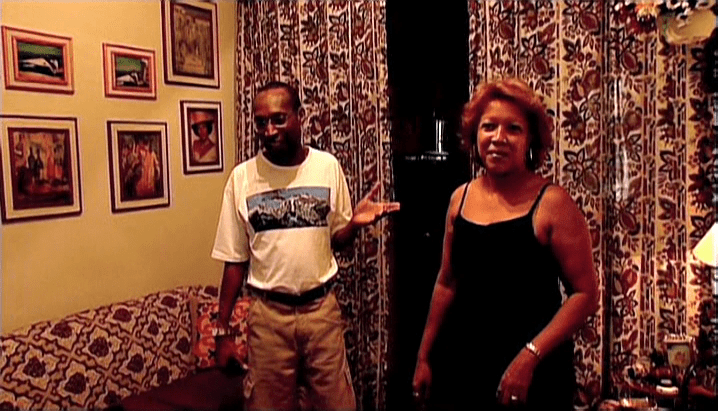
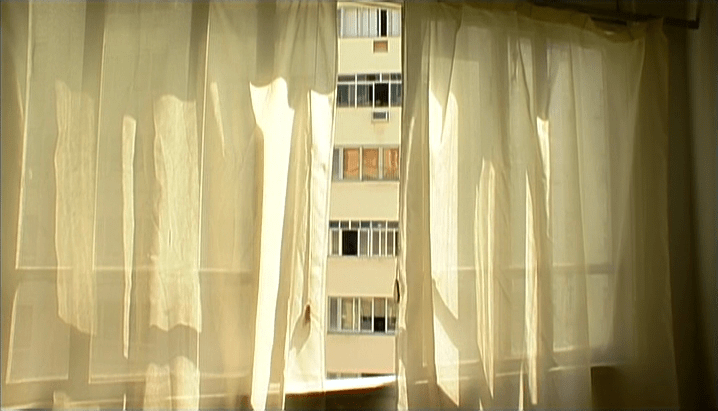


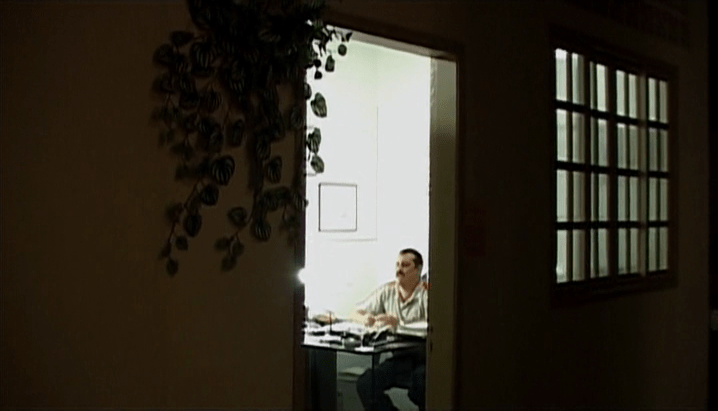

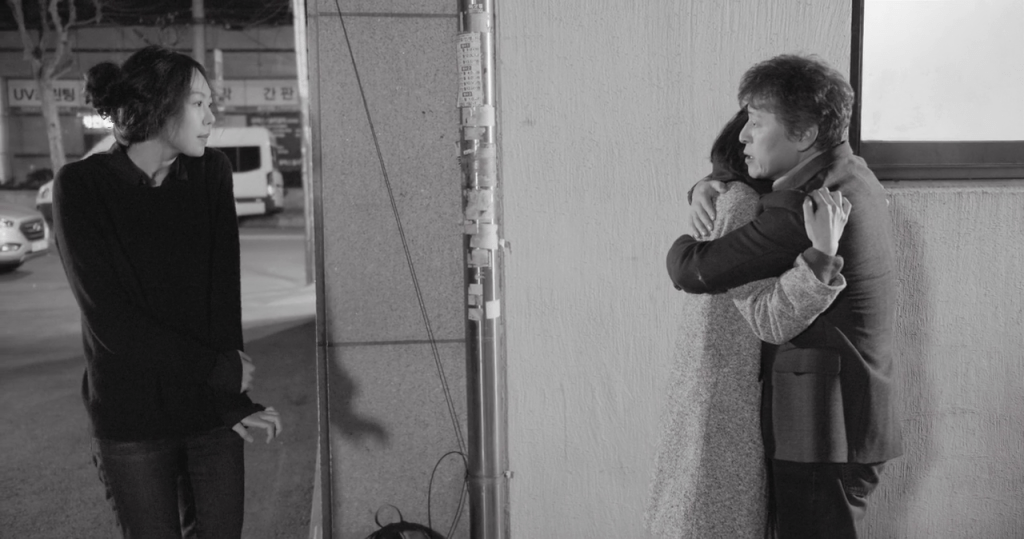


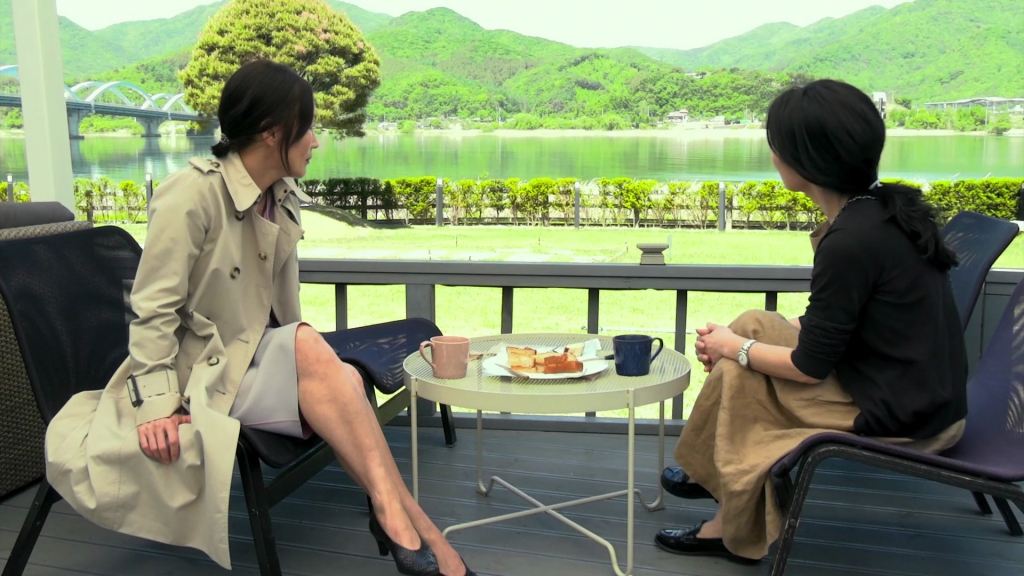
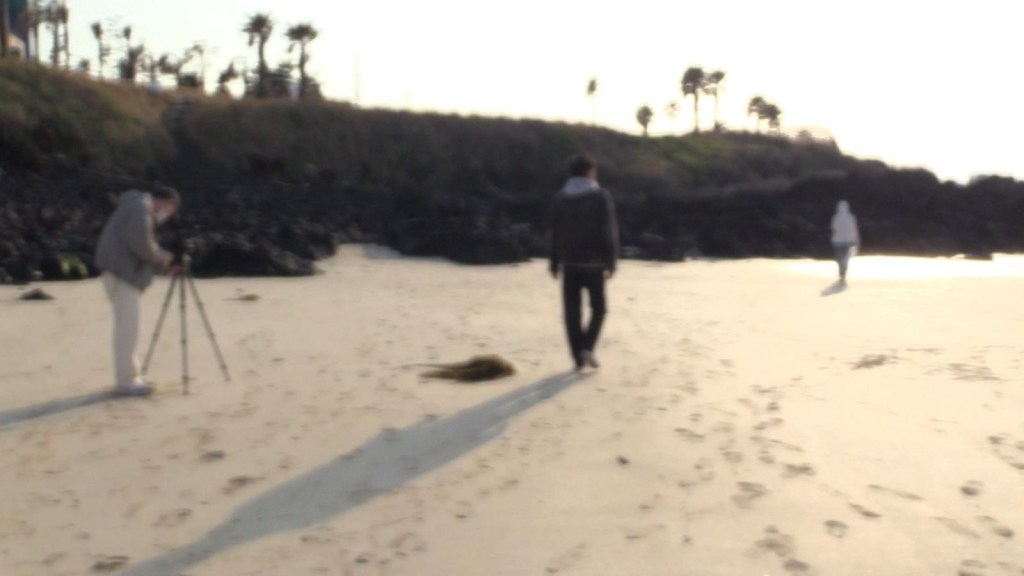


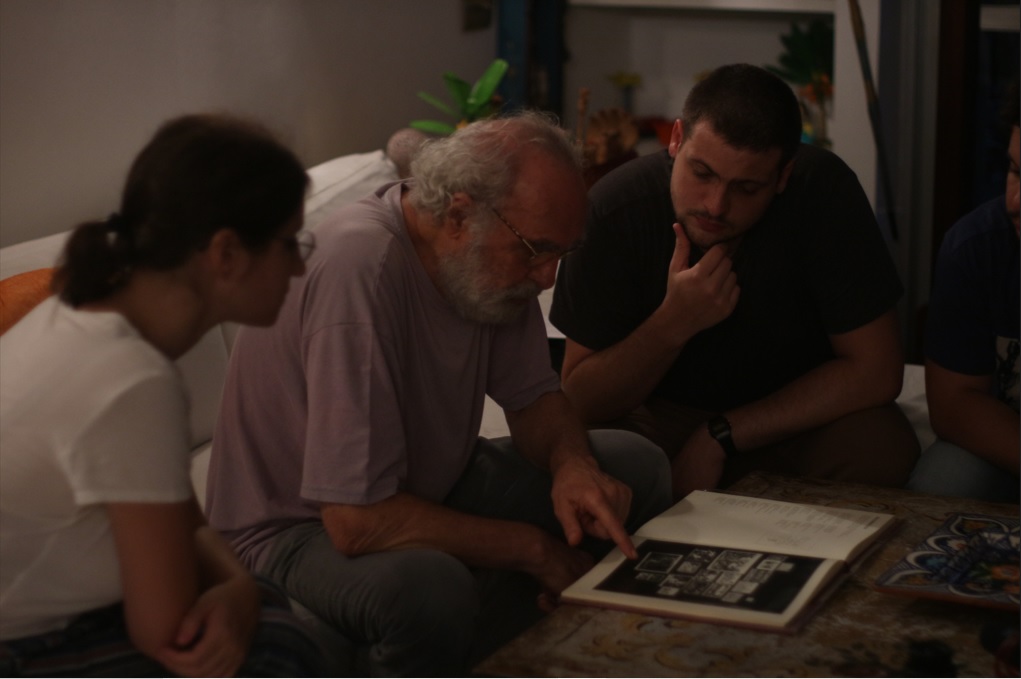



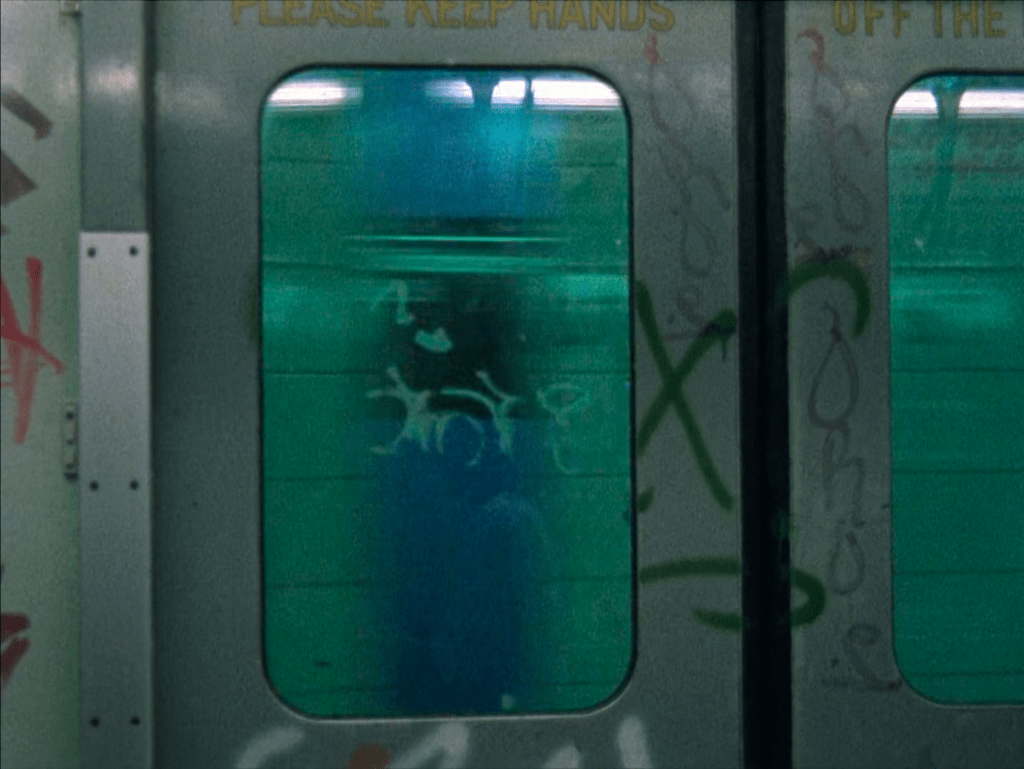


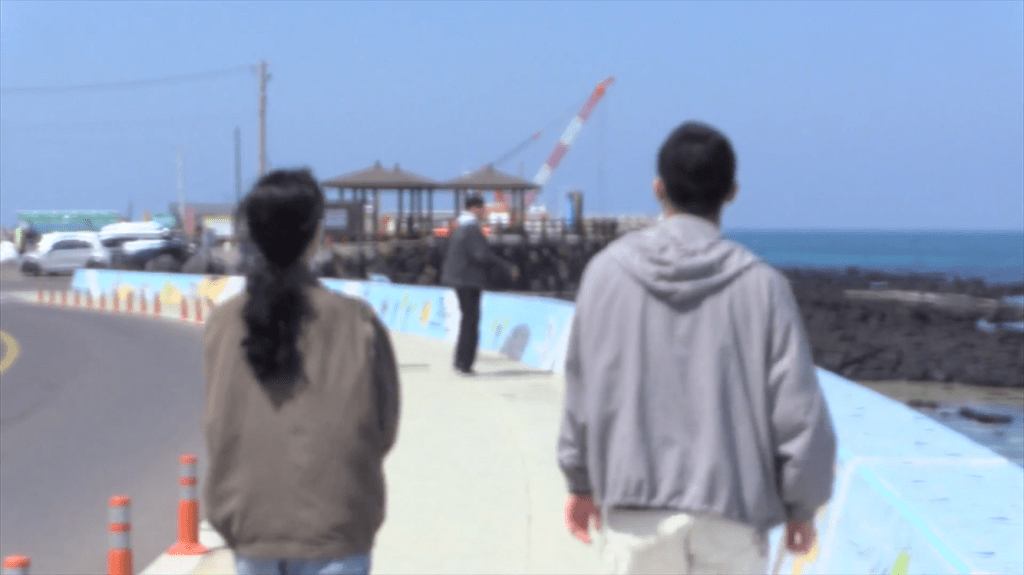


 LIMITE